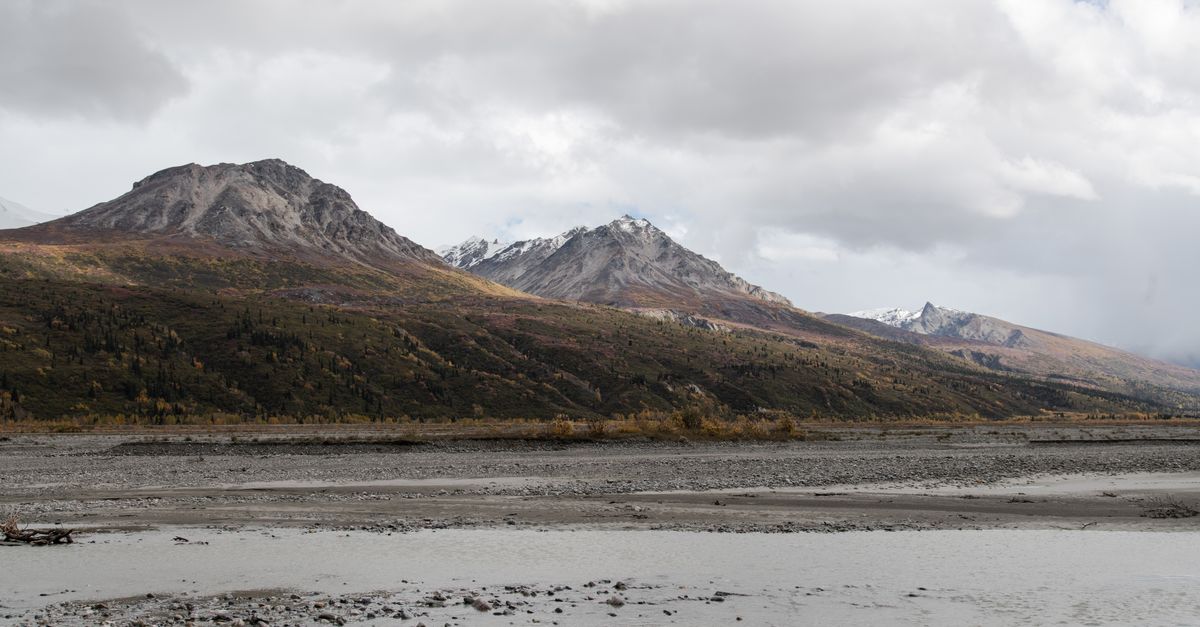
Alaska requires the same seven Leave No Trace principles as elsewhere, but their field application changes with tundra, bears, scarce developed sites and long distances from help. The National Park Service's Alaska guidance emphasizes preparation, durable surfaces, approved bear-resistant food storage and packing out trash.
The exact rule still belongs to the park, preserve, refuge, forest, BLM office or state unit you enter. Some places require bear-resistant containers or human-waste pack-out systems; others recommend them for particular routes.
Plan for hours, not averages
Weather and river conditions can change quickly. Carry navigation independent of cell service, emergency communication appropriate to the trip, extra food and insulation, and a route left with a responsible person. Bush flights, ferries and remote roads add delay that a normal itinerary does not show.
Know whether permits, food containers or orientation are required before traveling to the trailhead or airstrip.
Choose durable camp with bears in mind
NPS Alaska guidance recommends established or already impacted sites where available, or durable surfaces such as gravel, rock, sand and appropriate grass. Avoid bear sign, alder thickets and concentrated food sources. Keep camp away from water according to unit guidance.
Store food, trash, toiletries and cooking gear using the approved method. Cook and eat away from the sleeping area. Never keep food or scented waste in a tent.
Human waste is environment-specific
NPS notes that heavily visited areas or places near water may favor bag-based pack-out. In tundra, deep catholes can disturb sensitive resources, and individual parks provide more specific direction. Learn the route's system before departure and carry the required supplies.
Pack out toilet paper and menstrual products. Wash and dispose of strained water according to local guidance, away from camp and water.
Respect wildlife by changing your route
Distance is not only a number. If an animal changes behavior, you are too close. Yield travel corridors, avoid carcasses and food concentrations, and never approach for a photograph. Learn species-specific guidance for bears, moose, marine mammals and nesting birds.
Share locations carefully
Add useful dated access and condition reports, but avoid broadcasting dens, nests, cultural sites or pristine unestablished camps. Map established legal camping places with honest access notes, not fragile shortcuts.
If a remote site has debris too heavy to carry, record it with photos, transport constraints and estimated load. In Alaska, a “few bags” may require a boat or aircraft plan, so access detail matters as much as volume.
Keep transport contingencies low impact
Weather can delay a bush flight, ferry or pickup beyond the planned night. Carry reserve food, fuel and waste capacity without creating an emergency cache. If transport is delayed, follow the land manager's instructions and keep every scented item in the approved bear-resistant system.
Do not build a new landing marker, cut brush or move driftwood for convenience. Pilots and boat operators make the final safety decision; a permit or reservation does not guarantee travel in current conditions.
At the trip end, inspect the waiting area as carefully as camp. Packaging often escapes during hurried repacking beside an airstrip or beach. Record actual pickup time and route conditions so a later visitor understands that the report reflects one weather window, not normal access.
Sources & further reading
- Leave No Trace in Alaska — National Park Service
- Alaska public-land stewardship — National Park Service
Access, prices and opening times change. Verify locally before you travel.
Tags
- Alaska
- Leave No Trace
- bear country
- backcountry camping
Beyond this page
Links to reference material and organisations we don't control.
- ReferenceProtected areasWikipedia
- ReferenceNatura 2000Wikipedia
- OfficialThe Natura 2000 protected-area networkEuropean Commission
- OrganisationIUCN — protected-area categoriesIUCN