Document illegal dumping beside a US rural road
Record an outdoor dump safely with a fixed location, hazard description, photographs, agency contact and no accusations about unknown people.
Recently verified — 3 August 2026
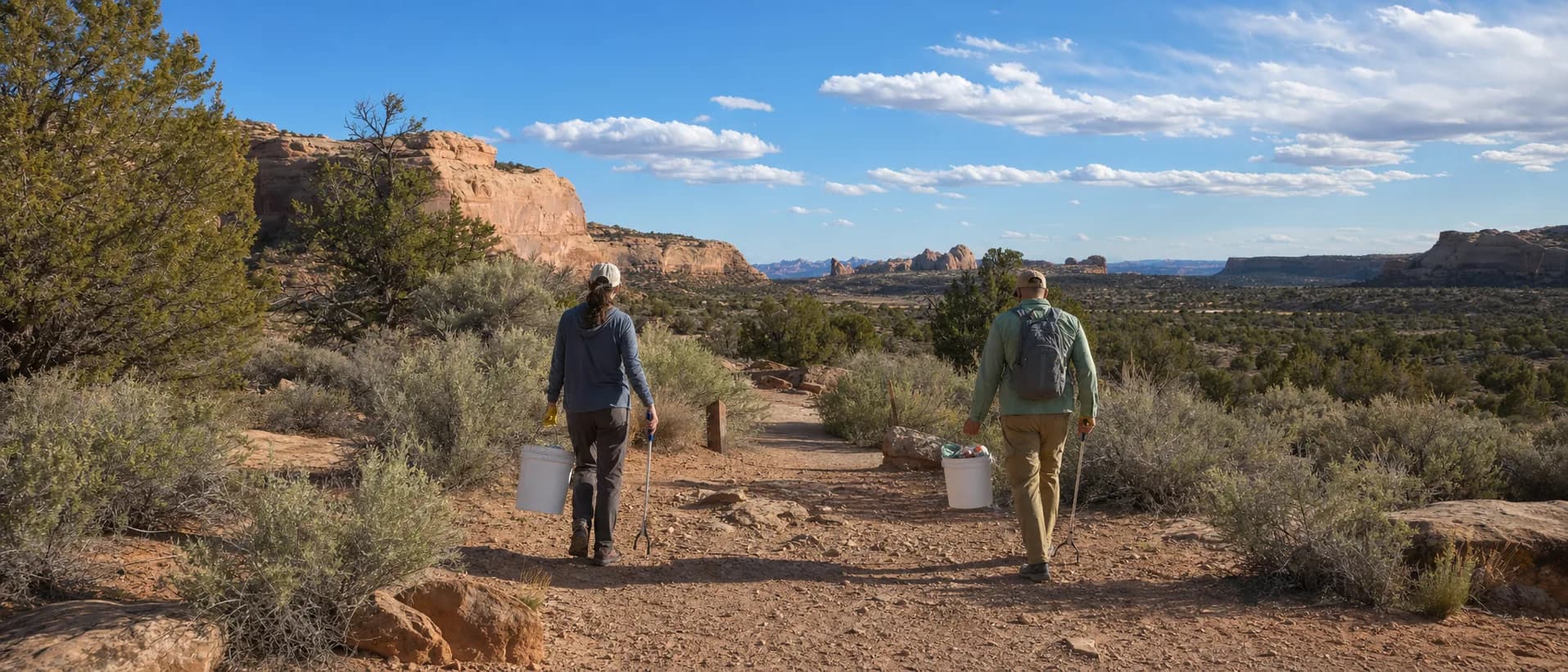
An illegal dump is a reporting problem before it is a cleanup problem. Rural piles can contain asbestos, fuel, sharps, appliances, animal waste, personal documents and unstable structures. Do not enter the site, open containers or recruit volunteers from a photograph. Preserve a safe observation and send it to the responsible land or environmental authority.
Stop at a safe distance
Park legally and never walk in a travel lane or around a blind bend. If there is no safe place to stop, continue and report the nearest road marker or intersection from a safe location. Keep children and pets away. Do not touch, smell, move or burn any material.
Describe the access without trespassing. Note whether the dump is on a public right-of-way, private parcel, forest road or park land only when you can determine that from official maps or signs. Avoid confronting a person who may be dumping; call emergency services when there is an immediate threat or active crime.
Make a useful record
Record the date, time, road name, direction of travel, nearest marker and a broad location. Photograph from a stable public position. Include the pile's approximate size and categories such as household waste, construction debris, tires, electronics, fluids or unknown sealed items. Keep faces, license plates and personal documents out of a public post.
Do not label an individual or business as responsible based on a logo, envelope or assumption. Send identifying details privately to the investigating authority. Your public description should say what was observed, not who is guilty.
Report through the right channel
Notify the land manager, county or state environmental office, and use the EPA reporting route when the situation falls within its scope. Ask whether the case number, photos and access details should remain private. A map pin is not a substitute for an official report and should never direct volunteers into a hazardous dump.
Record a public cleanup or dumping observation only with safe access, a hazard warning and no accusation. Add a dated condition report to a nearby mapped place when it helps travelers avoid the area. Use a cleanup event only after professional clearance, permission and disposal are confirmed.
Follow up with the case number, not repeated visits to the site. A careful report protects the public, preserves evidence and gives the agency information it can act on.
Sources & further reading
- Report environmental violations — US Environmental Protection Agency
- Illegal dumping prevention — US Environmental Protection Agency
Access, prices and opening times change. Verify locally before you travel.
Tags
- illegal dumping
- rural roads
- reporting
- evidence
Further reading
Links to reference material and organisations we don't control.
- ReferenceIllegal dumpingWikipedia
- OfficialTrash-Free WatersUS EPA
- OfficialBulgarian Ministry of Environment and WaterMOEW