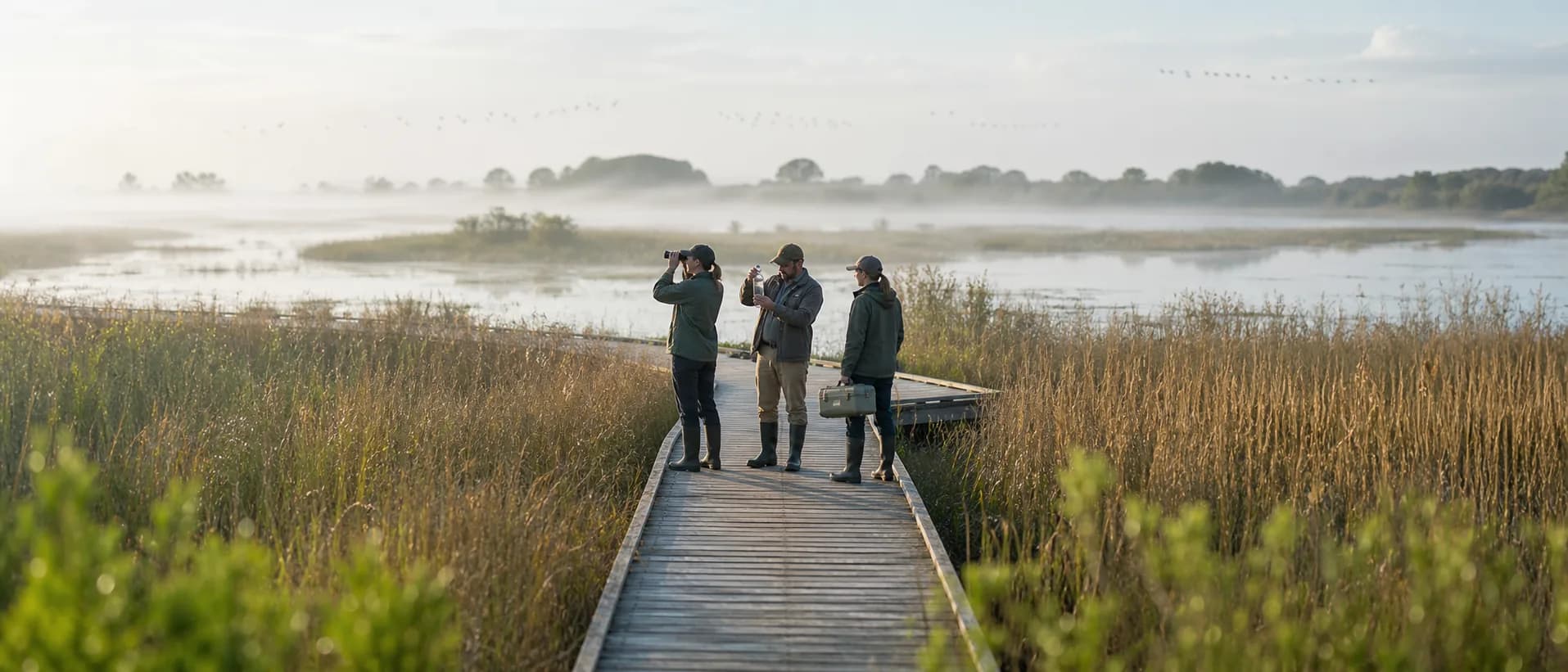
Komodo asks visitors to manage three things at once: heat on land, timing on the water and distance from wildlife. A dragon sighting is not a reason to move closer, and a bright sea day is not proof that a boat route or snorkelling stop is suitable. Start with the current park protocol and the operator or ranger who is responsible for the day’s route.
Confirm the day before you board
Opening times, tickets, routes, weather and marine conditions can change. Check the park’s current notice and ask the authorised operator what is actually included: island landing, ranger escort, walking length, shade, toilet, refill point and return time. Do not treat a package itinerary or map pin as permission to land at a different cove.
Keep a screenshot or note of the official information you checked, including the date. If a route is closed or a landing is cancelled, accept the change. A substitute stop that has not been approved may put people on unstable ground or bring visitors into a wildlife area at the wrong time. The safest itinerary is allowed to become shorter.
Let the ranger set the distance
The park protocol says not to approach or touch wildlife and not to feed it. That applies even when an animal appears calm, when another visitor is already close, or when a camera zoom makes the distance look harmless. Stay behind the ranger’s line, keep children close and leave a clear path for the animal to move away. Never block a trail, surround an animal or call it toward a group.
Do not pick up eggs, shells, plants or other natural objects. Keep food sealed and do not leave scraps near a campsite, boat landing or viewpoint. A fed animal can learn to associate people with food, which makes the next encounter less safe for both sides. “The photo was worth it” is not a conservation standard.
Make heat a reason to slow down
Drink before you feel desperate and use the shaded pauses chosen by the guide. Wear a light layer that protects from sun, keep a hat secure and carry a backup container rather than assuming that a small kiosk or boat cooler will be available. Schedule the most exposed walk early when the official itinerary allows it, but do not ignore a current heat or weather warning to preserve the schedule.
Stop for headache, unusual weakness, confusion, faintness, vomiting or loss of coordination. Tell the guide immediately, move to the agreed safe point and follow trained first-aid or emergency instructions. A person who is becoming unwell should not be sent ahead alone or encouraged to “push through” for the viewpoint.
Treat the sea as a connected habitat
Ask where the boat will anchor and whether a mooring or sandy bottom is used. Do not request an anchor drop on coral. Keep fins, cameras and dangling equipment from striking the reef, and do not touch, stand on, collect or feed marine life. If visibility, current or waves are unsuitable, stay on the boat or choose the approved alternative.
Use a reef-safe waste routine without making a product claim you cannot verify: keep every container closed, avoid loose tissues and bring the waste back to land. Do not throw food or packaging overboard. If sunscreen, fuel or another substance leaks, tell the crew rather than hiding the problem or rinsing it into the water.
Report without publishing a sensitive shortcut
After the visit, record the date, island or authorised route, weather, water access, crowding, ranger instructions, waste facilities and any cancelled activity. Separate an official rule from your own observation. Do not post the location of a nesting site, a den, an unofficial landing or a quiet wildlife refuge.
For a small and safe litter issue, add a dated place report in Garbamons with the access limits. The best Komodo photograph is the one that documents a respectful distance; the best itinerary is the one that leaves the dragon, reef, guide and next visitor with room to continue.
Sources & further reading
- Komodo National Park visitor protocol — Komodo National Park
- Komodo National Park — Komodo National Park
- Komodo National Park World Heritage site — UNESCO World Heritage Centre
Access, prices and opening times change. Verify locally before you travel.
Tags
- Komodo
- wildlife etiquette
- heat safety
- marine conservation
- waste reduction
Elsewhere on the web
Links to reference material and organisations we don't control.
- ReferenceProtected areasWikipedia
- ReferenceNatura 2000Wikipedia
- OfficialThe Natura 2000 protected-area networkEuropean Commission
- OrganisationIUCN — protected-area categoriesIUCN