August wildlife in Bulgaria: a distance-first field guide
Use a distance-first method for watching and photographing Bulgarian wildlife in August: read behaviour, avoid bait and playback, follow protected-area rules and share locations responsibly.
Recently verified — 12 August 2026
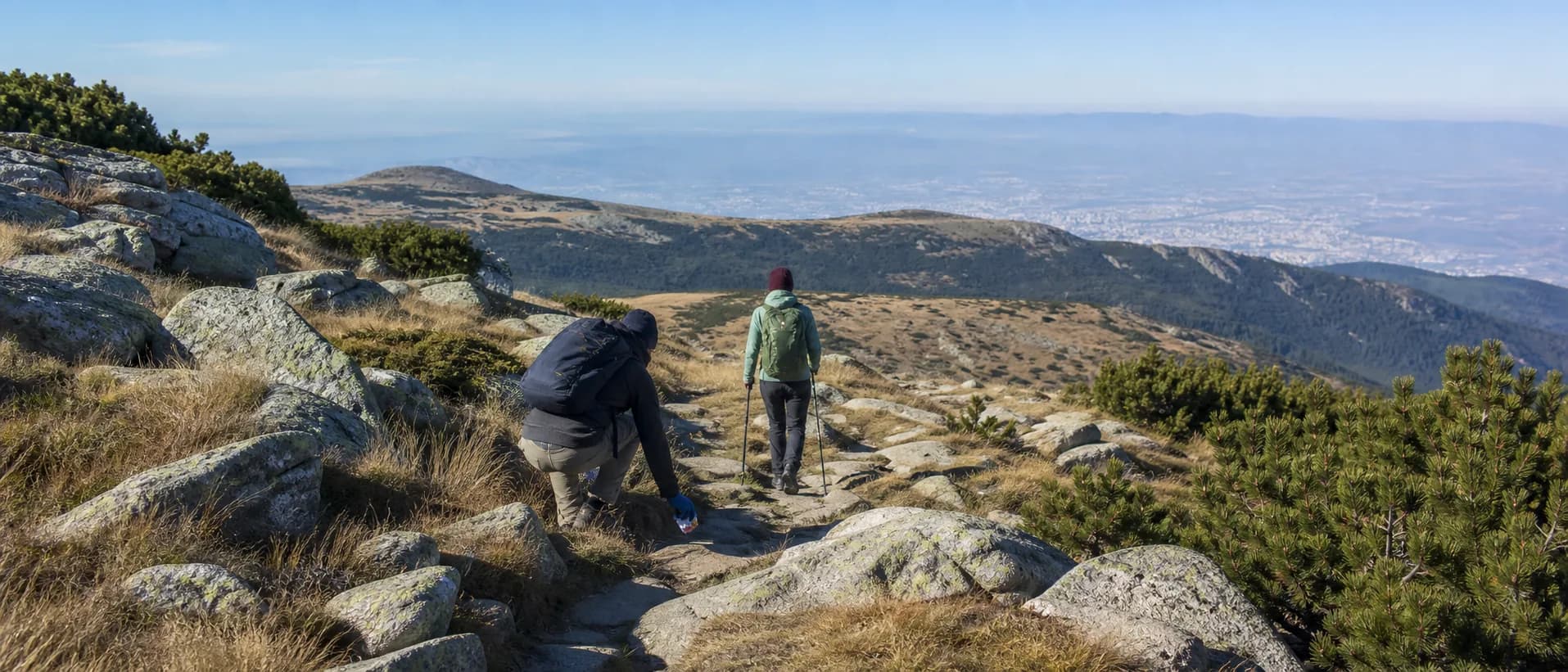
August wildlife watching in Bulgaria is often a lesson in restraint. Heat changes when animals move, dry vegetation makes sound carry, young animals may still be dependent and popular paths can bring people close to places that look empty. The strongest photograph is not the one taken at the shortest distance. It is the one that records natural behaviour without making the animal spend energy escaping you.
This approach works for mammals, birds, reptiles, amphibians and insects. It also works after the calendar moves into September: the species and habitats change, but the decision rule remains the same. Watch first, notice your effect, and increase the distance before the animal has to do it for you.
At a glance
Let the place set the first boundary
Before you leave, identify the exact land designation and manager. Bulgaria’s national parks, nature parks, reserves, protected areas, Natura 2000 sites and municipal green spaces can have different access, dog, vehicle, camping, drone and photography conditions. A map pin or old blog post is not a permit. Use the Bulgarian protected-area register and the current information issued by the relevant manager. Check signs when you arrive and obey a temporary closure, restoration area or seasonal restriction even if no animal is visible.
Choose a route where you can observe from durable ground. A public trail, platform or roadside pull-off may be more responsible than a spectacular off-route viewpoint. Do not cross a meadow, reed bed, dune, scree slope or river margin because tracks or droppings suggest an animal is nearby. Those signs are evidence of use, not an invitation to follow.
Tell someone your route and return time, carry water and use a phone or paper map appropriate to the terrain. August heat, thunderstorms and fire restrictions can make a short trip unsafe. In the mountains, turn around before the weather or light forces you to rush. A rushed return is when people step off paths, leave equipment or miss an animal’s warning behaviour.
Measure distance through behaviour
There is no single safe number of metres for every species or habitat. A quiet deer in open ground, a snake on a warm rock, a heron at a wetland edge and a bear in dense forest need different margins. The animal’s response is the measurement. If it stops feeding, repeatedly looks at you, changes direction, flattens its body, gives an alarm call, bunches with others or leaves a perch, you are too close or too exposed.
Stop where you are, avoid eye-level pursuit and slowly retreat along the route you used. Do not crouch behind a bush and wait for the animal to return if your position keeps it alert. Do not surround it with friends or block its path to water, cover or a road crossing. If another visitor is approaching, quietly signal for more space rather than creating a crowd.
Young animals are a special reason to leave. A lone fawn, chick or fox cub is not necessarily abandoned, and approaching it can draw a parent into the open or teach it to associate people with food. Never touch, move, rescue or “check” a wild animal unless a qualified authority directs you. Keep dogs on the required control and far from nests, dens, livestock and resting wildlife.
Photograph without manufacturing a scene
Binoculars and a field notebook are enough for a useful observation. For photography, use the longest practical lens, a stable position and a shutter speed that matches the animal’s movement. Let the animal occupy a smaller part of the frame if that preserves its behaviour. Crop at home rather than walking closer. A poor-light record can still document date, habitat and behaviour honestly.
Never use playback, bait, food, scent, captive decoys or thrown objects to bring wildlife into view. Do not mimic a call repeatedly. These techniques can interrupt feeding, expose a nest, increase predation risk or cause an animal to spend scarce energy avoiding you. They also make the resulting image a staged encounter even when the edit looks natural.
Drones deserve particular caution. Noise and overhead movement can trigger escape, especially in open country and around birds of prey, waterbirds and mammals with young. Check the exact legal and protected-area conditions before any flight; when in doubt, leave the drone at home. Avoid flash at night and do not use a torch to hold an animal’s attention for a portrait.
Share less when the place is more vulnerable
Do not publish exact nest, den, roost, lek, hibernation or rare-species coordinates. A precise point can attract photographers, collectors, curious visitors and predators in the form of domestic animals. Use a broad area, a public viewpoint or a delayed post when that is enough. Keep private operational details for the manager or a trusted conservation project.
When you share a sighting, separate what you saw from what you inferred. Record date, time, broad habitat, weather, distance estimate and behaviour. “Unidentified raptor, seen from the marked path, flying west” is better than a confident species claim built from a blurry frame. Do not imply that a place is always open, safe or rich in wildlife from one quiet morning.
Turn one outing into useful information
Photograph signs and trail conditions from the route, without identifying people unnecessarily. Note barriers, shade, water availability and any disturbance you could verify. If you see fishing line, illegal feeding, a damaged fence or waste near habitat, keep your distance and send a dated report to the manager or municipality. A public map entry can describe the hazard without revealing the animal that led you there.
Use Garbamons’ nature-place reports for broad, dated observations and responsible access notes. The best wildlife record does two things at once: it helps another person prepare, and it leaves the animal with no reason to remember that you were there.
Sources & further reading
- General information about protected areas — Ministry of Environment and Water of Bulgaria
- Protected areas register — Bulgarian Executive Environment Agency
- Code of Conduct — British Trust for Ornithology
Access, prices and opening times change. Verify locally before you travel.
Tags
- wildlife ethics
- August
- Bulgaria
- conservation
- photography
Beyond this page
Links to reference material and organisations we don't control.
- ReferenceProtected areasWikipedia
- ReferenceNatura 2000Wikipedia
- OfficialThe Natura 2000 protected-area networkEuropean Commission
- OrganisationIUCN — protected-area categoriesIUCN