Australian fire danger ratings, fire bans and park closures for hikers
How Australia's four fire danger ratings, total fire bans and park closures fit together, which camp stoves each state allows on a ban day, and where to check.
Sources checked - 27 October 2026
In this article
Three separate things decide whether you can walk, camp and cook in an Australian park on a hot day, and they come from different authorities:
- The fire danger rating says how dangerous a fire would be if one started. It is a forecast for an area, issued under one national scale.
- A total fire ban is a legal order from the state or territory fire service that bans fire in the open for a day, usually decided the afternoon before.
- Park rules come from the land manager: seasonal campfire bans, park fire bans and closures. Some parks close on Catastrophic days, and some on Extreme or total fire ban days too.
A day can carry a low rating and still fall inside a seasonal campfire ban, or have a total fire ban with the park still open. Check all three the evening before a walk and again on the morning.
The state rules below cover New South Wales, Victoria, Tasmania, Western Australia and South Australia. This page does not cover the fire ban rules of Queensland or the Northern Territory, and for the ACT it covers only the ratings; check those fire services directly.
The four ratings
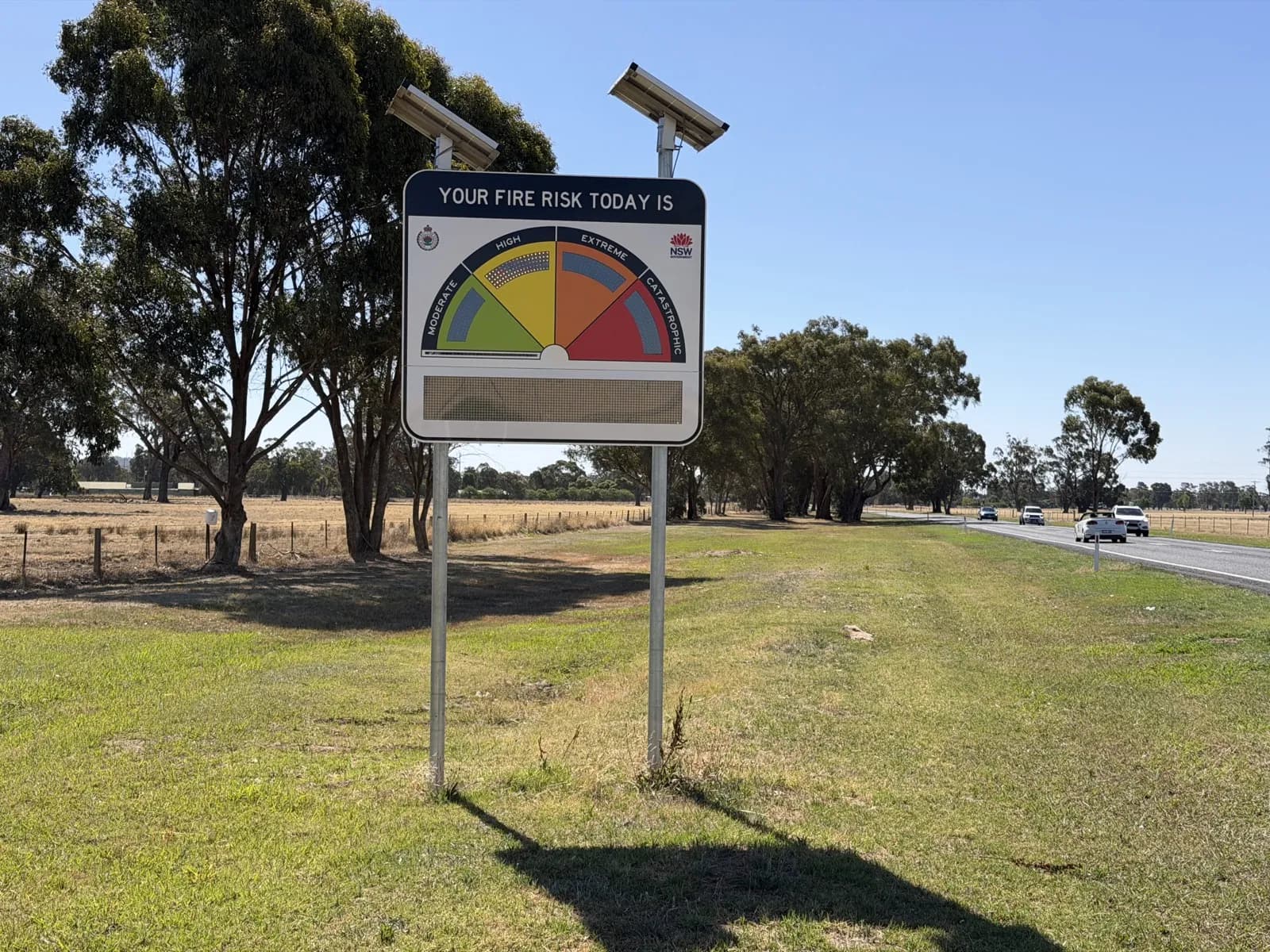
Since 1 September 2022, every state and territory uses the Australian Fire Danger Rating System (ACT ESA). It cut the old six levels to four, each paired with an action message (DFES WA). The rating describes the potential danger should a bushfire start, worked out from forecast weather, vegetation type and fuel (Tasmania Fire Service). It is not a forecast of whether a fire will start.
| Rating | Fire Behaviour Index | Official message | What it means for a walk |
|---|---|---|---|
| No rating | 0-11 | None issued; fires are unlikely to spread in a threatening way | Normal planning, but seasonal bans still apply |
| Moderate | 12-23 | Plan and prepare | Most fires can be controlled; know the park's exits |
| High | 24-49 | Be ready to act | Fires can be dangerous; decide in advance where you would go |
| Extreme | 50-99 | Take action now to protect your life and property | Fires spread quickly; the official advice is to reconsider travel through bushfire risk areas |
| Catastrophic | 100+ | For your survival, leave bushfire risk areas | Do not be in the bush; many parks close |
The index bands and messages are from the Tasmania Fire Service, which notes the system is the same across Australia. The last column is our reading of those messages for a day walk. On a No rating day, ACT ESA reminds people they must still follow local seasonal rules such as total fire bans (ACT ESA).
For walkers, the line that matters is between High and Extreme. At Extreme, the official message moves from preparing to reconsidering travel, and parks in several states start to close or advise against visits.
Total fire bans
A total fire ban is declared by the fire service for the days when fires would be hardest to control. It can cover a whole state or only some districts:
- New South Wales: the RFS Commissioner may declare a ban during the bush fire danger period (October to March), for particular fire weather areas or statewide. The decision is generally made around 5 pm and the ban runs from midnight for 24 hours (NSW NPWS). The RFS says bans usually fall on days rated Extreme or Catastrophic (NSW RFS).
- Victoria: CFA declares bans on days when fires are likely to spread rapidly and be difficult to control, for the whole state or defined districts (CFA).
- Western Australia: bans are declared for predicted extreme fire weather or when widespread fires are already burning. They are announced in the afternoon or the day before, usually after 5 pm, but can also be declared on the day itself, and normally run for 24 hours from midnight (DFES WA).
- Tasmania: the Tasmania Fire Service may declare a ban on high fire danger days, and it applies to national parks and reserves in the affected area (Tasmania PWS).
In all five states covered here, no campfire is allowed in the open on a ban day, and wood, charcoal and other solid-fuel barbecues are banned too. The penalties are serious. In New South Wales, lighting a fire on a ban day attracts an on-the-spot fine of AUD 2,200 or, if the case goes to court, a fine of up to AUD 5,500 and/or 12 months in jail; if the fire escapes and causes damage, the maximums rise to AUD 132,000 and/or 14 years (NSW RFS). In Western Australia a breach can bring an AUD 1,000 infringement, and on conviction a fine of AUD 25,000 and/or 12 months in jail (DFES WA). Victoria's CFA warns of large fines and possible imprisonment (CFA).
Can you use a camp stove on a ban day?
This is where the states differ most, and where a walker carrying a stove can break the law without lighting a campfire.
| Where | Gas stove on a total fire ban day | Liquid fuel (methylated spirits, shellite) |
|---|---|---|
| NSW national parks | Visitor-owned gas and electric cookers generally prohibited; ask the park office in advance about exceptions. Allowed inside a caravan or its three-sided annexe. Park-built gas barbecues can be used under conditions | Prohibited |
| Victoria (CFA general rule) | Allowed if it is a commercially made appliance for cooking, stable, with 3 m cleared of flammable material, a hose or at least 10 litres of water, and an adult present until it is out | Prohibited |
| Tasmania parks and reserves | LPG (butane or propane) stoves allowed; electric too | Prohibited |
| Western Australia | Only a gas barbecue with an enclosed flame and 5 m cleared around it, at home or in an authorised area such as a public park; exposed-flame barbecues are not allowed | Prohibited |
| South Australian parks | All fires and most barbecues, including gas and liquid fuel, not allowed; some fixed park barbecues may be used if the park is open | Prohibited |
Sources: NSW NPWS, CFA, Tasmania PWS, DFES WA, Parks SA.
Three cautions sit behind the table. The Victorian row is the CFA's general rule; CFA also says fire restrictions apply all year in state forests, national parks and protected public land, and points walkers to the land manager, DEECA, for those areas (CFA). The DFES page for Western Australia permits only enclosed-flame gas barbecues and says nothing specific about portable camp stoves, so do not count on one there. And in New South Wales and South Australia, plan a cold meal for a multi-day walk that might cross a ban day.
Park fire bans and seasonal campfire bans
Land managers can restrict fire even when no total fire ban is in force.
- NSW: NPWS may declare a park fire ban, or close parks and reserves, where the fire risk to visitors is high. During a park fire ban, campfires and solid-fuel barbecues and stoves (wood, heat beads, charcoal, briquettes, hexamine) are banned, and visitor-owned gas and electric cookers are generally prohibited unless the local park office agrees in advance (NSW NPWS). Solid fuel fire bans can also apply in NSW state forests; Forestry Corporation lists them (NSW RFS).
- Tasmania: seasonal campfire bans started at 2 am on Monday 26 October 2026 in national parks and reserves in 20 municipalities, including Hobart, Launceston, Huon Valley, Tasman, Glamorgan-Spring Bay (with Maria Island), Kingborough (with Bruny Island), Break O'Day and Central Highlands. The bans cover campfires, pot fires and other solid-fuel stoves; gas stoves and gas barbecues are permitted. The notice gives no end date (Tasmania PWS). Separately, some fragile areas are permanent "fuel stove only" areas with no open fires at any time. A posted sign overrides the state campfire ban map, and signs can go up at short notice with immediate effect (Tasmania PWS).
- South Australia: many parks never allow wood or charcoal fires; others allow campfires in season only. Firewood collection in national parks is prohibited, so bring your own where fires are allowed (Parks SA).
- Queensland: fire restrictions appear on the park alerts page. On 27 October 2026 it listed a fire prohibition for Blackbraes, White Mountains and Porcupine Gorge national parks from 12 October 2026 to 15 January 2027, and a permanent fire prohibition on Teewah Beach in the Cooloola Recreation Area (Queensland Parks). Queensland's own fire ban rules are not covered here.
When parks close
Closures follow the rating more than the ban, and they are announced by the park agency, not the fire service.
- Victoria: on a forecast Catastrophic day, DEECA and Parks Victoria close parks and forests, including state forests and national parks. Some lower-risk areas, such as inner-urban parks, may stay open. You may not get a personal warning or see a closed sign. On Extreme days the advice is to reconsider your visit, and some parks and picnic areas are regularly closed on total fire ban or forecast Extreme days. If you are already in a park, leave the night before or early in the morning if it is safe (Parks Victoria).
- South Australia: parks are usually closed on Catastrophic days and can also close on Extreme days (Parks SA).
- NSW: NPWS may close parks and reserves where the fire risk to visitors is high (NSW NPWS).
Fire also closes parks long after it is out. In late October 2026, South Australia listed Cape Torrens Wilderness Protection Area and Talisker Conservation Park as closed, parts of Deep Creek National Park still closed for bushfire recovery, a section of Alligator Gorge in Mount Remarkable National Park shut after the February 2025 Wilmington fire, and the Wild South Coast Way re-routed (Parks SA). These recovery closures stay until further notice and have nothing to do with the day's rating.
Heat can close a track even without fire. South Australia closes Googs Track and the campsites in Yumbarra Conservation Park and Yellabinna from 1 December 2026 to 28 February 2027 because of extreme daytime temperatures (Parks SA). At Uluṟu-Kata Tjuṯa, the Valley of the Winds walk closes beyond Karu Lookout from 11 am when the forecast or actual temperature reaches 36°C; see the Uluṟu and Kata Tjuṯa walks guide.
Where to check
Ratings are set for fire weather areas or districts, and bans for districts or, in Western Australia, whole local government areas (DFES WA). Look up the area your trailhead is in, not the nearest city.
| State or territory | Rating and ban | Park closures and alerts |
|---|---|---|
| New South Wales | NSW RFS | NPWS alerts list at nationalparks.nsw.gov.au |
| Victoria | cfa.vic.gov.au; VicEmergency Hotline 1800 226 226 | Parks Victoria changed conditions listing and the park's own page; 13 1963 |
| Tasmania | fire.tas.gov.au | PWS campfire map and signs |
| Western Australia | emergency.wa.gov.au; TFB hotline 1800 709 355 | The park's land manager |
| South Australia | CFS (cfs.sa.gov.au); hotline 1800 362 361 | Parks SA closures and alerts |
| ACT | ACT ESA | |
| Queensland | Not covered here | Park alerts |
| Northern Territory | Not covered here | Not covered here |
Phone numbers and addresses are from the Parks Victoria, DFES WA, Parks SA and NSW NPWS pages.
A sensible sequence for a summer walk:
- Two or three days out: look at the forecast ratings for the district. If Extreme or Catastrophic is forecast, pick a different day or a low-risk area.
- The evening before: after the ban decision (around 5 pm in NSW and WA), check whether a total fire ban is declared, and check the park's alerts for closures and fire bans.
- The morning: check again before driving in. In Victoria a closed park may have no sign at the gate.
- On a multi-day walk: carry a way to get updates, know your exits, and leave early if Extreme or Catastrophic is forecast for a day you would still be in the bush.
In an emergency call 000.
The rating definitions, ban rules, stove rules, closures and alerts above were checked against the official pages on 27 October 2026. Rules change by season and district, so the agency pages on the day of your walk take precedence.
Sources & further reading
- Fire Danger Rating System Explained - Tasmania Fire Service
- Fire Danger Ratings - ACT Emergency Services Agency
- The Australian Fire Danger Rating System: what's changed, why and where to next? - Department of Fire and Emergency Services WA, 28 March 2024
- Fire danger ratings and total fire bans - NSW Rural Fire Service
- Total Fire Ban rules - NSW Rural Fire Service
- Fire bans - NSW National Parks and Wildlife Service
- Can I or can't I? (August 2025) - Country Fire Authority (Victoria)
- Catastrophic forecast park closures - Parks Victoria
- Changed conditions and closures - Parks Victoria
- Total Fire Ban - Department of Fire and Emergency Services WA
- Campfires and BBQs - National Parks and Wildlife Service South Australia
- Fire - National Parks and Wildlife Service South Australia
- Closures and alerts - National Parks and Wildlife Service South Australia
- Campfires and fire bans - Tasmania Parks and Wildlife Service
- Campfire bans to come into effect from Monday 26 October 2026 - Tasmania Parks and Wildlife Service
- Park alerts - Queensland Parks and Wildlife Service
Tags
- Australia
- bushfire
- fire danger rating
- total fire ban
- park closures
- camp stoves
- hiking safety