Bulgaria in August: build a heat-safe day hike plan
A practical mid-August hiking plan for Bulgaria: choose a cooler route, carry enough water, recognise heat illness and turn around before the margin disappears.
Recently verified — 12 August 2026
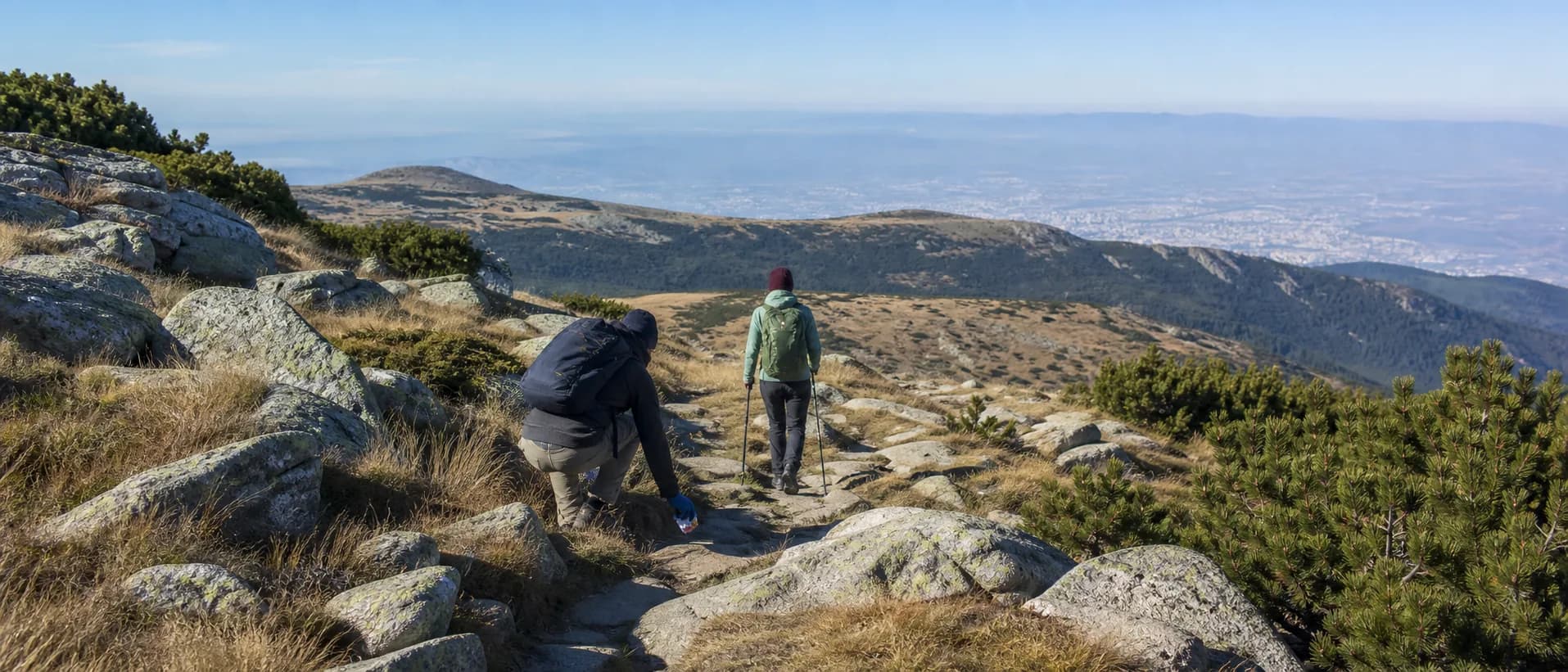
For a mid-August hike in Bulgaria, start early, choose shade or a shorter route, carry more water than the bare minimum and set a firm turnaround time before you leave. Do not try to rescue an ambitious summit plan after heat, thirst or a late start has used up your margin. Check the National Institute of Meteorology and Hydrology (NIMH) forecast, dangerous-phenomena notices and the land manager's current information on the morning of the walk.
Choose the day before choosing the summit
The best August route is the one that leaves room for heat, pauses and a slow return. A short forest walk, a shaded valley path or a lower viewpoint can be a better day than an exposed ridge reached after rushing. Compare the ascent, shade, water points, escape routes and transport—not just the distance shown on a map.
Use an official marked trail and check its current access with the responsible park, municipality or site operator. A route described as easy can still become demanding when the ground is hot, a group is carrying children or water is unavailable. Avoid inventing a shortcut around a closed section. If the exact conditions are unclear, reduce the route rather than treating uncertainty as permission.
Set three limits in writing: the latest time you will start the return, the minimum water you must have when you reach that point, and the symptoms that end the walk immediately. Share the plan with someone who is not in the group. Include the starting point, route name, expected return and the person to contact if the plan changes.
Put the exposed work in the cool part of the day
The Ministry of Health advises avoiding prolonged outdoor exposure in the hottest hours, including the 12:00–16:00 period in its high-temperature guidance. For a hike, translate that into route design rather than a rigid promise: begin early, use shaded sections when possible and avoid scheduling the hardest climb or a long treeless ridge for the middle of the day.
Wear light, breathable layers, a hat and sunglasses, and use sun protection that you will reapply. Long sleeves can be more useful than relying only on sunscreen when the route is exposed. Keep your pace conversational. Frequent short pauses in shade are better than waiting until someone is dizzy, cramping or unable to keep up.
Do not use thirst as your only water signal. Drink regularly, but do not force extreme amounts of plain water. Bring food that survives heat and is easy to eat: salty snacks, fruit that will not leak, sandwiches packed safely and a small reserve for an unplanned delay. Never count a natural water source as available unless you have current, reliable information and a treatment plan suited to the hazards.
Recognise trouble early
Heat exhaustion may look like heavy sweating, headache, nausea, dizziness, weakness, cramps or an unusual drop in coordination. Stop at the first meaningful change, get the person into shade, loosen excess clothing, cool the skin and give small sips only if they are alert and able to swallow. Do not leave them alone or send them downhill by themselves.
Confusion, collapse, seizure, loss of consciousness, very high body temperature or a person who is getting worse are emergencies. Call 112, give the route and the last known location, and follow the operator's instructions. Keep cooling while waiting, without delaying the emergency call. A group should have a charged phone, offline map, headlamp and enough water and food to wait for help or walk out slowly if directed.
Children, older adults, pregnant people and anyone with chronic illness can be more vulnerable to heat. Ask about medication or medical limits before the hike without pressuring someone to disclose more than they want. A dog also needs shade, water and a surface that will not burn its paws; a hot rock or asphalt approach can be a hazard before the trail begins.
Leave the place cooler and safer for the next group
Stay on the marked trail, especially where dry grass or fragile plants border the path. Do not widen a route to find a cooler-looking line, and do not enter a stream or lake unless the site manager permits it and you understand the water risk. Pack every wrapper, wet wipe, fruit peel and tissue back out. Food scraps attract wildlife and make the next visitor's heat problem worse when bins overflow.
Skip the fire entirely on a hot, dry day. In national parks, open fires are prohibited by the visitor guidance; elsewhere, a fire ring, a social post or an old campsite does not prove that fire is allowed on your date. Use a cold meal and check local instructions before carrying any stove.
Before leaving, record what you actually observed: shade, trail surface, water status, signs, crowding and any hazard. In Garbamons' mapped sights directory, a dated note can help the next hiker choose a realistic route without turning one hot afternoon into a permanent forecast. Open Bulgaria's outdoor places on the map
The useful August plan is not the longest one. It is the plan that begins with current information, protects the body's cooling capacity, turns around early enough and leaves no new pressure on a dry landscape.
Sources & further reading
- Recommendations for safety in high temperatures — Ministry of Health of the Republic of Bulgaria
- National weather forecasts, dangerous phenomena and heat comfort — National Institute of Meteorology and Hydrology
- What you need to know when visiting Bulgaria's national parks — Ministry of Environment and Water
Access, prices and opening times change. Verify locally before you travel.
Tags
- August hiking
- heat safety
- day hikes
- Bulgaria
Beyond this page
Links to reference material and organisations we don't control.
- ReferenceEcotourismWikipedia
- ReferenceMeteor showersWikipedia
- VideoPBS Terra — landscapes and climateYouTube