Lightweight plastic bags in Europe — what the falling count does and does not prove
Eurostat's 2022 carrier-bag figures explained, including thickness categories, missing comparisons and better litter-survey practice.
Recently verified — 2 August 2026
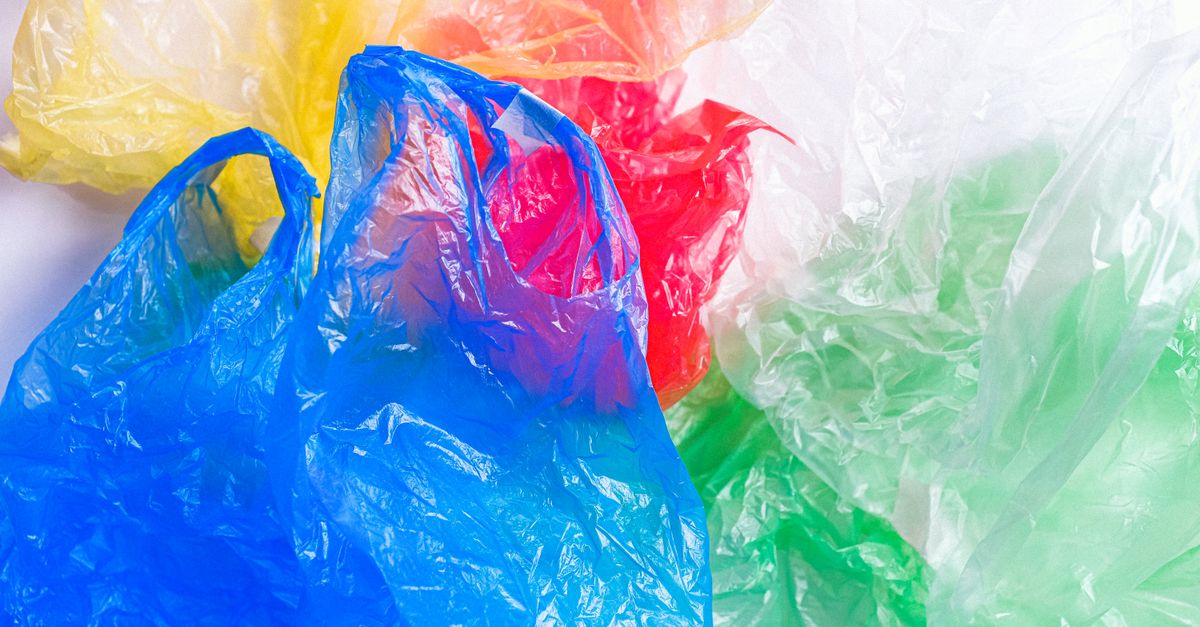
Eurostat reported that EU residents consumed an average 66.6 lightweight plastic carrier bags each in 2022. Across the Union, the total was 29.8 billion—4.7 billion fewer than in 2021, a 14% reduction per person.
The measure sounds simple until thickness enters the definition. Lightweight plastic carrier bags have a wall thickness below 50 microns. “Very lightweight” bags are below 15 microns and are often used for loose food or hygiene purposes. Countries can have very different mixes of those two categories.
A count is not a mass
Sixty thin produce bags and sixty heavier checkout bags are the same number of items but not the same amount of plastic. A switch to thicker bags can reduce a lightweight-bag count while increasing material per bag. A switch to paper changes the plastic indicator without showing the life-cycle impact of replacement bags.
The dataset is still important: the EU Plastic Bags Directive was designed to reduce consumption, change behaviour and combat litter. But the metric should be reported by its full name rather than paraphrased as “all bags.”
Country tables require footnotes
Eurostat reported wide differences among countries with available data. Reporting coverage and the share of very-lightweight bags affect comparison. Some countries use exemptions or separate accounting for food-hygiene applications. Never construct a complete EU league table by treating missing values as zero.
Consumption data also does not directly measure litter. A bag used and properly managed remains inside the consumption count; an older bag found on a riverbank sits in the litter stock but may predate the reporting year.
How to count bags outdoors
In a survey, separate complete carrier bags from fragments and distinguish thin produce bags where possible. Do not turn ten fragments into ten bags. Record fragments in a defined category and state the minimum size counted.
Fix the survey boundary, observation date and cleanup status. A post-storm shoreline and the same beach after mechanical grooming cannot be merged as if sampling conditions were equal. Count before volunteers remove material.
For a recurring location, create a dated litter report with photos and an honest scale estimate. Keep the detailed survey spreadsheet separately; a map pin is the action layer, not a replacement for raw monitoring data.
Prevention without bag theatre
A reusable bag only avoids disposables if it is actually reused. Keep bags where they are needed, wash only when necessary, repair strong bags and decline a new bag when carrying capacity is already available. Businesses should track total bag types and material, not advertise progress from one category while quietly shifting to another disposable.
At cleanup events, use durable collection containers where safe and practical, but hygiene, sharps and transport requirements may still require liners. The goal is not to eliminate every bag regardless of function; it is to prevent unnecessary material and keep necessary material controlled.
A precise conclusion
The 2022 fall is a real signal within Eurostat's defined lightweight-bag measure. It does not prove an equivalent fall in plastic mass, all disposable bags or environmental leakage. Pair consumption counts with material data and standardized litter monitoring before claiming a landscape outcome.
Sources & further reading
- 4.7 billion fewer lightweight plastic bags in 2022 — Eurostat
- EU action on plastic bags — European Commission
Access, prices and opening times change. Verify locally before you travel.
Tags
- plastic bags
- Europe
- statistics
- litter
Elsewhere on the web
Links to reference material and organisations we don't control.
- ReferencePlastic pollutionWikipedia
- OfficialPlastics in Europe — briefings and dataEuropean Environment Agency
- OrganisationPlastic Pollution CoalitionPlastic Pollution Coalition
- VideoUN Environment Programme on YouTubeYouTube