Remove glass safely from a US trailhead
Assess broken glass, keep people away, use rigid containers and verify disposal before organizing a trailhead glass cleanup.
Recently verified — 3 August 2026
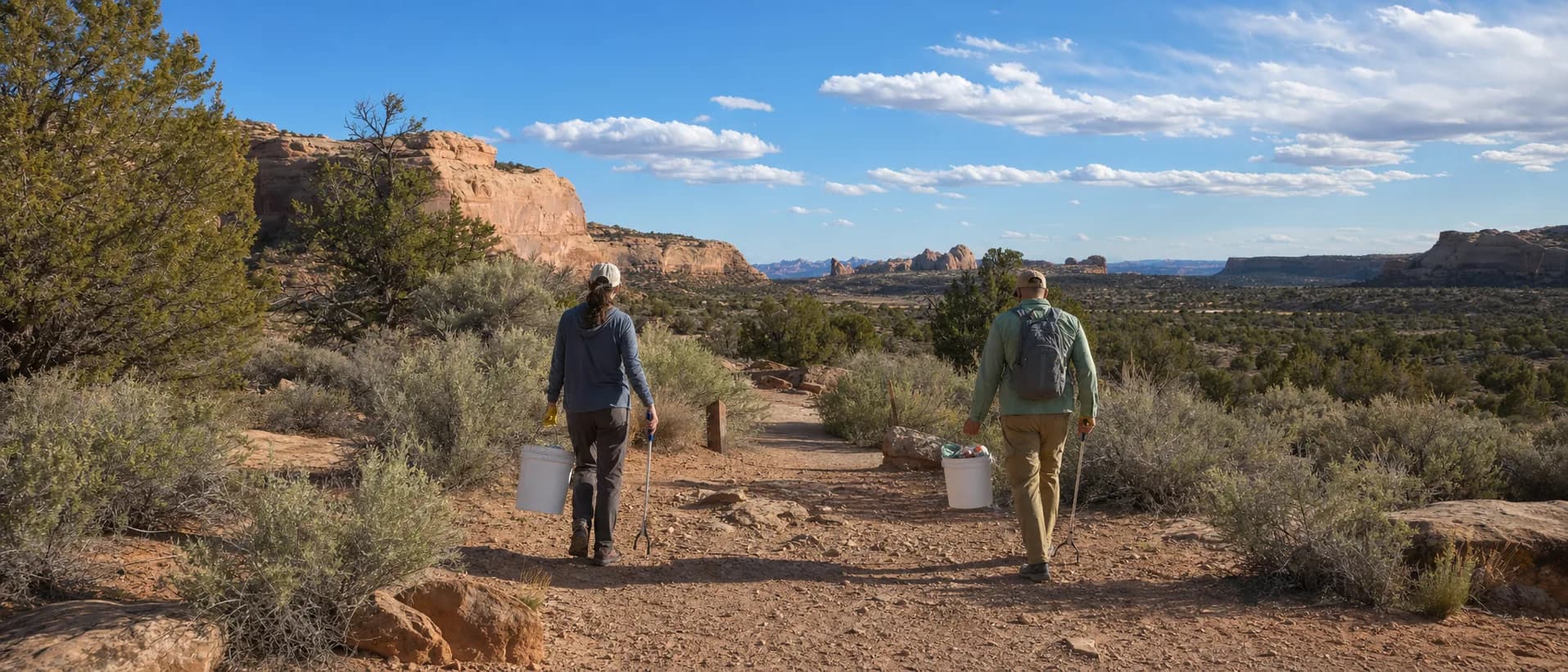
Broken glass is a common trailhead hazard, but it should not be swept into a thin bag or mixed into a recycling bin without checking the local system. Before organizing a response, mark the boundary, keep people and dogs away and ask the land manager whether volunteers may handle it.
Assess from a distance
Look for the spread, the surface, vehicle traffic, shade and whether fragments are embedded in soil or scattered through grass. Do not kneel in the area, rake blindly or use a bare hand to test a patch. Photograph from a stable safe position and report glass mixed with fuel, blood, chemicals or unknown liquids as a higher-risk condition.
Put a temporary warning only when the owner approves it. Do not create a trip hazard or block an accessible route. If the glass is on a road shoulder, bridge or active parking lane, request a controlled response rather than sending volunteers.
Use the right container
For approved ordinary glass, use puncture-resistant gloves, closed footwear, eye protection and long-handled tools. Place fragments into a rigid lidded container that cannot be punctured. Do not fill it beyond a weight that a person can safely carry. Keep the container upright and secured during transport.
Do not assume the glass belongs in a bottle-and-can stream. Broken glass can contaminate machinery and may be excluded from curbside recycling. Call the receiving facility or follow the park's waste instructions. Never leave a full container beside a trailhead bin.
Protect the rest of the team
Assign one person to the glass zone and keep the public outside it. Children and pets should have no role near fragments. Stop when the material includes needles, ammunition, vehicle parts, biological residue or buried pieces that require excavation. Do not disturb habitat to chase every tiny shard.
Map a glass hazard with a clear warning and safe approach. If cleared, publish the cleanup event with rigid-container rules and the confirmed disposal route. Use a fixed-view photo to document the boundary without showing participants or private vehicles.
Afterward, inspect the staging area, tools, vehicle floor and shoes. Confirm the container reached the named facility. Removing glass responsibly means reducing the injury risk without turning a dangerous pile into a hidden bag that someone else must discover.
Sources & further reading
- Volunteer safety — National Park Service
- Recycle right — US Environmental Protection Agency
Access, prices and opening times change. Verify locally before you travel.
Tags
- glass
- trailheads
- sharps
- cleanup safety
Background reading
Links to reference material and organisations we don't control.
- ReferenceLitterWikipedia
- ReferenceIllegal dumpingWikipedia
- OrganisationWorld Cleanup DayLet's Do It World