Maasai Mara safari: distance, dust and wildlife etiquette
Plan a lower-impact Maasai Mara safari with a responsible operator, wildlife distance, dust awareness and every piece of waste carried back.
Recently verified — 18 August 2026
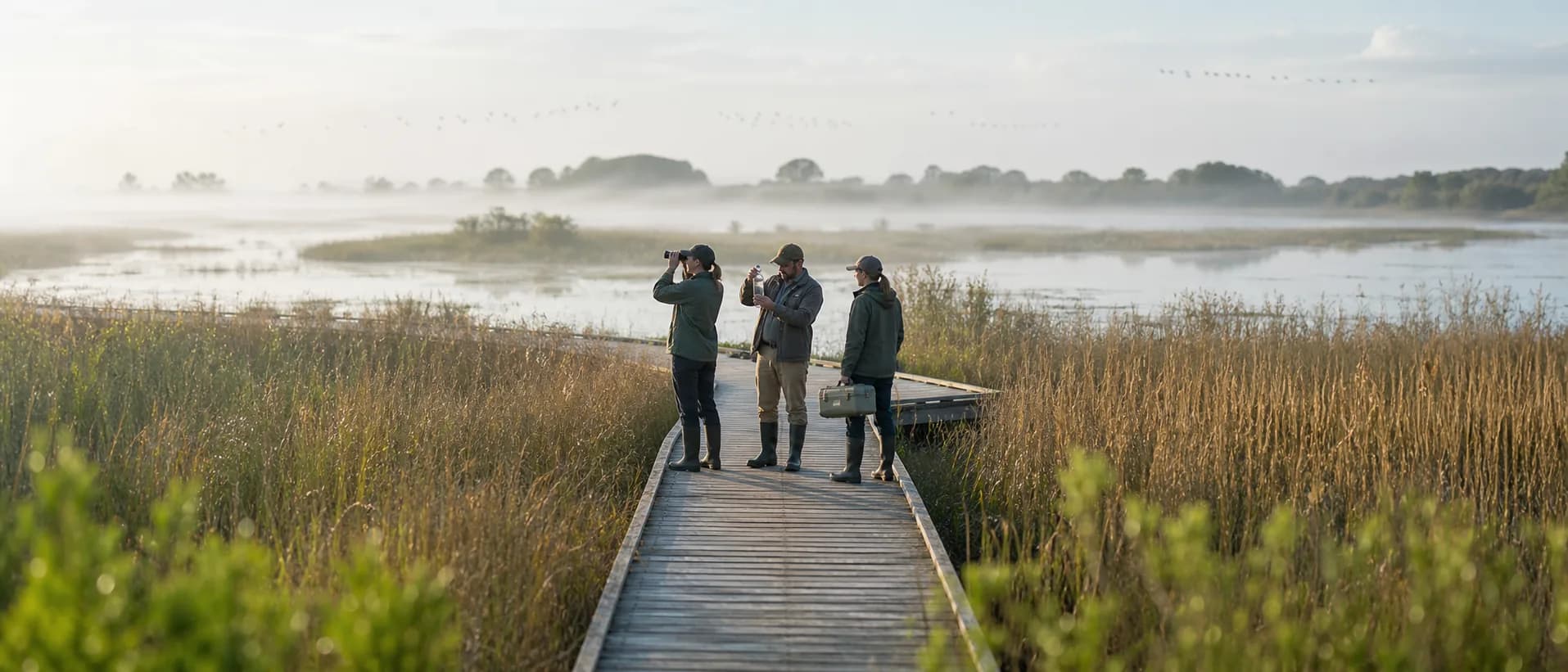
The Maasai Mara is not a wildlife stage arranged for a perfect photograph. It is an ecosystem shared by animals, conservancies, communities, guides, livestock and visitors. A responsible safari leaves the animal’s route open, the road usable and the people who live with the landscape part of the plan. The most useful question is not “How close can we get?” but “What behaviour lets the animal continue normally?”
Choose the operator before the animal sighting
Ask who manages the route and whether the day will move through a national reserve, a private conservancy, community land or several areas with different rules. Confirm the current entry, vehicle, guide and off-road requirements. Do not assume that a driver’s confidence, a popular photo location or a line of other vehicles makes an action permitted.
An accountable operator should be able to explain how it handles waste, fuel, toilets, wildlife distance, vehicle numbers, community fees and complaints. If the answer is “everyone does it,” treat that as a warning. A lower-impact itinerary may mean fewer sightings, a quieter vehicle or a longer wait, but it gives the guide room to make a good decision when the road becomes crowded.
Make distance a wildlife rule, not a camera setting
Stay in the vehicle unless the guide and local rules identify an authorised place to leave it. Never approach an animal on foot, surround it with vehicles, block its route or call it toward you. Do not ask the guide to chase a cheetah, push into a crossing, disturb a resting animal or move closer to a mother and young. If an animal changes direction because of your vehicle, the vehicle is already part of the problem.
Keep voices low, silence notification sounds and do not play calls from a phone. Avoid flash unless the responsible authority explicitly permits it. The guide should have permission to end the sighting, move away or wait behind another vehicle. A missed frame is cheaper than a stressed animal learning that people are obstacles or food sources.
Manage dust, heat and the road margin
Dust is not only an inconvenience for a passenger. It can reduce visibility, enter another vehicle and affect people, livestock and wildlife beside the track. Stay on authorised roads, keep speed appropriate to the surface and slow down near settlements, walkers, cyclists and animals. Do not create a new track around a puddle or crowd a verge for a better angle.
Carry water in refillable bottles, protect it from heat and ask where safe refills are available. Stop for dizziness, confusion, unusual weakness or signs of heat illness and tell the guide immediately. Do not leave a person alone beside the vehicle or send them walking across open ground to find shade.
Pack a safari waste routine
Keep a small, closed bag in the vehicle for wrappers, tissues, peels and damaged gear. Do not throw anything from a window, bury it at a picnic stop or leave it beside an accommodation bin. Food scraps can attract wildlife and change behaviour. Ask the camp or lodge how it separates waste and take responsibility for anything that system cannot accept.
Toilets and informal stops need the same care. Use established facilities when available and follow the operator’s instructions when they are not. Do not enter thick vegetation alone, approach animals or create a new “private” place that the next visitor will assume is acceptable.
Share a useful observation, not a secret pressure point
After the safari, record the date, operator, area type, road condition, wildlife distance, crowding, dust, facilities and any rule you were told. If a problem needs follow-up, send it to the operator, reserve or conservancy with a precise time and location. Avoid publishing den sites, nesting areas, a rare animal’s resting place or an unofficial route.
For a small, safe litter issue, add a dated place report in Garbamons without turning it into a public invitation. In the Maasai Mara, patience is a conservation tool: the best safari is the one where the animal keeps its space and the community keeps its say.
Sources & further reading
- Kenya Wildlife Service — Kenya Wildlife Service
- KWS and the Maasai Mara ecosystem — Kenya Wildlife Service
Access, prices and opening times change. Verify locally before you travel.
Tags
- Maasai Mara
- safari etiquette
- wildlife distance
- community conservation
- low-waste travel
Elsewhere on the web
Links to reference material and organisations we don't control.
- ReferenceProtected areasWikipedia
- ReferenceNatura 2000Wikipedia
- OfficialThe Natura 2000 protected-area networkEuropean Commission
- OrganisationIUCN — protected-area categoriesIUCN