Build a storm-drain litter campaign in a US town
Connect street observations, drain education, local permission and safe collection so a litter campaign reduces runoff without entering traffic.
Recently verified — 3 August 2026
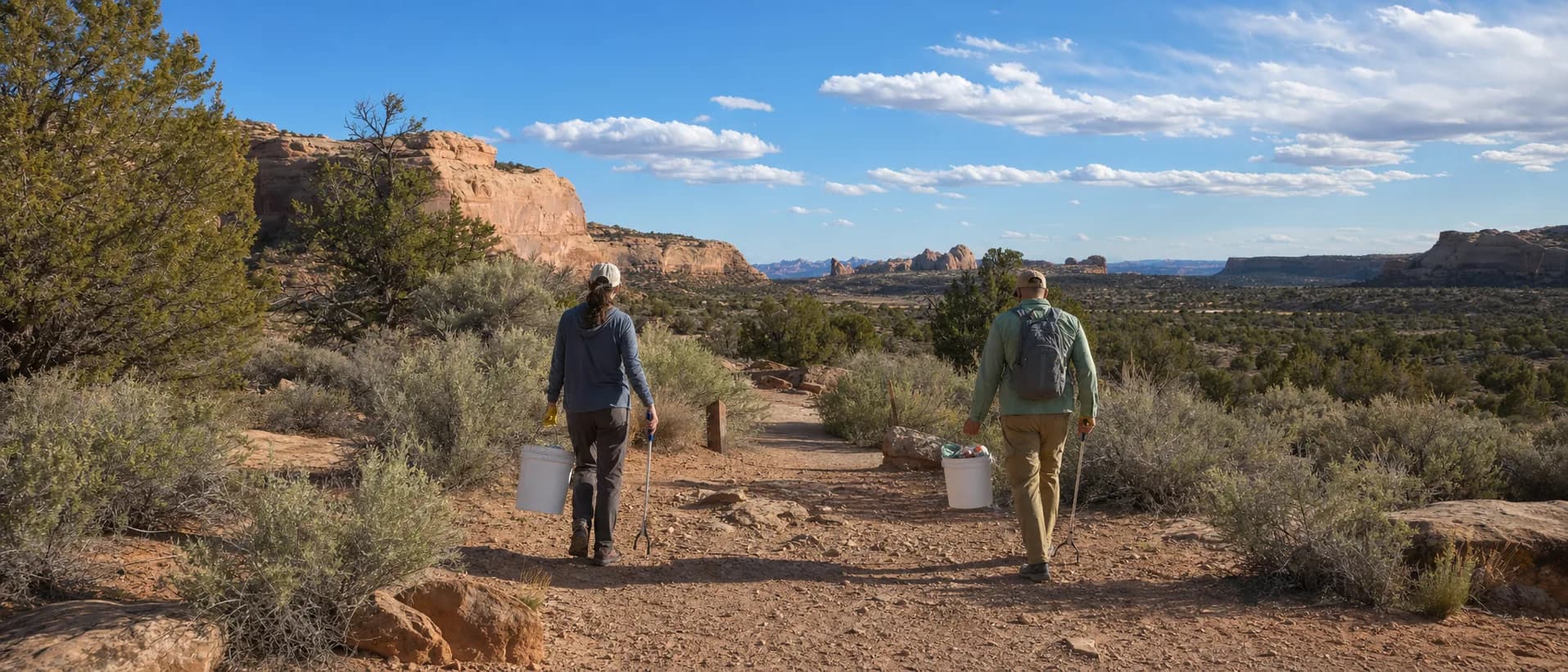
Street litter can move from a sidewalk into a storm drain and then toward a creek, lake or coast. A campaign works best when it combines prevention, reporting and a permitted cleanup. Volunteers should never stand in a travel lane, lift an inlet grate or reach into flowing water to make a photograph.
Learn the local system
Ask the city public-works or stormwater office which drains can be adopted, marked or reported. Some markings require permission, some are already part of a municipal program and some locations are unsafe for volunteer access. Find out who removes material from the grate and whether a drain near a school, construction site or industrial property has a separate response.
Map the street segment rather than every private address. Record the date, recent rainfall, visible litter categories and whether the inlet was blocked. A blocked drain can be a flood hazard; report it through the city channel instead of trying to clear it with a hand tool.
Teach the route from pavement to water
Use a simple public message: litter left on the curb can move during rain. Focus on lids, food packaging, cigarette-related items, pet waste and loose plastic film. Do not claim that a sign alone stops pollution. Pair the message with a bin placement, business outreach or collection schedule when the city can support it.
Keep outreach materials reusable and avoid handing out single-use promotional items that become the next litter source. Ask residents to report blocked or damaged inlets, not to enter them.
Organize safe collection
Work on sidewalks or closed streets with permission, high-visibility controls and an adult leader. Use grabbers, gloves and small bags for ordinary dry litter only. Stop at sharps, chemical containers, sewage, dead animals, electrical parts and anything lodged in the drain. Never pour collected liquid into the inlet.
Map a recurring street litter location with a safe access note. If a closure and disposal route are confirmed, publish a cleanup event; use before-and-after images that omit homes, faces and vehicle plates.
Repeat the same observation after rain and after the prevention measure. The most useful outcome may be fewer items reaching the inlet, not the largest bag count. Keep the campaign focused on the full path from street behavior to stormwater response.
Sources & further reading
- Stormwater discharges from municipal sources — US Environmental Protection Agency
- Keep storm drains clear — US Environmental Protection Agency
Access, prices and opening times change. Verify locally before you travel.
Tags
- storm drains
- litter prevention
- cities
- plastic pollution
Elsewhere on the web
Links to reference material and organisations we don't control.
- ReferencePlastic pollutionWikipedia
- OfficialPlastics in Europe — briefings and dataEuropean Environment Agency
- OrganisationPlastic Pollution CoalitionPlastic Pollution Coalition
- VideoUN Environment Programme on YouTubeYouTube