A trailhead litter audit that stays safe
Measure litter around a US trailhead without entering traffic, disturbing wildlife or promising a cleanup before permission and disposal are confirmed.
Recently verified — 3 August 2026
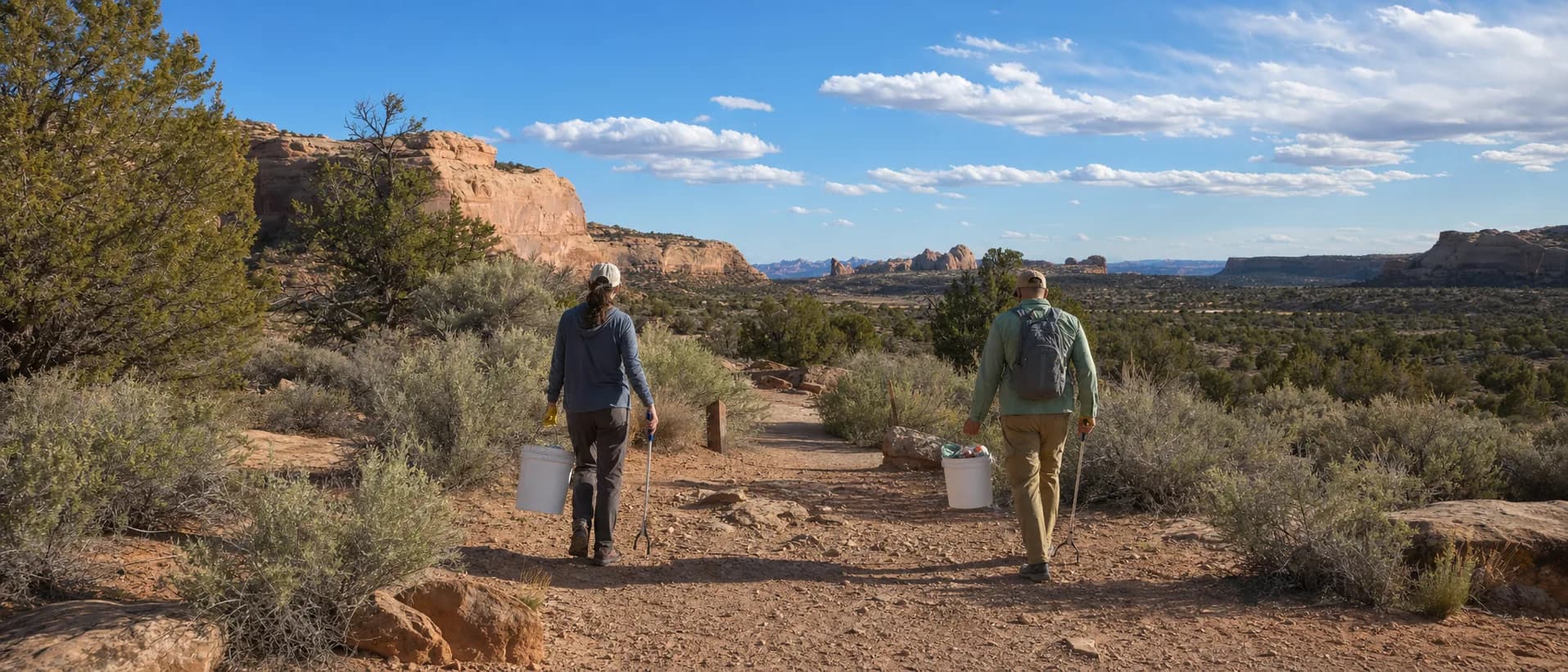
A trailhead litter audit is useful only when it describes a site that people can reach and work safely. Parking areas often combine ordinary wrappers with broken glass, vehicle parts, sharps, human waste and debris blown from the road. Begin with observation and mapping; picking up everything you see is not the goal of an unsupervised survey.
Define the boundary
Write the exact segment before counting anything: for example, the paved edge from the information board to the last marked parking bay. Do not widen the survey into a highway shoulder, private parcel, drainage channel or closed restoration plot. Record the date, weather, visitor volume and whether the site was open.
Use categories that another person can repeat, such as drink containers, food packaging, cigarette-related items, fishing line, glass, metal and bulky waste. Estimate counts and bag volume separately. A single refrigerator is not equivalent to 100 snack wrappers, so describe both item type and handling complexity.
Observe without entering hazards
Stay behind barriers and face moving traffic when the site is near a road. Wear high-visibility clothing only when the responsible agency approves a controlled survey. Do not climb beneath vehicles, reach into brush, touch needles or open containers, or move an object to photograph what is underneath. Mark a hazard as “do not handle” and notify the manager.
Look for patterns that help prevention: overflowing containers, wind direction, missing lids, dogs' access, a food truck queue or an informal pullout. Photograph from a safe public position. Do not include license plates, faces, campsite numbers or private conversations in a public report.
Turn notes into an actionable report
State what was seen, where it begins and what response is needed. “Glass scattered along the east parking edge, approximately 20 metres, no safe shoulder” is stronger than “dirty trailhead.” Include a rough bag estimate only for safe ordinary litter. Identify sharp, chemical, biological, bulky or unknown material separately.
Map the cleanup location with the boundary, access and exclusions. If a manager approves a response, publish the cleanup event with traffic controls, tools, age limits and final disposal. A dated condition report can also go on the trailhead listing without implying that the site is permanently clean.
Repeat the audit after collection. Comparing the same boundary at similar times reveals whether a new bin, sign, pickup schedule or access change worked. A careful record turns a visual complaint into information that an agency and volunteers can actually use.
Sources & further reading
- Volunteer safety on public lands — National Park Service
- Leave No Trace Seven Principles — National Park Service
Access, prices and opening times change. Verify locally before you travel.
Tags
- trailheads
- litter audit
- field notes
- safety
Beyond this page
Links to reference material and organisations we don't control.
- ReferenceLitterWikipedia
- ReferenceIllegal dumpingWikipedia
- OrganisationWorld Cleanup DayLet's Do It World