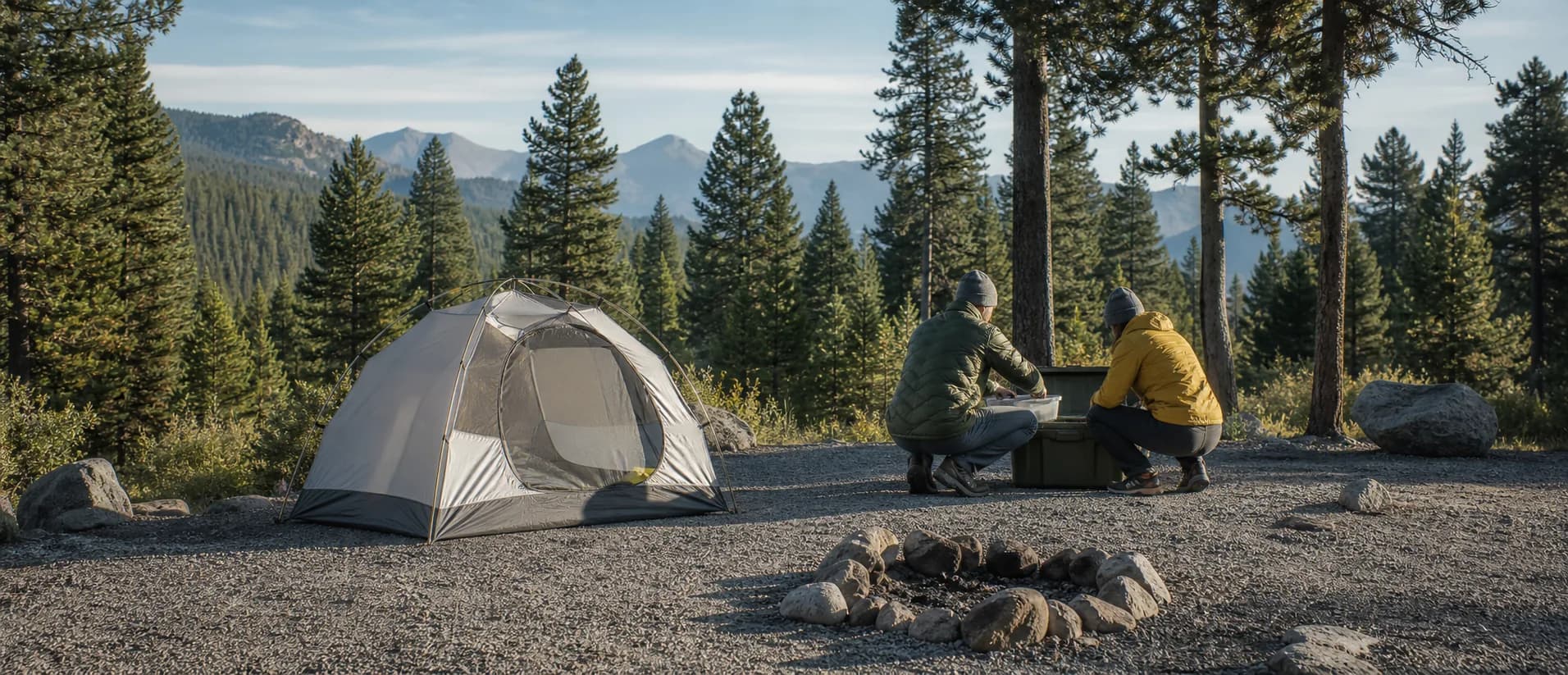
In bear country, food storage is a visitor-safety rule, a wildlife-protection rule and a waste rule at the same time. Alaska units can require bear-resistant containers on particular trails or recommend a different system in other areas. Read the exact park, preserve, refuge or forest page before you buy equipment. A container approved somewhere else may not satisfy the rule where you are going.
Start with the official requirement
Check whether the manager specifies a model, an approved list, a suspension method or a distance between cooking and sleeping areas. Learn whether the requirement covers food, trash, toiletries, pet food, bait, cookware and any item with a smell. In a remote trip, the weight and capacity of the container determine how much food you can carry, so solve this before planning the menu.
Do not confuse a waterproof bag with a bear-resistant container. A sealed plastic bag prevents leaks but does not stop a determined animal. A vehicle trunk can also be insufficient if the local rule requires a canister or if windows, doors or truck beds are not secure.
Make the camp layout repeatable
Choose a sleeping area away from the cooking and storage area when the manager's guidance calls for separation. Keep the container closed whenever you are not actively removing food. Do not leave it beside the tent “for one minute,” and do not use it as a seat if the manufacturer or park warns against that use. At night, place it where the manager recommends rather than tying it to a tree or cliff edge.
Prepare meals that create little liquid waste. Wipe cookware with a small amount of water and pack out the used towel when required. Strain dishwater only where local rules permit and dispose of it at the required distance. Never bury food scraps. Their smell can teach wildlife to search campsites even when the visible trash is gone.
Include the return journey
Leave capacity for wrappers, damaged food, hygiene products and any litter you safely collect. Pack a liner that keeps the inside clean, but do not put a hot stove or sharp object into the container. If a canister is lost, stolen or damaged, contact the manager and follow the incident instructions; do not replace it with an improvised hanging system.
Map an established legal camp with honest storage and access notes after verifying the current rule. A public listing should not reveal a hidden food cache or encourage a fragile site. If a remote camp has ordinary litter, record the cleanup need with the carry distance and wildlife restrictions; do not invite volunteers to handle food-contaminated waste without manager direction.
At the end of the trip, inspect the canister, pack and cooking area for crumbs and torn packaging. Clean equipment away from camp and store it so the next trip begins without a scent problem.
Sources & further reading
- Bear safety in Alaska — National Park Service
- Leave No Trace in Alaska — National Park Service
Access, prices and opening times change. Verify locally before you travel.
Tags
- Alaska
- bear country
- food storage
- backcountry
Background reading
Links to reference material and organisations we don't control.
- VideoREI — skills and gear explainersYouTube
- OrganisationThe seven Leave No Trace principlesLeave No Trace
- ReferenceCampsiteWikipedia
- ReferenceAlaskaWikipedia