Cool camping food without single-use ice
Keep August camping food safe in Bulgaria with reusable cold packs, frozen bottles, a small menu and clear limits for perishable food.
Recently verified — 12 August 2026
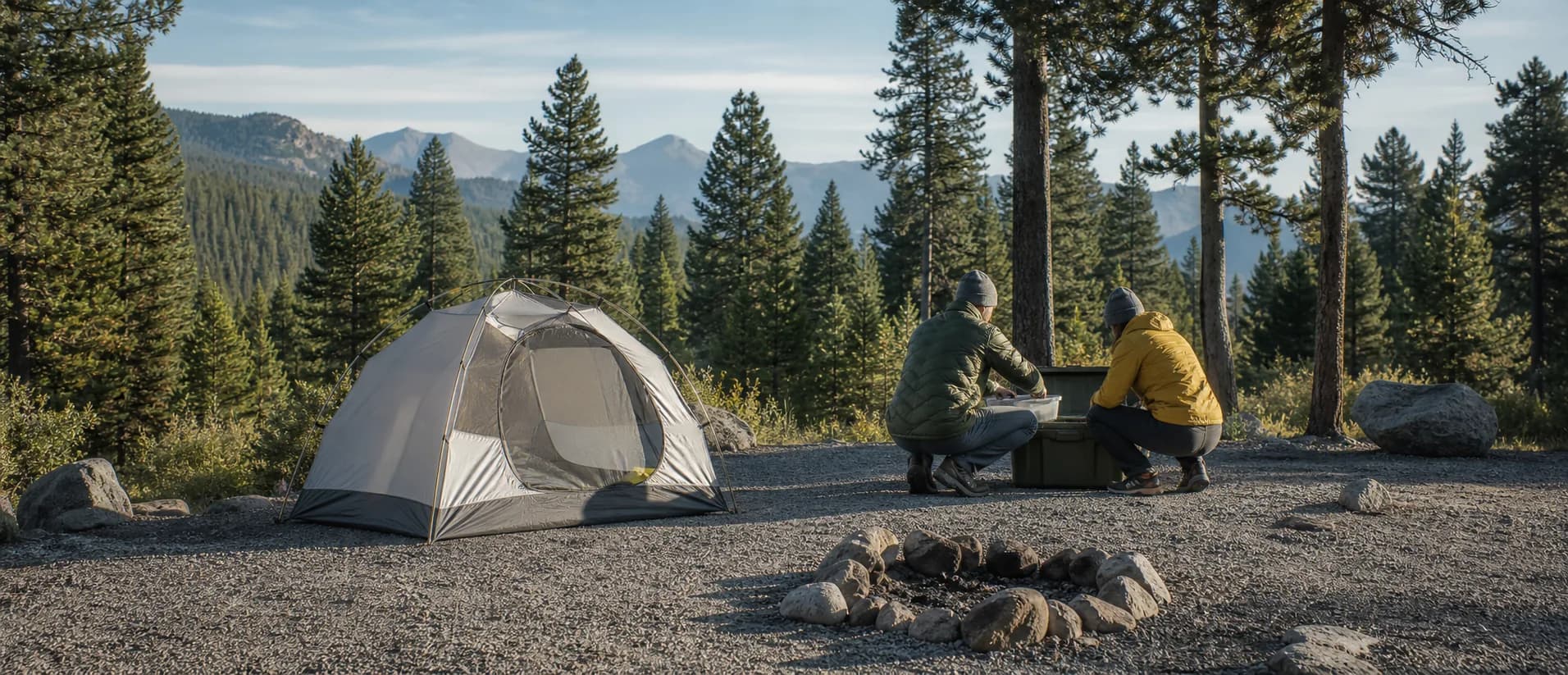
You do not need a bag of disposable ice to keep a campsite meal safe, but you do need a cold chain you can check. For an August 2026 trip in Bulgaria, first decide how long the food must stay cold, whether the campsite has a freezer or only a tap, and whether your group can eat the perishable items early. If you cannot keep a food's required temperature, change the menu rather than gambling on a warm cooler.
The low-waste solution is a small insulated system used repeatedly: reusable cold packs, frozen food-safe water bottles, an insulated box or bag, a separate drink bag and a shade plan. Cooling is a safety task, not just a way to make drinks pleasant.
At a glance
Build the cold source at home
Reusable gel packs are the simplest option if their label allows food transport and the pack is intact. Freeze them fully before departure. A sturdy reusable bottle filled with safe drinking water can also be frozen and later becomes drinking water as it thaws. Leave room for expansion, keep the cap tight and put the bottle in a leakproof sleeve. Do not freeze a thin single-use bottle for repeated use or use a pack that has split, swollen or leaked.
Freeze some food in its original, properly labelled packaging if the instructions permit. A frozen meal or sauce can act as a cold source while thawing, but it still needs to be eaten or stored according to the label. Do not confuse a cold object with a measured safe temperature: the centre of a full box may remain warm even when the outside feels cold.
The Food Standards Agency recommends distributing cold packs through a cool box or bag rather than putting every pack at the bottom. Fill empty spaces with clean, dry cloths or safe containers so warm air does not circulate freely. Pack the cooler just before leaving and keep it in the passenger area only if that area is cooler and safer than a hot boot.
Choose food that matches the trip
Plan the most perishable meal first. Dairy, cooked dishes, fresh meat, fish, prepared salads, sandwiches, dips, cut fruit and food with a “use by” date need reliable chilling. Eat these items on the first day or when you still have a verified cold system. For later meals, choose unopened shelf-stable foods, whole fruit and vegetables, bread, grains, canned or dried ingredients, and foods you will cook thoroughly at the campsite.
Keep raw meat, poultry and fish sealed at the bottom of the food cooler so liquid cannot reach ready-to-eat food. Use a separate cutting board or wash it properly before it touches cooked food. Pack sauces and dairy in small reusable containers, labelled with the date and contents. Do not remove a use-by date just to make an item easier to pack.
If a campsite operator says a freezer is available, confirm whether it is for guest food, what hours apply and whether space must be booked. A reservation platform or an old review is not a current guarantee. If there is no freezer, start with fully frozen packs and do not plan to refresh them with an unconfirmed supply of ice.
Protect the cooler from August heat
Keep the cooler closed. Put drinks in a separate bag so a thirsty passenger does not warm the food every half-hour. Store both in shade, never in direct sun, and cover them with a light-coloured towel without blocking ventilation. Do not leave the box in a parked car during a beach stop. Asphalt and a closed vehicle can raise the temperature quickly even when the air feels manageable.
Open the lid only when you know what you are taking out. Take the next meal out together, close the box and return it immediately. A cheap thermometer is useful for a long drive or a group that includes young children, older adults, pregnant people or anyone with a condition that increases food-poisoning risk. Follow the food label first; general rules cannot override a stricter instruction.
Use water and cooling gear hygienically
Use only clean, safe water to make ice or fill a frozen bottle. Wipe the outside of packs before they go into the food box and keep leaking packs away from food. Wash reusable bottles and containers after the trip and let them dry completely. A bottle that has held water is not automatically clean enough for raw meat or sauce.
Keep a small hand-washing setup at the kitchen area and separate the clean serving utensils from the raw-food tools. Do not wash greasy containers or spill food water into a stream. Scrape leftovers into a sealed container and take them to the campsite's confirmed waste route; do not bury food or leave it for animals.
Make the system smaller, not more disposable
Pack one cooler that you can keep reliably cold rather than two half-filled boxes that are opened constantly. Use a reusable bottle or pack as the cold source instead of buying small single-use ice bags at every stop. If you buy a cold item on the road, treat it as a short-term addition and confirm how it will be kept safe after the next hour.
Avoid buying more chilled food than the group can eat before the cold system weakens. This reduces both food waste and packaging waste. If a meal is delayed by traffic, a late check-in or a storm, move to shelf-stable food and keep the perishable meal unopened until you have a reliable refrigerator or cooler again.
At departure, check the label dates, count what was eaten, clean the box and freeze the reusable packs again only after they are washed and dry. Browse Garbamons campsites with facilities and access notes, then confirm freezer, water, food-storage and waste arrangements directly with the operator before relying on them.
Sources & further reading
- Handling food safely — European Food Safety Authority
- Proper food handling — European Food Safety Authority
- Keeping food safe on a picnic — Food Standards Agency
- Keep food cool when outside — Food Standards Agency
Access, prices and opening times change. Verify locally before you travel.
Tags
- camping food
- cool boxes
- reusable gear
- food safety
Background reading
Links to reference material and organisations we don't control.
- VideoREI — skills and gear explainersYouTube
- OrganisationThe seven Leave No Trace principlesLeave No Trace
- ReferenceCampsiteWikipedia