Campsite water storage in Bulgaria — a safe August 2026 plan
Plan drinking-water storage at a Bulgarian campsite without guessing about taps, tests or supply, and keep water cool, clean and separate from wastewater.
Recently verified — 12 August 2026
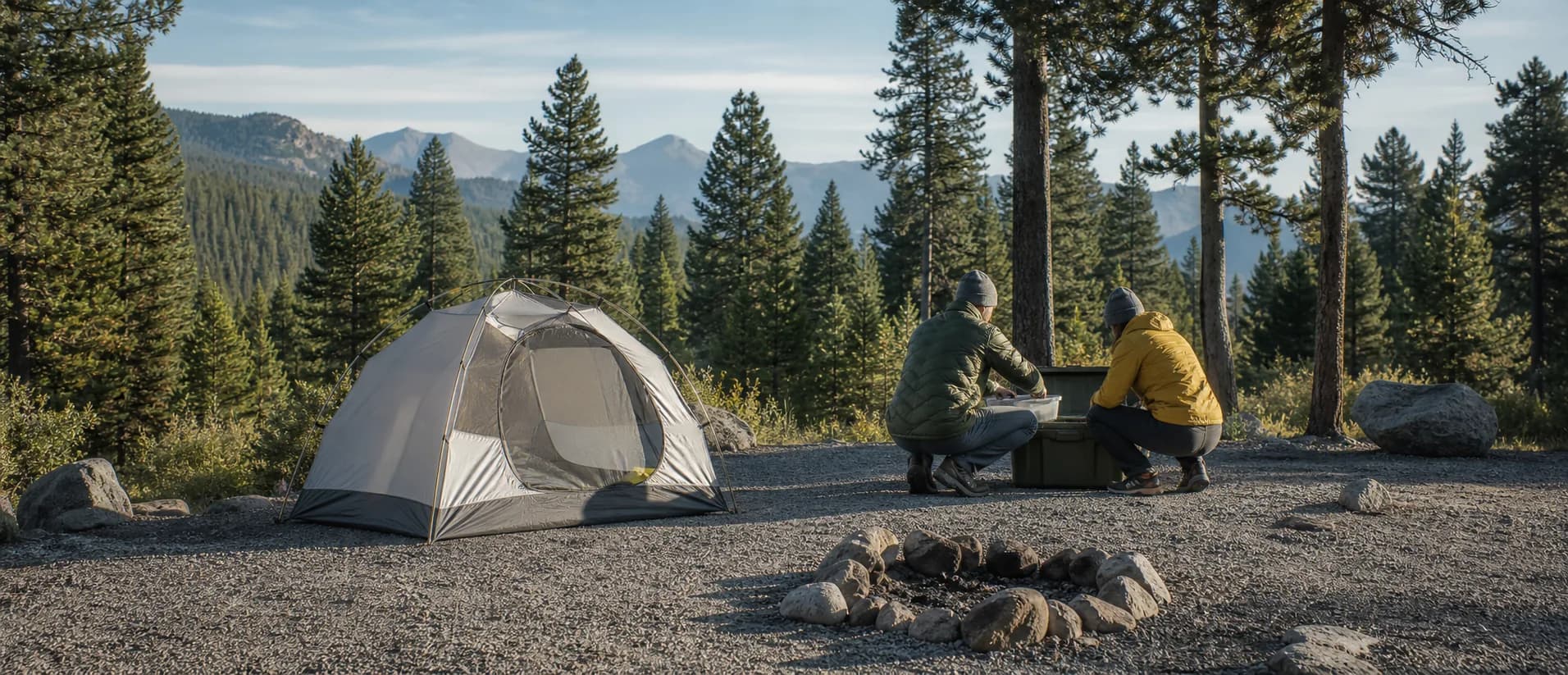
In August, water is the part of a camping plan that fails quietly. A tap can look clean but be switched off, marked for washing, supplied from a source that has not been confirmed for drinking, or simply unable to serve a full campsite during a hot weekend. The practical answer is not to publish a universal “safe tap” list. It is to arrive with enough water for the first part of the stay, verify the source with the operator or land manager, and store what you have without warming or contaminating it.
This guide is for an established campsite or another location where camping is permitted. It does not turn an informal forest clearing into a legal campsite, and it does not treat a spring, stream or decorative fountain as drinking water. In Bulgaria, the responsible water operator and regional health information are more useful than a clear-looking flow.
Build the supply around your real day
Estimate water for drinking, cooking, medication, washing hands and the walk away from camp. Hot weather, elevation, exertion, children, pregnancy and health conditions change the requirement; there is no honest single number that suits every camper. Add a reserve for a delayed departure, a failed tap or a detour. Split the reserve between people rather than placing every litre in one container.
If a campsite listing says “water”, send a short message or call the operator before you travel. Ask the date of the information, whether the tap is seasonal, whether it is connected to the campsite supply, and whether there is a restriction for drinking. Keep the answer with your booking details. A community map can help you find candidates, but Garbamons’ camping map is not a laboratory, a water authority or a current operating notice.
Choose containers that are easy to keep clean
Use food-grade containers with a wide enough opening to wash and dry them properly. Dedicate one container to drinking and cooking water and another, clearly marked one, to non-potable water if you need it. Do not reuse a container that held fuel, pesticide, detergent or an unknown liquid. Do not share a cup or bottle mouth-to-mouth in a group; pour into a clean cup instead.
Before filling, wash hands and keep the cap, spout and inside of the container away from the tap, ground and dirty table. Close the container immediately. If a campsite has a hose, do not assume that the hose is hygienic or approved for drinking; ask the operator and use your own clean connector only if permitted.
A treatment tablet, filter or UV device can be useful only when you know its instructions, limits and maintenance. It is not a reason to collect water from a stream after a storm. Treatment does not remove every possible chemical or physical hazard, and a filter that works for a clear mountain source may not be suitable for turbid water. When the source is uncertain, carry safe water or leave.
Keep August heat out of the water
Store drinking water in shade, ideally in the coolest ventilated part of camp, never beside a stove, fuel canister, waste sack or sun-heated car panel. A soft cooler can reduce heat, but ice that touches the mouth of a bottle can also introduce contamination if it is not clean. Keep the cap closed and do not repeatedly dip a mug, dirty hand or used utensil into a shared container.
Rotate containers so the water you are using is accessible and the reserve stays sealed. Mark the fill time if you are managing a group, especially when several people refill from different sources. If a container becomes warm, cloudy, damaged, foul-smelling or visibly contaminated, isolate it and do not serve it. Do not make a public claim that a campsite has a water problem from one unverified bottle; report the observation to the operator and the appropriate health channel.
Separate water from the rest of camp
Set the water station above the food-preparation and washing area, not in a low point where greywater can run back. Keep soap, toothpaste and dirty dishes away from the tap. Use only the minimum water for washing, strain food scraps into your waste bag and follow the campsite’s wastewater instructions. Never pour greasy water into a stream or lake, and never wash dirty footwear at the drinking tap.
At an established campsite, follow the manager’s rules for fire, cooking, toilets, animals and waste. In national parks, the Ministry of Environment’s visitor guidance is a reminder that fire and water-related shortcuts can harm a protected area. A hot day is not an exception to a park regime.
What to do when the tap fails
Stop and make the decision while the group still has a reserve. First, recheck the campsite notice and ask staff whether the tap is temporarily unavailable or not intended for drinking. Second, check whether a lawful, confirmed supply exists in the nearest settlement. Third, shorten the stay or leave before the reserve becomes an emergency. Do not pressure a local spring, take water from a private yard without permission, or publish an unverified source to help the next visitor.
If you see an official “do not drink” notice, photograph the wording only when safe and pass the information to the operator or responsible authority. A dated note in a mapped water or campsite report can be useful when it distinguishes “tap was dry on 12 August” from “water is unsafe”. The first is a personal observation; the second requires official confirmation.
Leave with a clean record
Before packing, wash and dry containers according to their instructions, check that no food or water packaging is left behind and keep all of your waste until you reach a confirmed collection point. Do not leave full bags beside a campsite gate unless the operator has accepted them and given clear instructions. Do not bury bottles, burn plastic or pour excess water into a sensitive shoreline.
The best August water plan is deliberately unglamorous: carry a reserve, verify the tap, use clean containers, keep them cool and be willing to change the weekend when the supply is not confirmed. That protects your group and avoids turning a guess about one campsite into bad advice for hundreds of people.
Sources & further reading
- Ordinance on water intended for drinking and domestic purposes — Ministry of Health, Ministry of Regional Development and Public Works, Ministry of Environment and Water
- Drinking-water quality monitoring and operator responsibility — Ministry of Health
- Visiting Bulgaria’s national parks responsibly — Ministry of Environment and Water
Access, prices and opening times change. Verify locally before you travel.
Tags
- campsite water
- drinking water
- responsible camping
- August camping
- Bulgaria
Beyond this page
Links to reference material and organisations we don't control.
- ReferenceSprings (hydrology)Wikipedia
- ReferenceDrinking water standardsWikipedia