Bulgaria by train and bus — a low-impact nature weekend plan for August 2026
Build a flexible Bulgarian nature weekend around train and bus connections, with live checks, a realistic backup and less pressure on fragile trailheads.
Recently verified — 12 August 2026
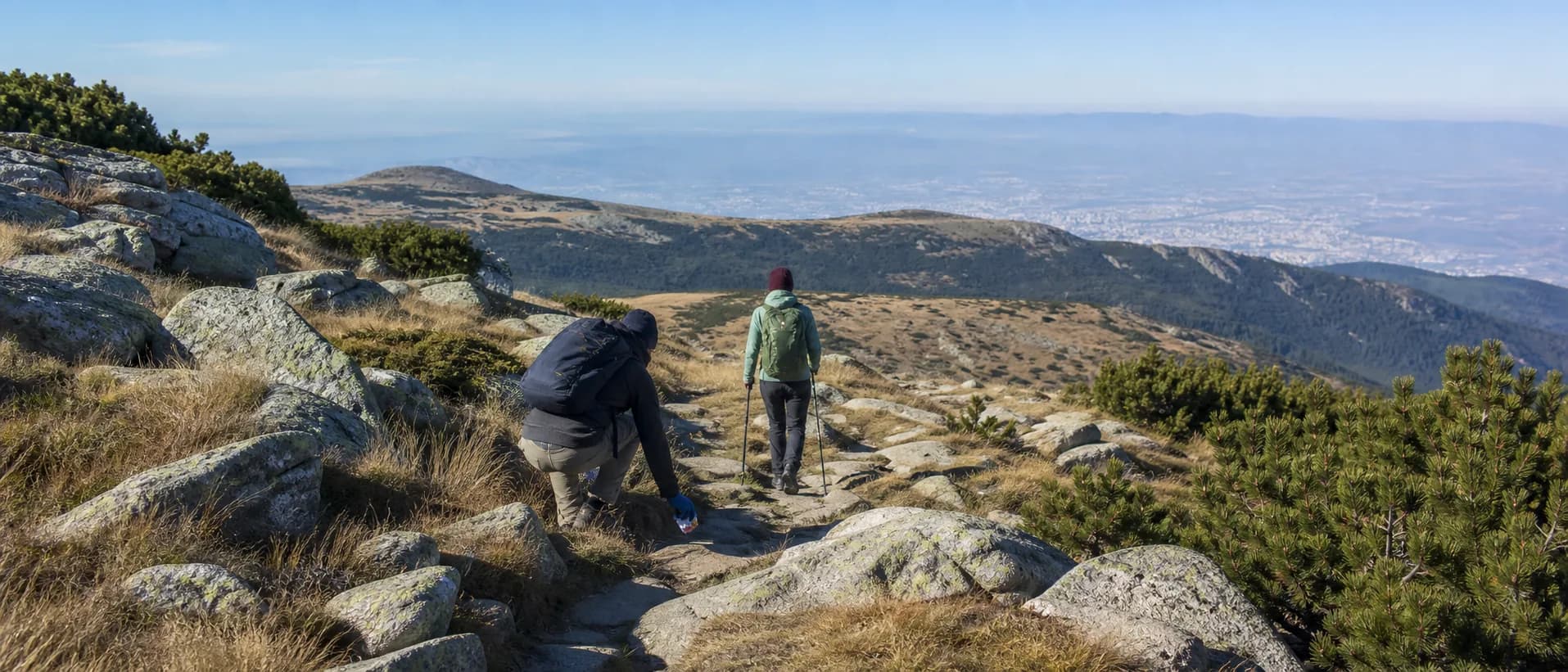
You do not need a car to make a satisfying nature weekend in Bulgaria, but you do need a plan that respects the last connection. A train can get you to a regional centre and a bus can take you closer to a trail; the walk from the stop, a missed connection or a full afternoon in August heat can still decide whether the day feels easy or frantic.
The most dependable approach for mid-August 2026 is to choose a type of weekend first, then fit a live timetable to it. Pick one established trailhead, nature park or village walk that is reachable without a car, and prepare a shorter alternative in the same transport corridor. Do not build the day around a screenshot of a timetable from a previous season.
Start with a two-option brief
Write down five things before opening a map: starting town, latest acceptable return, maximum walking time, whether you need shade or water, and the kind of surface your group can manage. Then make two plans:
This brief is more useful than a list of “best places”. A popular destination may have a beautiful route but no sensible late return, while a less famous stop can give children, slower walkers or hot-weather groups a full day outdoors without a race against darkness.
Check the transport in the right order
Use the official BDZ planner for the rail leg and the current page or phone information of the bus operator for the road leg. Search for the exact travel date, not just a weekday. Look for changes, replacement buses, reservations, group requirements, bicycle rules and the station or stop name you will actually use. Save the result offline, but remember that the saved copy is not a live guarantee.
For a mixed train-and-bus plan, write the connection as a small chain: departure, arrival, walk to the next stop, local bus, walk to the trail, turnaround time, return bus, walk back to the station and return train. Add a buffer between modes. A five-minute map connection can disappear while a train door, a road crossing or a village stop is being found.
If more than six people travel together, ask the rail operator about group arrangements early. For a small group, decide who carries the printed or offline plan and who watches the clock. Nobody should have to search for a signal while the rest of the group is already standing beside the road.
Do not promise a reader that a bus waits for a train, that a lift operates, or that a seasonal stop is served. Say exactly what was checked and when. Readers can use a dated planning note; they cannot use a confident but stale timetable.
Pick a route that can absorb a late start
August heat makes a short shaded climb more valuable than an ambitious exposed ridge. Prefer marked paths with a visible retreat option, durable ground and a place to pause away from traffic. If the walk begins beside a road, use the safest legal walking side and do not turn a bus stop or village entrance into a group meeting point.
In a protected area, read the current rules from the responsible park or land manager. Stay on marked paths where required, keep dogs under control, do not enter water bodies just because the day is hot, and never light a fire unless the current regime explicitly allows it. A nature weekend is not permission to improvise a campsite, shortcut a wet slope or collect plants.
Check the NIMH warnings for the municipalities along the route, not only the forecast for your departure town. A summer storm can change a dry crossing, a shaded path and the safe time to be on open ground. If thunderstorms, extreme heat or heavy rain make the main route unreasonable, use the shorter plan rather than trying to “save” the original objective.
Pack for the gaps between services
Carry water from a source you have confirmed as available and suitable for drinking, plus food that does not need a shop at the destination. A tap in a station, campsite or village is not automatically potable. Take a small rubbish bag, tissues, sunscreen, hat, light layer, power bank, offline map, first-aid basics and a headlamp even for a day trip. The headlamp is not an invitation to miss the last bus; it is protection against an unexpected delay.
Keep the pack simple enough to carry from the station to the trail. Reusable containers reduce packaging, but do not leave bottles or food scraps at a viewpoint. If a public bin is full, carry your waste to a confirmed collection point in town. Do not place a full cleanup sack beside an unconfirmed bin and call that disposal.
A useful two-day rhythm
On Friday evening, check the official transport pages, weather warnings, park notices and any operator messages. Download maps and write down the return options. On Saturday, leave early enough to avoid the hottest part of the walk, take one long break in shade and turn around with time to spare. On Sunday, use the shorter plan near a station or bus corridor; it gives the group a real recovery day and a practical fallback if Saturday changes.
After the walk, record the date, route section, surface, water availability and any access problem you personally observed. A dated condition note on Garbamons’ mapped nature places can help the next visitor understand what has changed, as long as it is clearly an observation rather than a promise.
Leave the route better organised than you found it
Before boarding the return service, check the ground around your rest stop for wrappers, tissues and food. Keep your group off planted verges and do not move barriers or signs to make a photograph. If you saw a larger ordinary-litter problem, map the cleanup location in Garbamons with an access note and a conservative estimate; do not invite volunteers until a responsible handoff is confirmed.
The result is a weekend that works for real people: a live connection, a route with an exit, enough water, less parking pressure and no invented certainty about what will be running on the day.
Sources & further reading
- Timetable and route planner — BDZ – Passenger Services
- Train timetable questions and answers — BDZ – Passenger Services
- Dangerous weather by municipality — National Institute of Meteorology and Hydrology
- Visiting Bulgaria’s national parks responsibly — Ministry of Environment and Water
Access, prices and opening times change. Verify locally before you travel.
Tags
- train travel
- bus travel
- nature weekends
- low-impact travel
- Bulgaria
Beyond this page
Links to reference material and organisations we don't control.
- ReferenceRoad tripsWikipedia
- ReferenceEcotourismWikipedia
- VideoNational Geographic on YouTubeYouTube