Camping in the Cairngorms: campsites, wild camps and fire rules
Choose between Glenmore and Rothiemurchus campsites, a lightweight wild camp or a campervan stop in the Cairngorms, with the new fire byelaw and Glenmore closures.
Sources checked - 8 October 2026
In this article
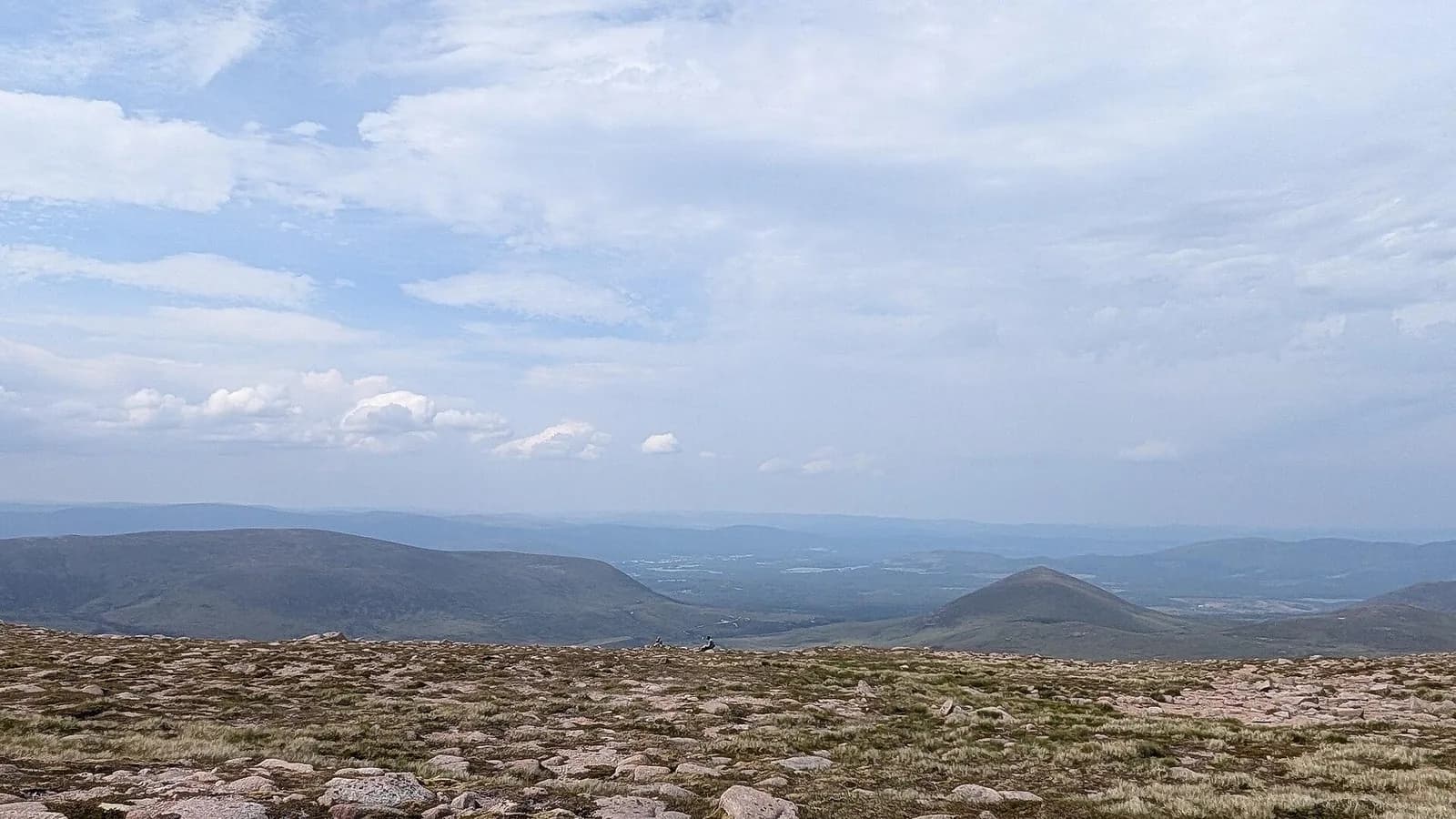
The Cairngorms give you three very different ways to spend a night: a pitch at a managed campsite among the old pines near Aviemore, a lightweight wild camp carried in on your back, or a night in a self-contained campervan. Scotland's access rights make wild camping legal across most of the park, but 2026 brought two changes every camper here needs to know about: a seasonal fire byelaw, in force for the first time from April, and the July 2026 wildfire around Glenmore, which kept the area closed for weeks.
Which overnight suits your trip?
| Plan | Best for | What you organise |
|---|---|---|
| Managed campsite | A base for several day walks, a larger tent, family trips, showers and toilets | Book a pitch that suits your tent or vehicle; check arrival times |
| Lightweight wild camp | A small group carrying everything on a walk, cycle or paddle | A responsible pitch, water, toilet kit and taking all waste out |
| Campervan stop | A self-contained vehicle | An authorised overnight place and the next waste service point |
The National Park Authority treats these as separate arrangements with their own guidance (camping and campervans). Group size, kit and facilities matter more than how remote a place looks.
The fire byelaw
The Cairngorms fire byelaw came into force for the first time on 1 April 2026. From 1 April to 30 September every year, fires and barbecues are banned across the national park. That includes mesh or metal fire pits, fire bowls, and wood- or charcoal-burning stoves. Most camping stoves remain allowed: those running on gas, liquid fuel, methylated spirits or solid fuel blocks, as well as gas barbecues (fire byelaw).
There are a few exemptions: registered campsites (which set their own rules), private gardens including short-term lets, land where the owner has given written permission, and the stove or fireplace inside a bothy. Breaking the byelaw can mean a fine of up to £500.
Outside the byelaw season, the Scottish Outdoor Access Code still asks you not to light open fires, fire bowls or barbecues during high fire risk or near forests, farmland, peaty ground or buildings (access code). In practice a gas stove is the right choice all year. Place it on a level, non-flammable surface away from dry grass and from the tent.
Glenmore after the July 2026 wildfire
A large wildfire broke out near Ryvoan Bothy, above Glenmore and Loch Morlich, on 15 July 2026. Homes and businesses in Glenmore Forest Park were evacuated as a precaution and people were asked to avoid the area (Highland Council). The Glenmore corridor reopened in early August (National Park Authority update), and most paths have followed. According to Forestry and Land Scotland's update of 5 October 2026 (Glenmore visitor information):
- The Ryvoan Trail, including An Lochan Uaine (the Green Lochan), is open again.
- The full Meall a' Bhuachaille circuit is open.
- The right of way to Nethy Bridge remains closed beyond Ryvoan Bothy while safety work continues, and one burned area is still closed.
- Between the Ryvoan Trail and the ski road, stay on forest roads and waymarked trails, particularly in windy weather, because of the risk from damaged trees.
Timber harvesting near Badaguish can also divert routes. The visitor centre car park has been run by the Aviemore and Glenmore Community Trust since November 2024, so Forestry and Land Scotland parking passes are not valid there.
Two managed campsites near Aviemore
Glenmore Campsite sits among the pines of Glenmore Forest Park with direct access to the beaches of Loch Morlich, at about 300 m above sea level. It has 206 pitches for tents, roof-top tents, campervans, motorhomes and touring caravans, on open sandy clearings or among the trees (Glenmore Campsite). Facilities include toilets, showers, drinking-water taps, dishwashing, laundry and chemical waste disposal, and dogs are welcome. The main gate is locked from 22:00 to 07:00, with no vehicle movement, so plan a late arrival accordingly (facilities). Two things to know when booking: the "grass with electric" tent pitches are actually on sand, and part of the site closes in winter.
Rothiemurchus Camp & Caravan is at Coylumbridge, in Caledonian pine forest near Loch an Eilein, with walking and cycling trails from the site. It has a heated building with toilets, showers and dishwashing, plus a launderette. You book by email or phone rather than online, because every pitch is different and the staff need your tent size and party. Dogs and electric hook-ups are not available in the tent area, and the whole site bans campfires, barbecues and any wood-burning stove. It closes every November (Rothiemurchus).
Choose Glenmore for the beach and a tent pitch with your dog; Rothiemurchus for a woodland pitch in a dog-free tent area with a heated amenity block.
A lightweight wild camp
The Scottish Outdoor Access Code covers lightweight camping in small numbers, for no more than two or three nights in one place. Camp well away from buildings and roads and avoid enclosed fields of crops or farm animals (access code). If your spot is busy, the park asks you to move to a quieter one (wild camping in the Cairngorms).
Plan the evening as carefully as the walk:
- Water. Know where you will collect it and carry a filter or a way to treat it.
- Toilet. Go at least 30 m from lochs, rivers and burns. Bury solid waste in a shallow hole and replace the turf, or bag it and carry it out. Bag up toilet paper and sanitary items and take them away.
- Kit. The park suggests a gas stove and a toilet kit: trowel, bags, toilet paper and hand sanitiser.
- Leave no trace. Take all litter and food scraps home and remove every sign of your pitch.
If you need more gear than you can carry, or a flushing toilet nearby, a campsite will make for a better trip.
Campervans and motorhomes
Access rights do not cover vehicles. The Scottish Outdoor Access Code does not apply to using or parking campervans, roof tents or motorhomes. Formal roadside laybys may be used for overnight parking, but camping outside the vehicle is not allowed there; woodland car parks, tracks, old roads and pull-offs need the landowner's permission (campervans and motorhomes). The park's interactive map shows aire-style overnight parking, which usually has no facilities and suits self-contained vehicles, along with waste service points for grey and chemical waste, most with fresh water. Pay where a site asks.
Before setting off, check the Forestry and Land Scotland Glenmore page for the latest closures. Pages were checked on 8 October 2026.
Sources & further reading
- Wildfire management and the fire byelaw - Cairngorms National Park Authority
- Camping and campervans - Cairngorms National Park Authority
- Wild camping - Cairngorms National Park Authority
- Campervans and motorhomes - Cairngorms National Park Authority
- Camping - Scottish Outdoor Access Code
- Glenmore visitor information - Forestry and Land Scotland
- Glenmore and Strath Nethy wildfire update, 5 August - Cairngorms National Park Authority
- SFRS fire in the open, Ryvoan Bothy near Nethy Bridge - The Highland Council
- Glenmore Campsite - Glenmore Campsite
- Glenmore Campsite facilities - Glenmore Campsite
- Rothiemurchus Camp and Caravan - Rothiemurchus
Tags
- Cairngorms
- camping
- wild camping
- fire byelaw
- Glenmore
- campervans