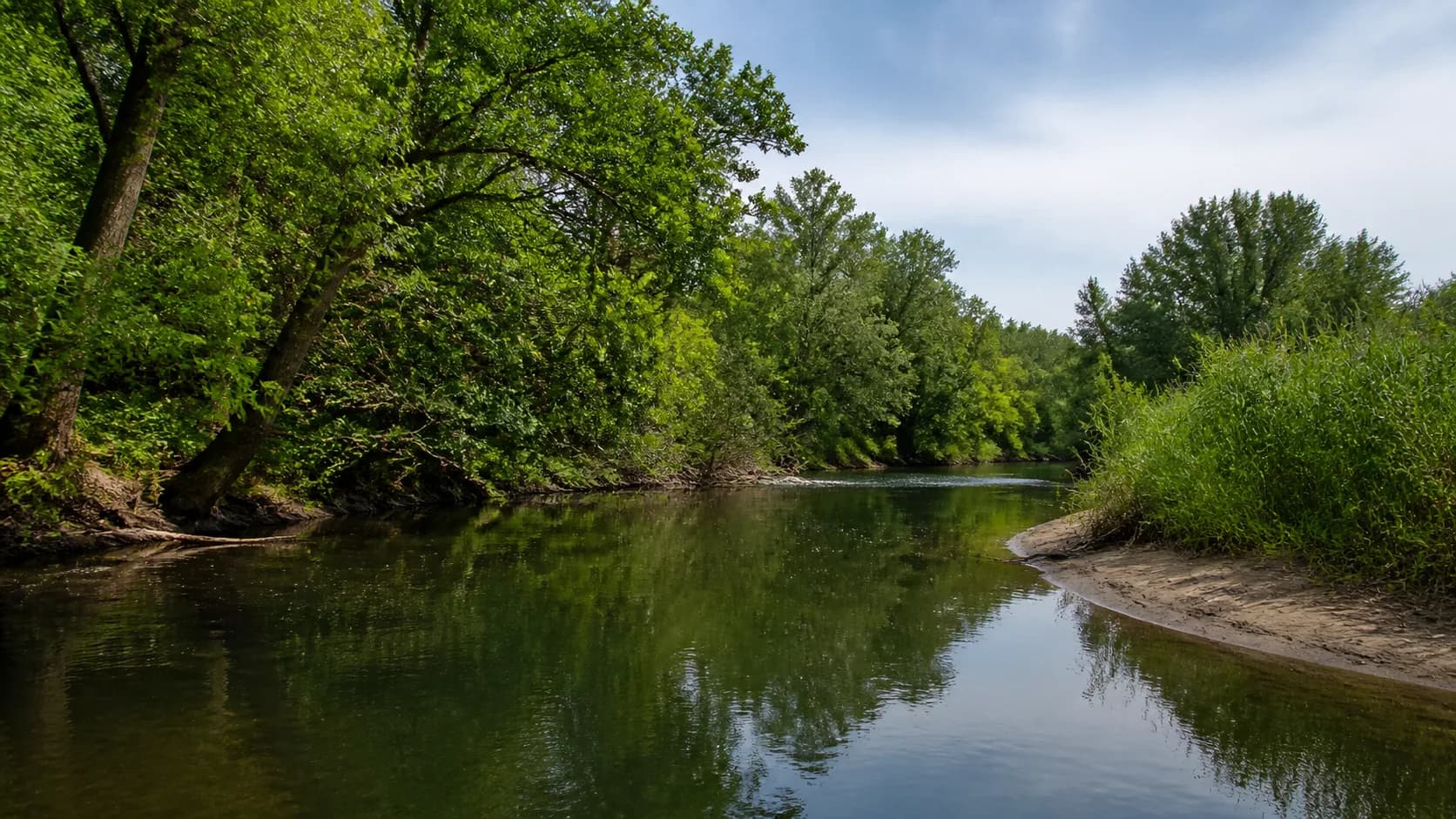
Kamchia is a river and wetland visit, not a blank patch of shade beside the coast. Floodplain forest, sand, reeds and the water itself can be sensitive to trampling and waste. Choose a public picnic area or managed visitor route, then keep the meal small enough that you can carry every item back out.
Start with a legal stopping place
Plan around a named access point, not a screenshot of a river bend. Confirm parking, opening arrangements, boat access and any seasonal notice before the drive. Keep emergency access and village roads clear. If you arrive and the surface is flooded, the bank is unstable or the site is crowded beyond its safe capacity, use the visit as a short walk or leave for another public place.
The river changes the route. A dry sandbar can be covered after rain, and a path beside the water can become slippery or undercut. Keep children and dogs away from fast water, steep banks and unknown channels. Do not use a small boat, swimming spot or crossing simply because another visitor did it earlier.
Keep food away from wildlife
Do not feed birds, turtles, fish or mammals. Food scraps change animal behaviour and leave a mess that someone else has to manage. Pack fruit peel, bones, bread, coffee grounds and used napkins as carefully as plastic. A bin that is full or missing is a reason to carry the bag home, not to leave it beside the trunk.
Avoid disposable charcoal and open fires unless the exact place and current rules allow them. Dry vegetation, wind and hot ash are a poor combination. A cold meal is easier to control and produces less waste. If you use a stove, keep it stable, away from dry material and within the rules of the site. Never pour oil, soap or leftover food into the river or onto the soil.
Stay on durable surfaces
The longoz is not a collection of shortcuts. Keep to an established route, boardwalk or public clearing. Do not walk into reeds to improve a photograph, cut across young vegetation or move deadwood to make a seat. Repeated small detours create a path that invites the next group to go farther.
Keep music and voices low. Avoid playback calls and drones around water and forest edges. If birds repeatedly alarm, stop feeding, or leave an area after the group arrives, increase distance or move back to the established route. A quiet picnic is a better use of the place than a close wildlife photograph.
Separate a picnic from a cleanup
Picking up a few safe wrappers from the public surface can be reasonable if you have gloves and a secure bag. Do not enter water, reeds or unstable banks to retrieve waste. Leave sharps, chemicals, dead animals and tangled fishing line in place and report them. A group cleanup needs the land manager, a collection plan and a safe boundary before anyone recruits volunteers.
Use Garbamons' mapped sights for a dated note about the route, shade, bank condition, facilities and signs. Use a cleanup pin for a larger problem, with the access point and a photo from a safe distance. Do not mark a protected habitat as a free-for-all cleanup zone.
Leave before the return becomes rushed. Take a final look for bottle caps, food fragments and tissues, then check that the bag is closed. A useful Kamchia report says where the public access was, when it was checked and what visitors should verify next.
Explore Kamchia river placesSources & further reading
- The Ministry of Environment and Water declared protected zone Kamchiya — Ministry of Environment and Water of Bulgaria
- Reserves and maintained reserves — Ministry of Environment and Water of Bulgaria
- General information about protected areas — Ministry of Environment and Water of Bulgaria
Access, prices and opening times change. Verify locally before you travel.
Tags
- Kamchia
- longoz forest
- picnic planning
- Bulgaria
Background reading
Links to reference material and organisations we don't control.
- ReferencePicnicWikipedia
- OrganisationThe seven Leave No Trace principlesLeave No Trace