Choose a low-impact riverside campsite in the US
Check legal access, flood exposure, durable ground, water distance, toilets, food storage and cleanup limits before camping near a river.
Recently verified — 3 August 2026
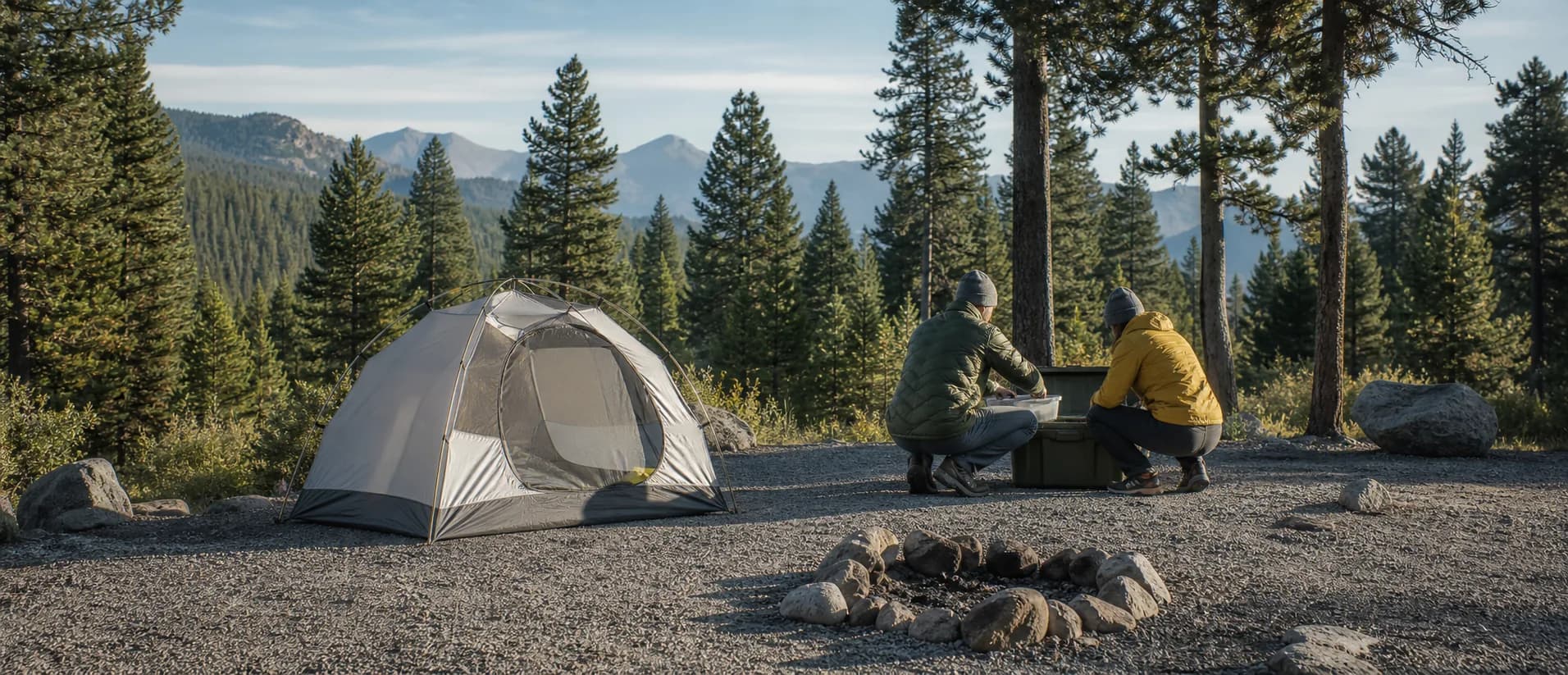
A riverside campsite can be scenic and convenient, but water level, bank stability, wildlife and sanitation change the decision. Choose an established legal site set back from the river according to the land manager's rule, and treat the water edge as a place to observe rather than a private utility room.
Confirm access and flood exposure
Check the land unit, permit, stay limit, road condition and flood forecast. Do not camp on a gravel bar, island, low bench, debris fan or channel simply because it is dry at arrival. Water can rise after rain upstream. Ask the manager where the safe high-ground boundary is.
Keep vehicles on designated surfaces and never cross a closed ford. A campsite near a river may have separate boat-launch, fishing, swimming and fire rules. Follow the most specific current notice.
Protect the bank and water
Use the established path to collect water, and treat it according to current guidance. Do not wash dishes, soap, sunscreen or clothes in the river. Strain and dispose of wastewater where the manager permits, pack out food scraps and keep human waste in the required system.
Do not move rocks, cut willows, build a fire ring or remove stable woody habitat. Keep tents and chairs off fragile vegetation. Store food, trash and toiletries in the wildlife-resistant system required for the site.
Plan a small cleanup boundary
Carry out ordinary reachable litter only from stable ground. Stop at fishing line under tension, sharps, chemicals, sewage, dead animals and debris in the current. Photograph and report those items. Do not enter the river or pull a bank pile that could collapse.
Add the legal riverside campsite with water, toilet and flood notes. Map a safe cleanup need with a weather and water warning, and publish a dated river condition report instead of a permanent safety claim.
Before departure, look uphill and downstream, not only at the tent pad. Remove every food crumb and piece of cord, confirm the fire is cold and leave the bank with no new path or improvised structure.
Sources & further reading
- Flood safety — National Weather Service
- Dispersed camping — US Forest Service
Access, prices and opening times change. Verify locally before you travel.
Tags
- riverside camping
- flood safety
- campsites
- Leave No Trace
Further reading
Links to reference material and organisations we don't control.
- ReferenceCampsiteWikipedia
- ReferenceWild campingWikipedia
- OrganisationThe seven Leave No Trace principlesLeave No Trace