Get permission for a rural roadside litter cleanup
Plan a roadside cleanup with the road owner, traffic controls, volunteer limits, hazard exclusions and a disposal route confirmed in writing.
Recently verified — 3 August 2026
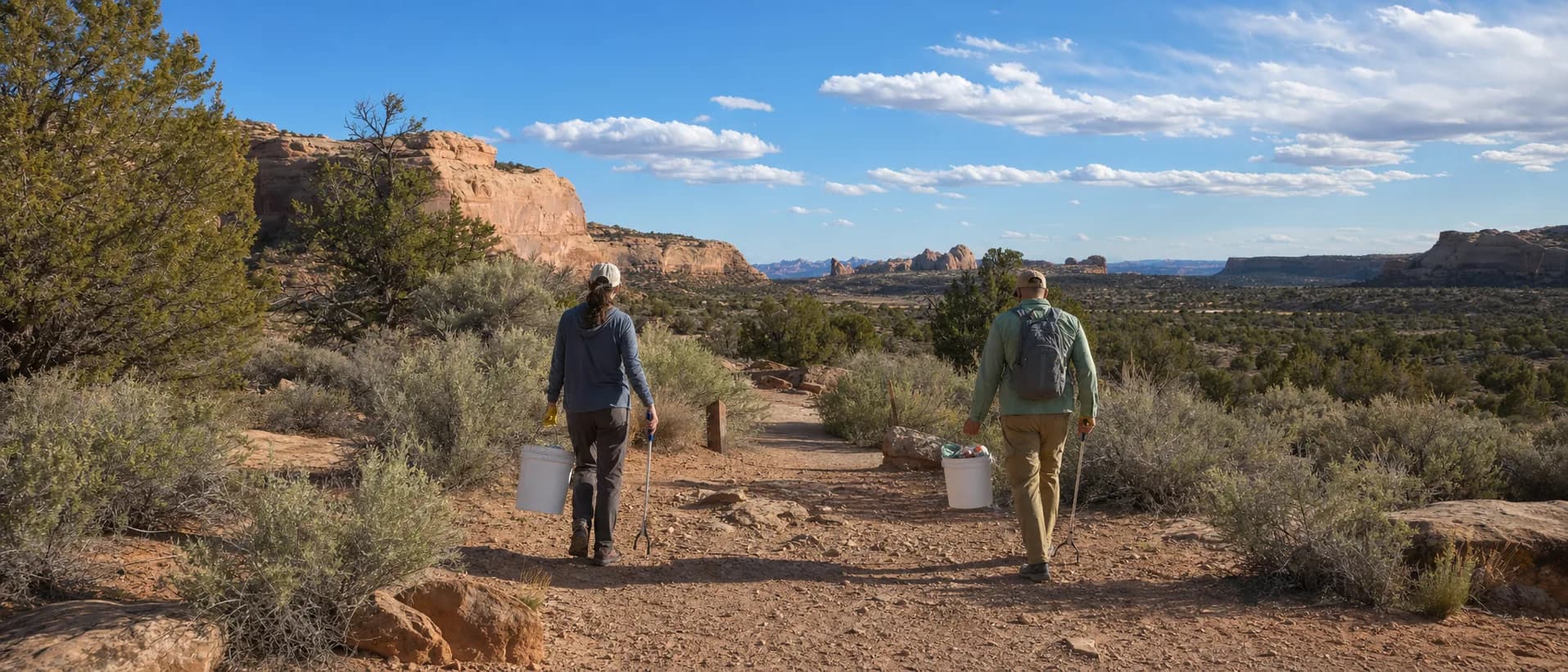
Roadside litter is visible from a car but not automatically safe to collect. The road owner may need a traffic plan, permit, warning signs, trained spotters, insurance, age limits and a specific disposal route. If those pieces are missing, move the project to a park, trailhead or service area with a safer work boundary.
Identify the road owner
Use the state, county, municipal or federal transportation page to learn who controls the segment. A scenic byway, bridge, rest area and private access road can have different rules. Ask whether volunteers may park, walk, stage bags and photograph. Get the response in writing and keep the contact available on the day.
Never assume a “no littering” sign grants cleanup permission. It may prohibit stopping or entering the shoulder. Do not include a highway, ramp or blind curve in a public event listing until the agency has approved the exact boundary.
Build the safety plan first
Use a trained traffic-control provider when required. Keep volunteers behind a visible barrier and out of the travel lane, drainage ditch and steep slope. Assign a leader, a traffic contact and a waste handoff person. Provide high-visibility clothing only as part of the approved plan; a vest does not make an unsafe shoulder safe.
Limit the task to ordinary dry litter that can be picked with grabbers. Stop at sharps, liquids, pressurized containers, animal remains, unknown drums, tires too heavy to lift and debris tangled in a guardrail. Report those items rather than improvising.
Confirm disposal before advertising
Ask who supplies bags, where full bags wait, what the landfill or transfer station accepts and when the collector arrives. Never leave bags on a public shoulder overnight. Separate items only if the receiving facility instructs you to do so, and keep evidence from suspected dumping private.
Publish the approved roadside cleanup with a clear exclusion list. Map recurring safe litter from a public access point, and use fixed-view photographs that do not show private vehicles or participants without consent.
At close, count bags before the crew leaves and verify the collector's handoff. A smaller, fully controlled project is more responsible than a large event that makes volunteers, drivers or downstream workers manage an unexpected hazard.
Sources & further reading
- Work zone safety — Federal Highway Administration
- Volunteers in parks — National Park Service
Access, prices and opening times change. Verify locally before you travel.
Tags
- roadside cleanup
- permission
- traffic safety
- volunteers
Beyond this page
Links to reference material and organisations we don't control.
- OrganisationWorld Cleanup DayLet's Do It World
- OrganisationInternational Coastal CleanupOcean Conservancy
- OrganisationLet's Do It WorldLet's Do It World
- VideoSurfrider Foundation on YouTubeYouTube