Tool safety for a US trail cleanup
Match gloves, grabbers, bags, sharps containers, footwear and volunteer roles to trail-cleanup risks before collecting ordinary litter.
Recently verified — 3 August 2026
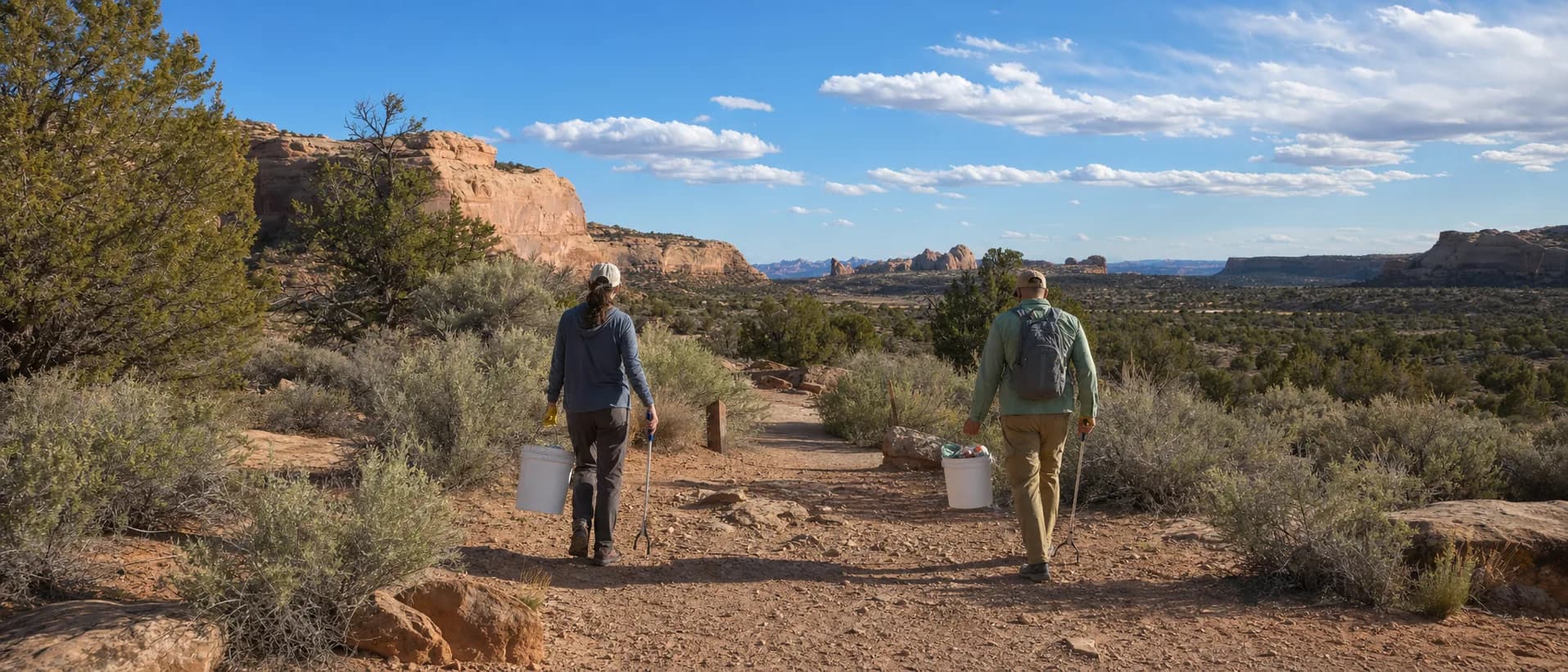
A trail cleanup succeeds when volunteers know what not to pick up. Ordinary paper, cans and food wrappers may be suitable for a supervised collection, while needles, ammunition, chemicals, unknown powders, human waste, dead animals and pressurized containers need professional handling. The tool list should follow the risk assessment, not the other way around.
Get permission and define the work zone
Contact the land manager before advertising a cleanup. Ask about access, permits, sensitive habitat, seasonal closures, disposal, emergency communication and the items volunteers must leave in place. The manager may provide a standard safety briefing or require a partner organization.
Divide the trail into small work zones with a start and finish marker that does not damage vegetation. Keep one person responsible for the boundary and one for the waste handoff. Do not allow volunteers to spread into steep slopes, water, caves, wildlife closures or road edges simply because litter is visible there.
Bring simple tools for safe material
Use long-handled grabbers, puncture-resistant bags inside a rigid outer container, sturdy closed-toe footwear, work gloves and eye protection where the manager recommends it. Carry drinking water, first-aid supplies, hand cleaning, weather layers and a communication method. Do not overload a bag until it tears; a lighter bag is safer on a narrow trail.
Place glass, metal edges and unknown containers into the designated rigid system only if the responsible agency has approved that handling. Never compact bags with a foot or hand. Keep food, water bottles and phones separate from collected waste. Children should have a clearly limited role away from sharp or unknown material.
Stop when the material changes
Pause for anything that can puncture, leak, burn, explode, infect or identify a crime. Photograph from a safe distance, note the location and contact the manager or emergency service. Do not open a can, move a propane cylinder, retrieve ammunition, disturb a dead animal or dismantle a makeshift dump.
Publish an approved trail cleanup with the work boundary and exclusions. Add before-and-after views from fixed safe positions, and record recurring litter when a manager can reach it. Report participant numbers and bag categories without posting personal details.
At the close, count bags, secure them in the agreed staging area and confirm the collector actually took them. Wash tools and hands at an appropriate facility. The safest cleanup is one that leaves both the trail and the volunteer team in better condition than it found them.
Sources & further reading
- Volunteers in parks — National Park Service
- Selecting gloves and protective equipment — Centers for Disease Control and Prevention
Access, prices and opening times change. Verify locally before you travel.
Tags
- trail cleanups
- volunteer safety
- tools
- waste handling
Beyond this page
Links to reference material and organisations we don't control.
- OrganisationWorld Cleanup DayLet's Do It World
- OrganisationInternational Coastal CleanupOcean Conservancy
- OrganisationLet's Do It WorldLet's Do It World
- VideoSurfrider Foundation on YouTubeYouTube