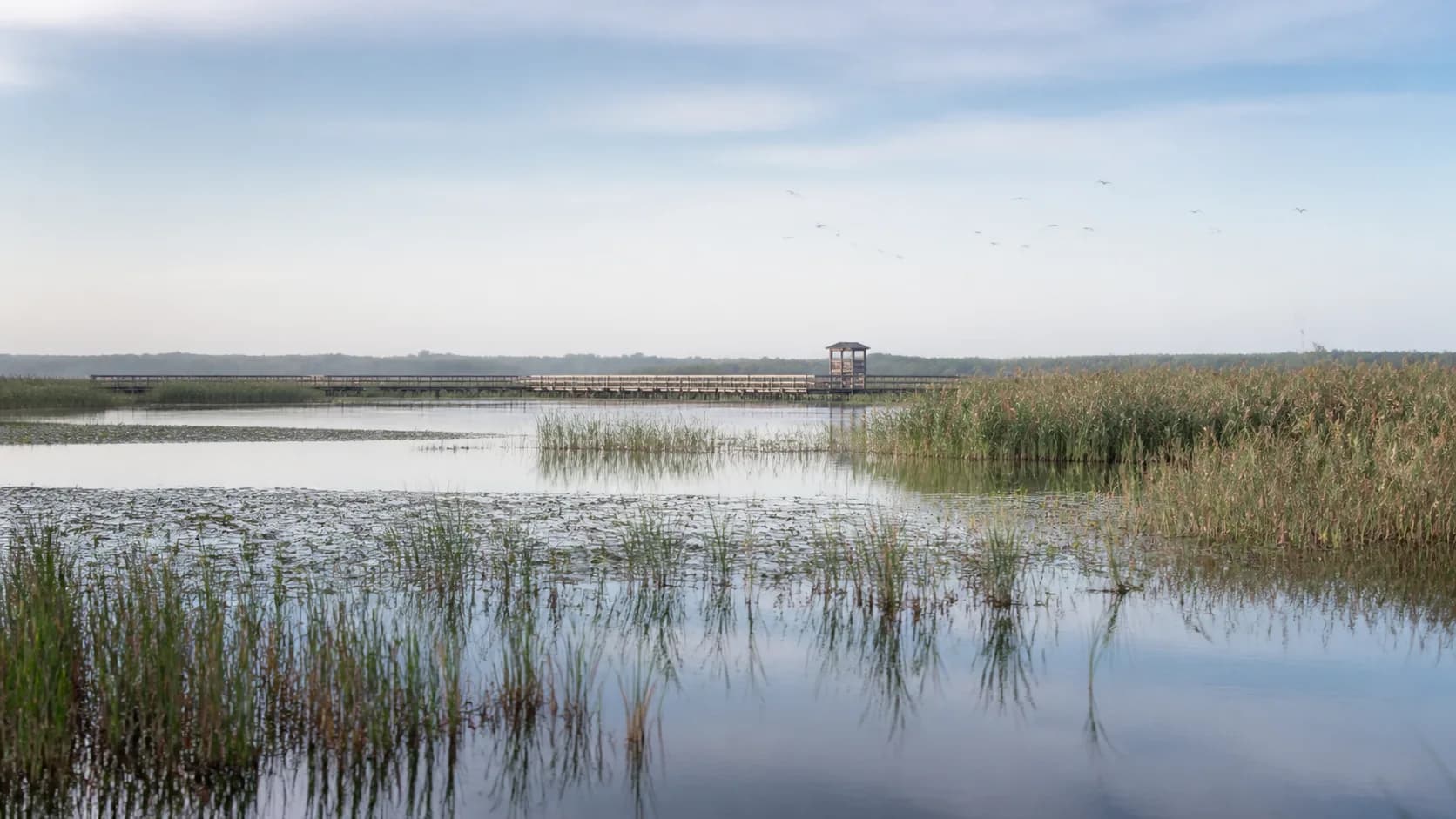
Srebarna is a protected wetland and a changing bird habitat, not a studio with a fixed list of subjects. Use the public visitor route, hide or platform that is open on the day, then let the distance and the birds decide the photograph. Water level, heat, migration and breeding activity can change what you see between visits.
Verify the public route
Check the reserve's current opening arrangements, visitor facilities and any seasonal restriction before travelling. A map line to the lake does not prove that the bank is open. Confirm the route, parking and museum or interpretation hours separately. Carry water, sun protection, insect protection and binoculars. Morning may be cooler, but it does not remove the need to follow the day's access rules.
Keep the plan flexible. A hide can be closed, a boardwalk can be wet, and a low or high waterline can change the view. If the route is inaccessible, use an official interpretation point or make the Silistra stop the main part of the day. Do not search for an unofficial entrance because the planned photograph is no longer available.
Keep the distance measurable
Start at the permitted viewpoint and watch the birds before raising the camera. If a flock keeps feeding while you remain still, that distance may be workable. If behaviour changes, back away until it returns to normal. Do not walk around a group to push it into flight or hide behind a vehicle while edging closer each time the birds relax.
Long lenses do not make disturbance harmless. A tightly cropped image can hide how close the photographer stood. Keep the full context in your field notes. Record the public facility, approximate direction, time and weather rather than publishing an exact nest or roost location. Send sensitive information privately to the responsible conservation body when there is a clear conservation reason.
Avoid drones, flash, food and recorded calls. They can interrupt feeding or pull birds away from a safe roost. Keep tripods and stools out of the walking line. Do not enter mud or shallow water to recover a dropped lens cap. The equipment is replaceable; the wetland edge is not.
Make a useful condition report
Write what you observed, not what another visitor promised. "Boardwalk open at 07:15, hide occupied, waterline below the lower marker and strong heat by 10:00" helps the next person prepare. "Best place for birds" does not. Note whether the observation came from an official platform, a public road or a museum area.
If you find fishing line, broken boards or unsafe waste, keep your distance and report it. Do not organise a cleanup inside reeds or nesting habitat without the manager. On Garbamons' mapped sights, share the public access point and dated condition. Leave rare species and vulnerable wildlife at a broad scale.
Pack every wrapper, tissue and food scrap out. Keep food closed and do not feed wildlife at the hide or car park. The best Srebarna photograph may be distant, but the best field note is specific enough to tell the next visitor where the public route ended.
Explore Srebarna visitor placesSources & further reading
- Srebarna Nature Reserve — UNESCO World Heritage Centre
- Register of protected areas in Bulgaria — Bulgarian Executive Environment Agency
Access, prices and opening times change. Verify locally before you travel.
Tags
- Srebarna
- bird photography
- wetlands
- Bulgaria
Background reading
Links to reference material and organisations we don't control.
- ReferenceGolden hourWikipedia
- ReferenceBlue hourWikipedia
- OrganisationDarkSky InternationalDarkSky International