Plan an accessible trail cleanup in the United States
Make a volunteer cleanup more inclusive with route information, task choices, rest points, waste limits, transport planning and honest access notes.
Recently verified — 3 August 2026
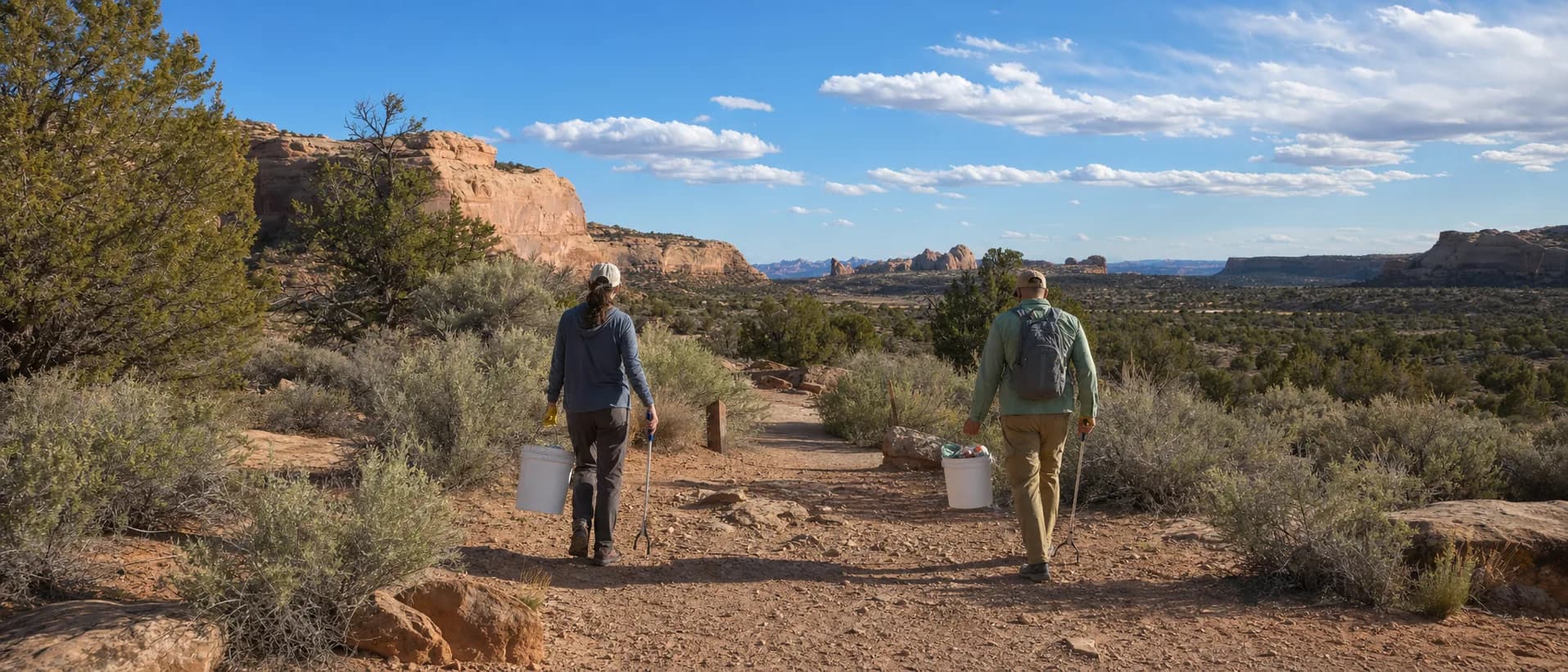
An accessible cleanup is not created by calling a site “easy.” Participants need specific information about the surface, slope, width, parking, toilets, shade, distance, communication and the work itself. A useful plan offers several roles so that collecting litter is not the only way to contribute.
Describe the route precisely
Ask the land manager for current access information and inspect the route from the legal entrance. Record firm or loose surfaces, cross-slope, gates, narrow points, rest areas, shade and weather exposure. Include the route to the toilet and the waste staging point. A route can be accessible for a mobility device while the chosen litter zone is not, so describe them separately.
Do not promise that a path is accessible from a photograph. State the date, conditions and any feature that needs confirmation. Provide an alternative meeting point or a remote data role when the trail is not suitable for every participant.
Offer different roles
Possible roles include welcome and check-in, fixed-zone observation, tallying, photography, public education, sorting safe dry material, route communication and data entry after the event. Keep sharp, heavy, contaminated or roadside material out of general volunteer tasks. Ask participants what information they need without requiring them to disclose medical details publicly.
Plan short work periods, rest breaks and a no-pressure stop rule. Use clear verbal and visual instructions, a buddy system by consent and a weather plan. Make sure water, shade, accessible parking and an emergency contact are known before the start.
Make waste handling inclusive and safe
Bring grabbers with different lengths, containers that do not require lifting overhead and bags that can be closed without twisting. Keep the staging area on firm ground. A participant who cannot lift a full bag can still tag a zone, record categories or direct a handoff. Do not ask volunteers to handle unknown objects because staffing is limited.
Publish the cleanup with honest access details, then use a consent-based event gallery that does not identify participants without permission. Map the cleanup boundary rather than a private meeting address when public access is limited.
Afterward, ask what information was missing and update the report. Accessibility is a condition report, not a permanent label; weather, construction, vegetation and facilities can change. The goal is a volunteer opportunity that lets more people contribute safely and predictably.
Sources & further reading
- Accessibility in national parks — National Park Service
- Volunteers in parks — National Park Service
Access, prices and opening times change. Verify locally before you travel.
Tags
- accessibility
- volunteering
- trail stewardship
- inclusion
Elsewhere on the web
Links to reference material and organisations we don't control.
- ReferenceVolunteeringWikipedia
- OrganisationLet's Do It WorldLet's Do It World
- VideoSurfrider Foundation on YouTubeYouTube