Late-summer volunteer cleanups in Bulgaria — a heat-safe plan for August 2026
Organise a useful Bulgarian cleanup in August with a cool work window, clear no-touch boundaries, first-aid planning and confirmed waste handoff.
Recently verified — 12 August 2026
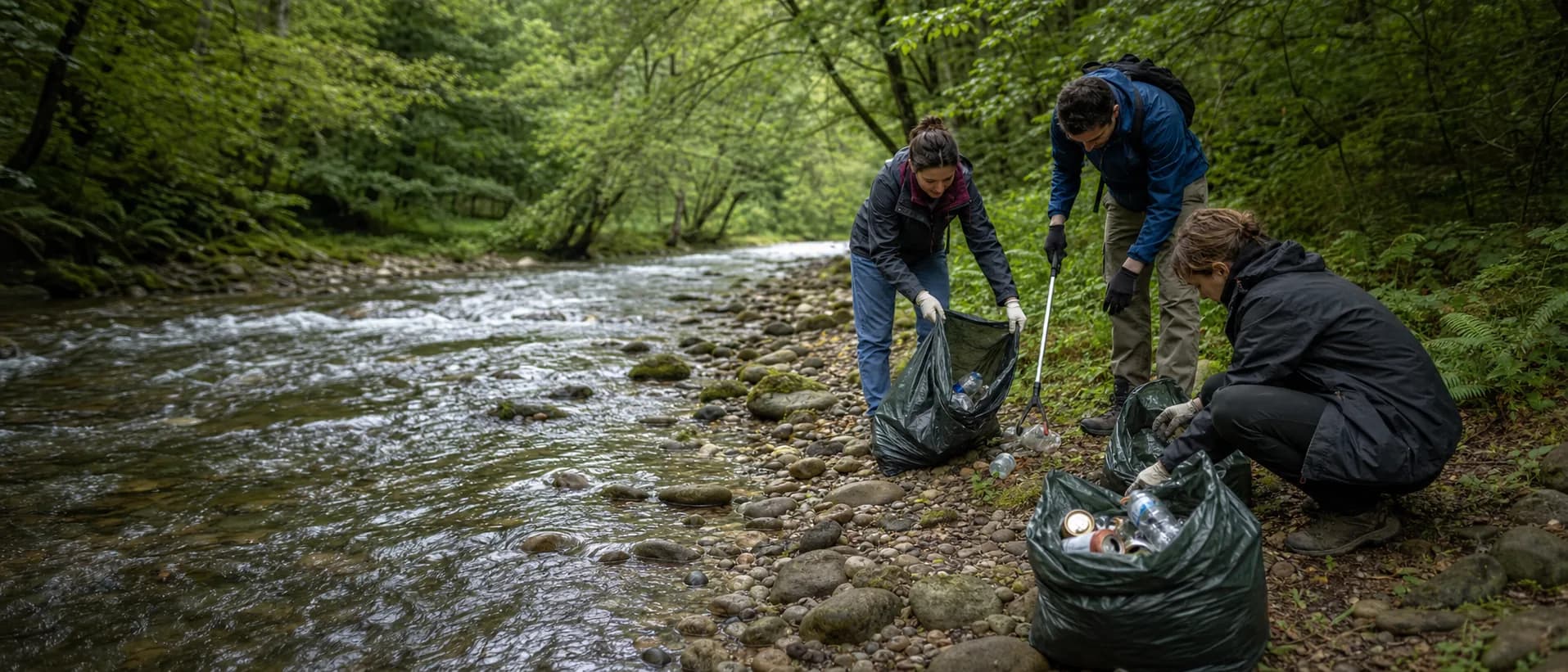
A volunteer cleanup in the second half of August should be short, early and easy to stop. The useful outcome is not the largest possible pile; it is a safe section cleared by a prepared team, with ordinary material separated from hazards and a confirmed way for the accepted waste to leave. If the only workable time is the hottest part of the day, postpone or shrink the task.
This is a planning guide for a lawful, manager-aware cleanup in Bulgaria. It is not permission to enter a riverbed, work beside a road, remove unknown waste or promise that a municipality will collect bags. Confirm the land manager, access, weather, group responsibilities and waste handoff before inviting people.
Choose the work window before the location
Start with the forecast and warning level for the exact municipality. In mid-August, an early morning window usually gives more shade and a cooler surface, but it does not cancel the need for water, breaks or a cancellation rule. Check again the evening before and on the morning of the event. Thunderstorms, high winds, extreme heat, smoke, flood risk or unsafe air are reasons to cancel or move the activity to a safer urban site.
Choose a boundary away from moving traffic, unstable banks and flowing water. A pretty riverside is not automatically a safe volunteer site. Do not send people into reeds, culverts, steep slopes, private land, active construction or a fire-risk area because those places look dirty from the road. If the problem is in a riverbed or ravine, ask the responsible authority or manager how it should be inspected and handled; the Ministry of Environment has recently highlighted the flood and re-pollution risks around such areas.
Make heat management visible
Tell volunteers the start and stop time, the shaded meeting point, the nearest accessible exit and the name of the person who can cancel the event. Ask people to arrive fed, rested and ready to say they are unwell. Light, loose clothing, a hat, closed shoes, sunscreen, work gloves and a spare layer are more useful than heavy matching equipment. Near any road, follow the organiser’s traffic plan and use high-visibility clothing where appropriate.
Set a buddy system. Each pair checks on the other person’s balance, speech, colour, energy and willingness to continue. Schedule breaks before anybody asks for one, move out of direct sun and do not treat thirst as the only signal. Bring personal drinking water and a group reserve; do not assume a nearby tap is working or potable. Avoid alcohol during the work period.
The Ministry of Health and Bulgarian Red Cross guidance both emphasise shade, light clothing and fluids in hot weather. For a cleanup, translate that into an operational rule: shorter shifts, smaller bags and permission to stop. No volunteer owes the organiser a full bag.
Give people a clear no-touch boundary
At the briefing, show examples of ordinary litter that can be handled and material that must stay in place. Volunteers should not touch needles, ammunition, gas cylinders, sealed or leaking containers, asbestos-looking sheets, chemicals, animal remains, large dumped appliances, unstable debris or anything that may contain bodily fluids. Do not open a bag to identify it. Keep children and untrained volunteers out of a hazard zone.
Use a grabber where it helps, wear intact gloves and keep hands away from the face. Do not climb into water, lift heavy objects as a team without suitable equipment or use a vehicle you have not been authorised to operate. Photograph an exclusion from a safe distance, note the location and report it through the land manager, municipality or emergency route appropriate to the risk.
Separate only what the confirmed receiver has agreed to accept. A pile that looks recyclable is not “recycled” because it went into a coloured bag. Keep sharp or unknown material out of ordinary bags and never mix chemicals with household waste.
Confirm the handoff before the invitation
Write down who accepts the bags, what types and quantities they will take, where the bags may be placed, the collection time and what happens if the plan changes. Ask whether transport is provided and whether the receiver needs a different sorting system. If you have no confirmation, reduce the event to a carry-out activity for each volunteer’s own small load, or postpone it.
Do not stack bags beside a road, stream, park gate or random public bin. That creates a second waste problem and can attract animals or block access. Keep a tally of approximate bags, bulky items and no-touch referrals. A municipality or operator may use different categories, so describe what was actually accepted rather than applying a familiar colour code from another campaign.
Keep the event useful after the last pair leaves
Take a final slow walk through the agreed boundary. Check for small plastic pieces, straps, glass and food, but do not extend the event into an unbriefed zone. Record the date, work window, number of people, approximate effort, ordinary waste removed, hazards referred and the confirmed destination. Do not publish faces, licence plates or sensitive locations without permission.
If the site needs a follow-up, map the cleanup location in Garbamons with what remains, safe access and exclusions. If a new event is approved, publish it in Garbamons only after the boundary, organiser, cancellation rule and waste handoff are clear. A public listing should help people arrive prepared, not create a crowd at an unsafe bank.
Know when first aid becomes an emergency
For confusion, loss of consciousness, severe weakness, breathing trouble, major bleeding or another life-threatening condition, call 112 and give the exact access point. Move the group away from traffic, water and heat while one person meets responders. Do not give an unconscious person food or drink, and do not send a volunteer away alone with someone who is deteriorating. Use your organisation’s trained first-aid procedure and record the incident privately.
After the event, wash hands, inspect gloves and shoes, and separate contaminated equipment from clean supplies. Thank people with an honest result: “one safe boundary completed; two hazards referred; pickup confirmed” is more valuable than a photograph that implies the whole riverbank is clean.
The most responsible August cleanup may be a 60-minute morning with fewer bags, a clear no-touch list and a real receiver. That is enough to protect volunteers, reduce litter and make the next action easier to organise.
Sources & further reading
- Dangerous weather by municipality — National Institute of Meteorology and Hydrology
- Heat and sunstroke — Ministry of Health
- Advice for hot days — Bulgarian Red Cross
- Preventive action for waste pollution in riverbeds and ravines — Ministry of Environment and Water
Access, prices and opening times change. Verify locally before you travel.
Tags
- volunteer cleanup
- heat safety
- waste handoff
- community action
- Bulgaria
Beyond this page
Links to reference material and organisations we don't control.
- ReferenceVolunteeringWikipedia
- OrganisationLet's Do It WorldLet's Do It World
- VideoSurfrider Foundation on YouTubeYouTube