Write a useful impact report after a US cleanup trip
Report volunteer hours, boundaries, material, hazards, disposal, access and lessons without overstating what one cleanup proves.
Recently verified — 3 August 2026
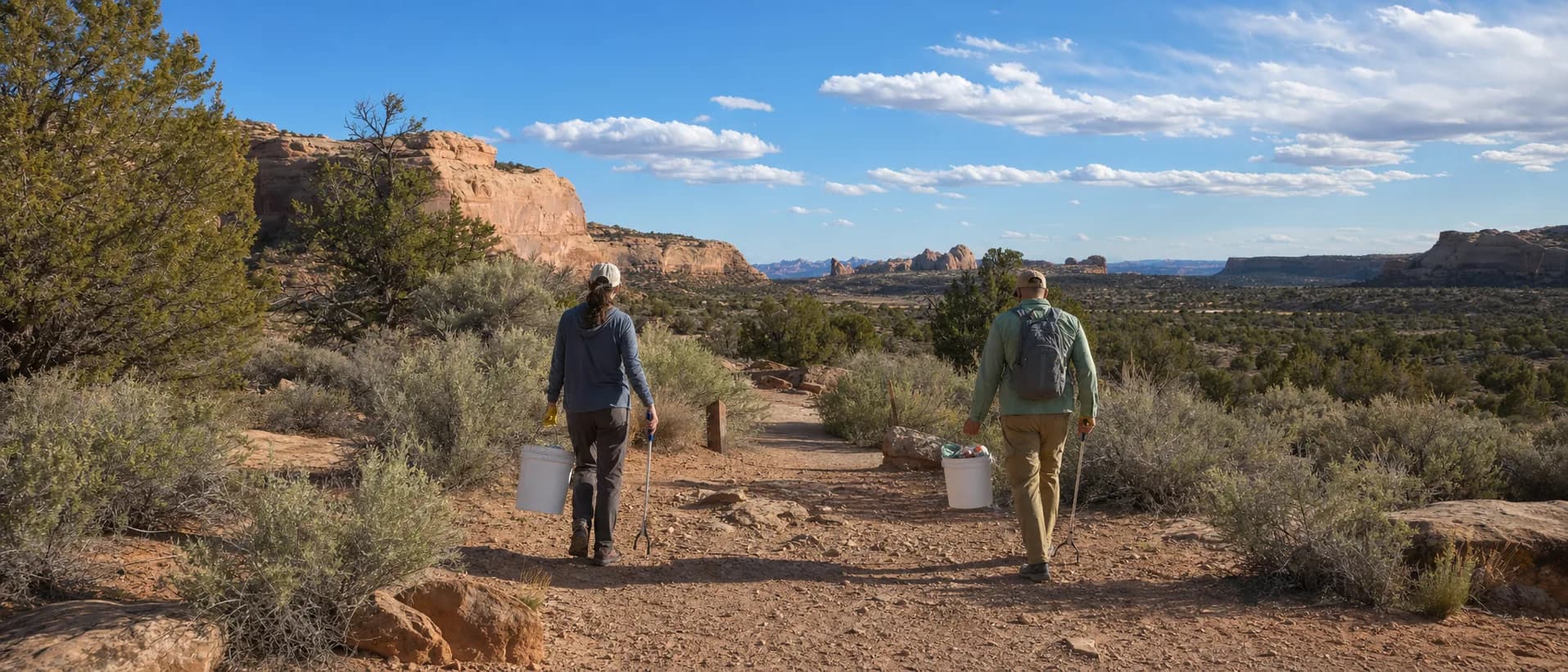
An impact report should let the land manager understand what happened without turning one successful day into a claim that the whole area is clean. Record the boundary, date, people, work time, material, exclusions, disposal and next action. Keep personal details and uncertain conclusions out of the public version.
Define the work precisely
Name the site, access point and segment. Record weather, tide or recent rain when they affect what was visible. State whether the area was open and who gave permission. If volunteers worked in several zones, list them separately rather than adding a vague total.
Count people and hours using a consistent rule. Note accessibility, tools and whether the work was observation, removal, education or restoration. A short supervised survey and a heavy debris operation should not be compared by bag count alone.
Separate safe work from exclusions
List ordinary categories such as bottles, food packaging, fishing line, glass and bulky items. Then list material left in place: chemicals, sharps, human waste, dead animals, contaminated flood debris, cultural objects or material too heavy for the team. An exclusion is a safety result, not a failure.
Record the bag estimate or weight and the confirmed receiving facility. Do not say “recycled” unless the receiving program supports that claim. If material was staged for pickup, name the responsible collector and the follow-up date.
Add before-and-after evidence carefully
Use fixed-view photographs with the same boundary and direction. Remove faces, plates, private property and sensitive wildlife locations. A photo can show visible change without proving that pollution stopped upstream or that every item was found.
Publish the cleanup result with a transparent scope. Add fixed-view images, update the cleanup location and attach a dated condition report without claiming permanent cleanliness.
The strongest impact statement may be modest: a defined segment was checked, safe material was removed, hazards were reported and the next response has an owner. That is evidence a community can repeat.
Sources & further reading
- Volunteers in parks — National Park Service
- Marine debris data resources — National Oceanic and Atmospheric Administration
Access, prices and opening times change. Verify locally before you travel.
Tags
- volunteer reporting
- cleanups
- field data
- evaluation
Elsewhere on the web
Links to reference material and organisations we don't control.
- ReferenceVolunteeringWikipedia
- OrganisationLet's Do It WorldLet's Do It World
- VideoSurfrider Foundation on YouTubeYouTube