Bulgarian Black Sea beach litter — a field guide for cleaners
Identify common coastal litter, separate safely, record fishing gear and microplastic hotspots, and turn a beach walk into useful cleanup evidence.
Recently verified — 1 August 2026
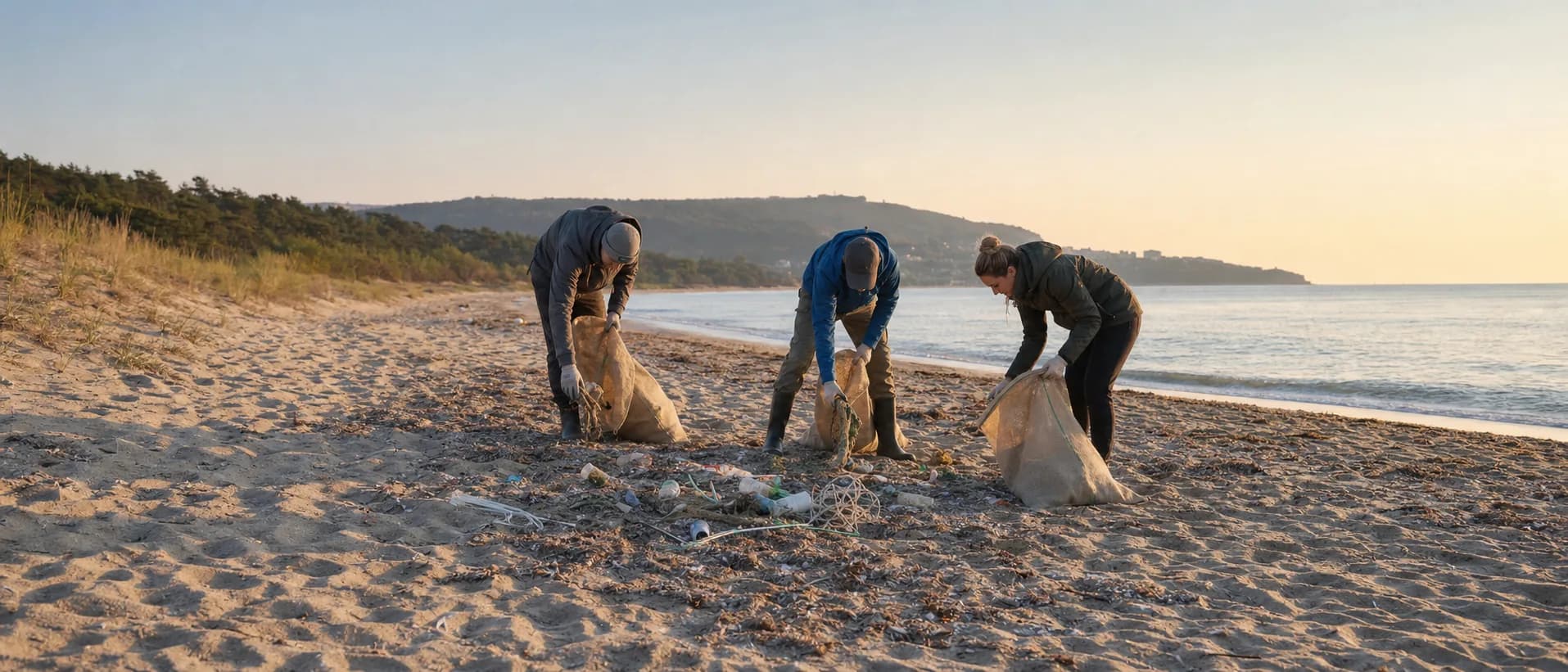
Beach litter on Bulgaria's Black Sea coast comes from more than beach visitors. Some items are left locally, some arrive along rivers, and others move with currents, storms or fishing activity. The practical task is not to guess an item's origin from appearance; it is to record what is present, remove what is safe, and preserve enough context for recurring sources to be investigated.
Read the strandline first
The strandline—the band of seaweed, shells and debris at the highest recent water reach—is where floating material concentrates. Walk it before spreading volunteers across the whole beach. Check river mouths, the downwind side of groynes, the back of dunes near informal paths, and the edges of seasonal parking.
Cleaning and monitoring are different jobs
A cleanup aims to remove material. A monitoring survey uses a defined area, method and categories so results can be compared. You can do both, but write the method down: start and end coordinates, distance, time, number of people, whether every item or only larger debris was counted, and what the tide or recent storm may have changed.
Avoid converting one morning into an annual pollution claim. A post-storm survey and a calm-season survey answer different questions.
Microplastics need a sensible boundary
Tiny fragments can turn an open-ended beach cleanup into hours of sifting with little comparable evidence. If the purpose is volunteering, prioritise removable macro-litter and obvious fragments. If the purpose is monitoring smaller plastic, use a documented protocol, fixed quadrat or transect, consistent sieve size and an agreed destination for the sample.
Do not remove large amounts of natural strandline. Seaweed and driftwood are habitat and part of the beach's material cycle. Separate manufactured litter from natural debris instead of raking the shore bare.
Build a cleanup that reaches collection
Before inviting volunteers, speak to the municipality, concessionaire or protected-area manager and agree where the sorted material will go. A wild beach may have no container capacity for dozens of bags. Vehicle access across dunes is not an acceptable shortcut.
Use a mapped beach-litter report to show the hotspot, access, waste mix and effort. If it needs a group, publish the cleanup meeting point and disposal plan. State explicitly whether participants must carry filled bags back to a road.
Make the result reusable
Photograph the same marked view before and after, then publish the collection date—not only the cleanup date. Record bag counts, unusual items and the section covered. A repeat survey at the same coordinates after tourist season or winter storms reveals far more than a single dramatic photograph.
The most valuable field note may be “clean today.” Dated condition reports on coastal sights help visitors choose access points and give organisers a baseline when a problem returns.
Explore cleanup locations on the Black Sea coastSources & further reading
- International Coastal Cleanup — Ocean Conservancy
- Marine litter — European Commission
Access, prices and opening times change. Verify locally before you travel.
Tags
- Black Sea
- beach litter
- plastic
- cleanup
Beyond this page
Links to reference material and organisations we don't control.
- ReferenceBeach cleaningWikipedia
- OrganisationInternational Coastal CleanupOcean Conservancy
- VideoThe Ocean Cleanup on YouTubeYouTube
- OrganisationSurfrider Foundation — coastal protectionSurfrider Foundation