River cleanup planning in Bulgaria — flood lines, access and disposal
Scope a safe Bulgarian riverbank cleanup around changing water levels, hidden sharps, land managers, volunteer boundaries and confirmed collection.
Recently verified — 1 August 2026
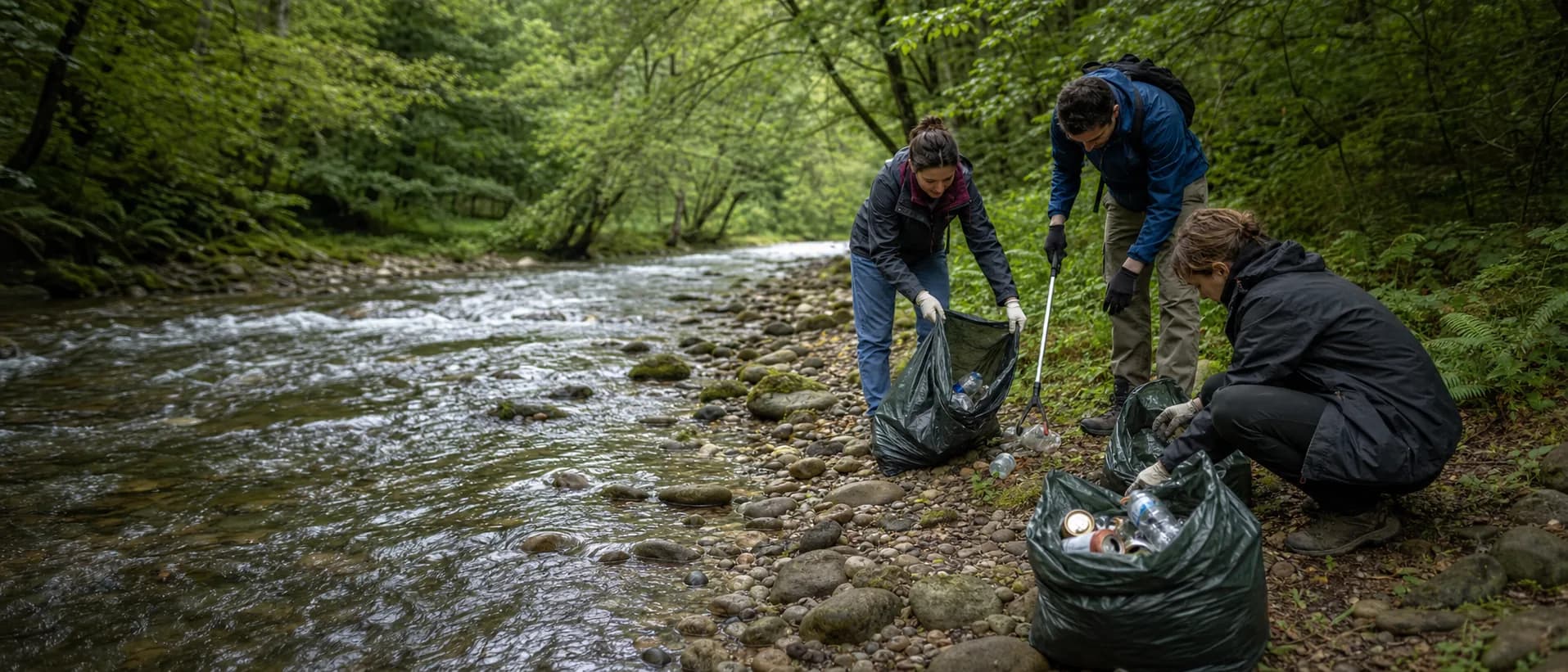
River cleanups are not beach cleanups with fresh water. Banks collapse, levels change upstream, vegetation hides sharps, and an apparently accessible pile may be impossible to remove without crossing private land. Scout the site twice if conditions have changed and define a dry-land working boundary.
Read the river before the rubbish
Identify recent flood lines, steep or undercut banks, weirs, fast channels, overhead power, road traffic and safe exits. Check weather across the catchment, not only at the meeting point. Rain upstream can affect a site under blue sky.
Volunteers should never wade or use boats simply because debris is visible. Water work requires a separate plan, skills, equipment and often authority.
Confirm ownership and collection
The municipality, water-basin bodies, road managers, park directorates and private owners may all have interests along one reach. Establish the responsible land manager and secure permission where needed. Agree a collection point a truck can reach without damaging the bank.
Ask the receiver which streams must remain separate and what it will not accept. Filled bags are intermediate storage; the cleanup is complete only after collection.
Scope and publish the event
Map the reach, entrances, no-go zones, first-aid point and bag collection. On Garbamons' cleanup map, use photographs and a conservative effort estimate. Then create an event with the meeting point, tools and disposal plan.
Brief volunteers on gloves, sharps, sealed containers, unstable banks, heat, ticks and hand hygiene. Use buddies near water and a hard finish time. Children need a clearly separated low-risk area.
Record evidence that can be compared
Photograph fixed views before and after. Record the length covered, people-hours, bags by genuinely separated stream, and unusual bulky items. Note water level and whether recent flooding affected the result. Do not compare bag counts across events unless bag size and method are compatible.
After collection, mark the site cleaned and document material left for authorities. Repeat photographs after the next high-water period can distinguish chronic local dumping from mobile flood debris without claiming origin from a single observation.
Close the loop with the land manager after pickup. Share the collection date, approximate quantities and exact location of anything that remained. A short written acknowledgement also gives the next organiser a verified contact and avoids rebuilding the disposal plan from scratch.
Map a Bulgarian river cleanupSources & further reading
- MOEW waste-pollution inspections — Ministry of Environment and Water
- International Coastal Cleanup — Ocean Conservancy
Access, prices and opening times change. Verify locally before you travel.
Tags
- river cleanup
- Bulgaria
- volunteer safety
- flood debris
Beyond this page
Links to reference material and organisations we don't control.
- ReferenceMarine debrisWikipedia
- ReferenceGhost netsWikipedia
- OrganisationThe Ocean Cleanup — rivers and ocean plasticThe Ocean Cleanup
- VideoThe Ocean Cleanup on YouTubeYouTube