A campfire permit checklist for US public lands
Check fire authority, seasonal restrictions, wood rules, ring requirements and extinguishing practice before lighting a campfire on public land.
Recently verified — 3 August 2026
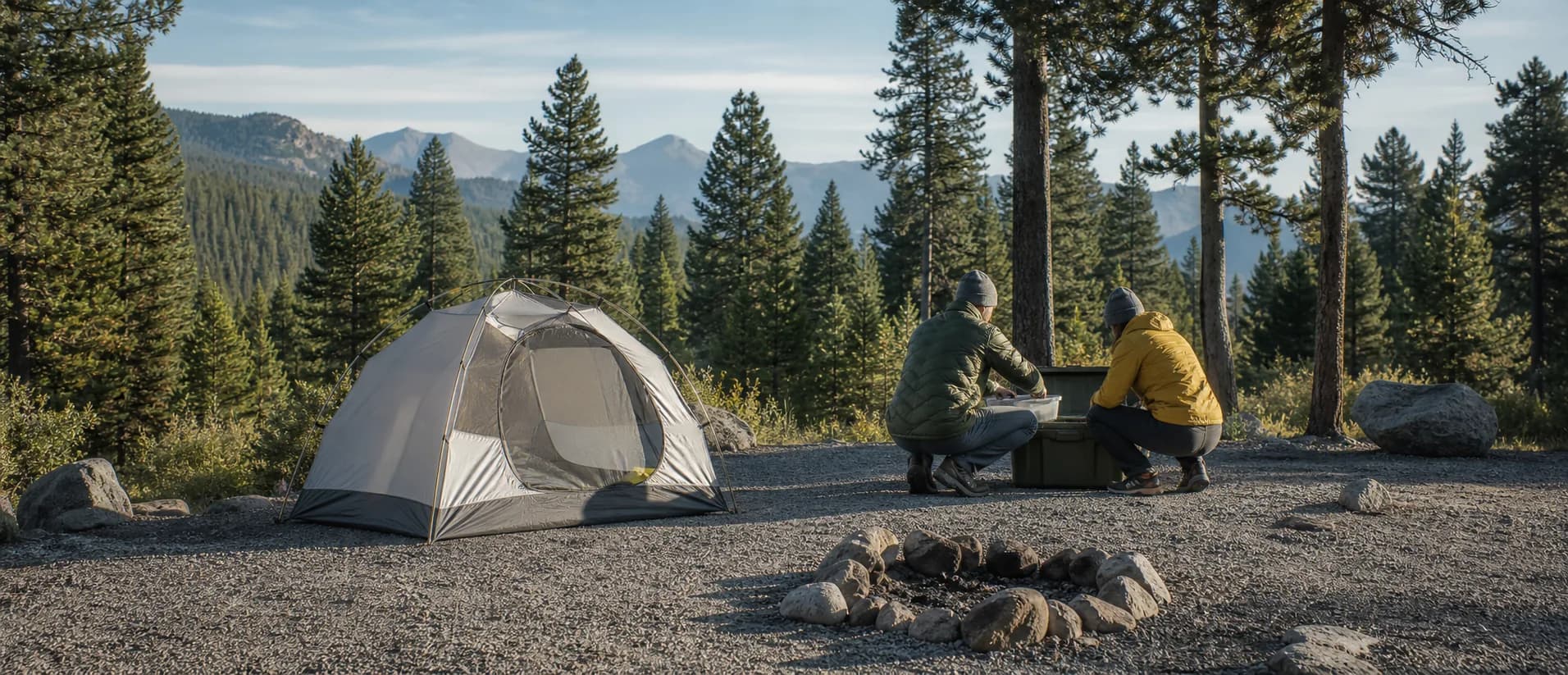
A campfire is not automatically legal because a campsite has a fire ring. On US public land, authority may be split between a national park, national forest, BLM field office, state agency, county and a local fire department. A restriction can also change during the day when wind, humidity or wildfire activity changes. Treat a fire as a permit-and-conditions question, not as a campsite amenity.
Identify the manager and current rule
Start with the land unit, not a generic search result. Read the official alert page for the park, forest, district or field office and look for fire restrictions, prohibited areas, permitted fuels and seasonal dates. Confirm whether your proposed site is inside a wilderness area, a developed campground or a dispersed-camping zone. The rule for a nearby campsite may not apply to your location.
Record the page date, the restriction stage and the office phone number. If the map boundary is unclear, call before departure. A reservation platform can describe a ring or grill while the manager has temporarily prohibited all flames. Do not rely on a social post or a review from a previous season.
Check fuel and equipment
Use only fuel allowed by the local order. Some units prohibit gathering wood, require certified local firewood or restrict fires to propane appliances. Moving untreated firewood can spread insects and disease, even when a fire is legal. Buy wood close to the destination when the manager recommends it, and take leftover wood only where the rule allows.
Carry water, a shovel where required, and a way to extinguish the fire completely. A small stove is often easier to control and creates less impact than a wood fire. Never use a fire ring as a reason to burn packaging, foil, cans, glass or food waste. Smoke and partially burned material remain a problem for the next visitor.
Build the smallest legal fire
If fires are allowed, use the existing ring and keep the fire small. Clear loose material only as the manager directs; do not scrape vegetation, move rocks from a stream or build a new ring. Keep tents, dry grass, vehicles and hanging branches away from flame. Stop immediately if wind rises or embers leave the ring.
Extinguish, inspect and report
Pour water slowly, stir the coals, feel for heat with the back of your hand only after the material has cooled, and repeat until everything is cold. Do not bury hot coals or leave them for the next camper. Pack out foil, wire, charcoal packaging and any unburned manufactured material.
Add an established campsite with its fire and fuel rules when the information is confirmed. If you find an unattended fire, contact the manager or emergency service rather than approaching a dangerous scene. Map a cleanup need only for safe, cold ordinary litter, with access notes and a clear warning when ash or hazardous material is excluded.
Recheck before ignition
Read the official restriction again at the trailhead or campground. Weather, smoke and a new order can change the answer after you leave home. The responsible campfire is the one that is legal today, small enough to control, fully cold before departure and absent from the landscape when you leave.
Sources & further reading
- Campfires and outdoor burning — National Park Service
- Dispersed camping — US Forest Service
Access, prices and opening times change. Verify locally before you travel.
Tags
- campfires
- public lands
- Leave No Trace
- fire safety
Background reading
Links to reference material and organisations we don't control.
- ReferenceWild campingWikipedia
- ReferenceLeave No TraceWikipedia
- OrganisationThe seven Leave No Trace principlesLeave No Trace
- VideoLeave No Trace, demonstratedYouTube