Choose a durable tent site on US public land
Select an established or durable campsite, protect vegetation and drainage, and avoid creating new tent pads on busy American trails.
Recently verified — 3 August 2026
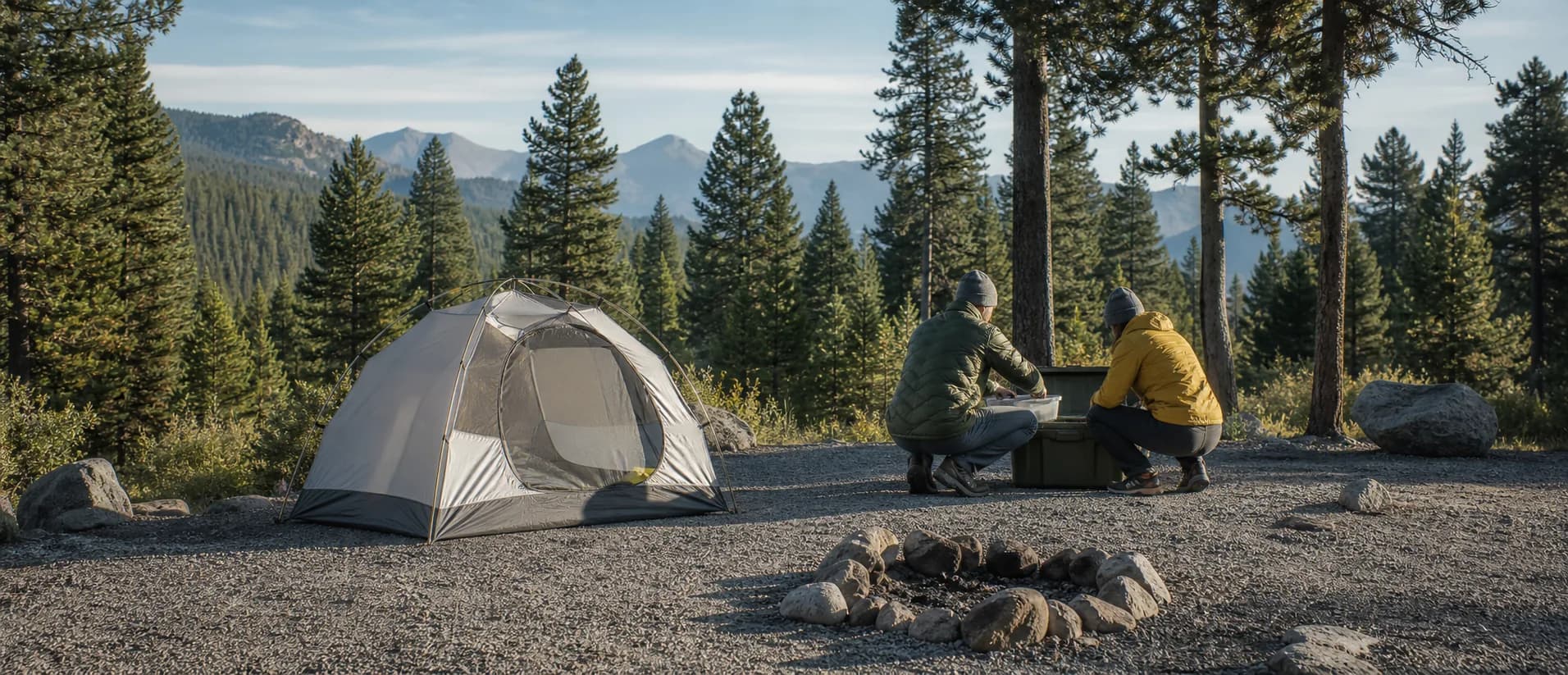
Where you put a tent changes how water moves, how plants recover and how future visitors read the landscape. The safest default on US public land is an existing legal site that is already hardened, away from water and large enough for your group. If the manager allows dispersed camping without established pads, choose a durable surface rather than flattening a new patch of vegetation.
Confirm the site is legal
Dispersed camping is not a blanket permission. Check the land unit, stay limit, distance from roads and water, permit requirement, seasonal closure and any designated-site map. A pullout, overlook or trailhead can have separate overnight rules. Respect private inholdings, tribal lands, restoration areas and posted no-camping zones.
Read the official map at the planning stage, then check signs at the approach. If a route description points to a popular informal pad but the manager has closed it, do not recreate it. A crowd-sourced pin can show that people camped there; it cannot grant permission.
Read the ground before pitching
Look for compact soil, rock, sand or gravel that can handle a night without crushing living plants. Avoid cryptobiotic soil, moss, lichens, wildflowers, wet meadows, shorelines, stream edges and animal travel corridors. Do not choose a site that blocks a trail, view, drainage channel or another party's safe route.
Use the smallest footprint that fits the tent, sleeping area and cooking plan. Do not cut branches, rake leaves, move boulders or build furniture. Place the tent so rain sheds around it rather than collecting underneath it. In steep terrain, choose the flattest existing durable site instead of terracing a slope.
Leave the site unreadable
Keep groups small and spread out only when the manager says that separate sites are appropriate. Walk on durable routes between tent, water and toilet. Avoid trampling a wider path to a scenic edge. Before leaving, replace moved furniture, brush out swept soil, remove crumbs and inspect for stakes, cord, micro-trash and personal items.
Map established legal camping places with honest surface notes and an observation date. Do not publish a fragile unestablished patch as a recommendation. If a busy route has multiple trampled pads, record the restoration or cleanup need from a permitted access point and leave revegetation decisions to the manager.
Good campsite choice is mostly restraint. A visitor should sleep on ground that can take the use, keep the camp compact, and leave without turning a one-night stay into a permanent new trail or tent platform.
Sources & further reading
- Leave No Trace Seven Principles — National Park Service
- Dispersed camping — US Forest Service
Access, prices and opening times change. Verify locally before you travel.
Tags
- tent camping
- durable surfaces
- public lands
- erosion
Background reading
Links to reference material and organisations we don't control.
- ReferenceWild campingWikipedia
- ReferenceLeave No TraceWikipedia
- OrganisationThe seven Leave No Trace principlesLeave No Trace
- VideoLeave No Trace, demonstratedYouTube