Nordic right to roam — five camping myths that damage trust
Why access rights in Norway, Sweden and Finland are responsibilities, not blanket permission for vehicles, fires, groups or private gardens.
Recently verified — 2 August 2026
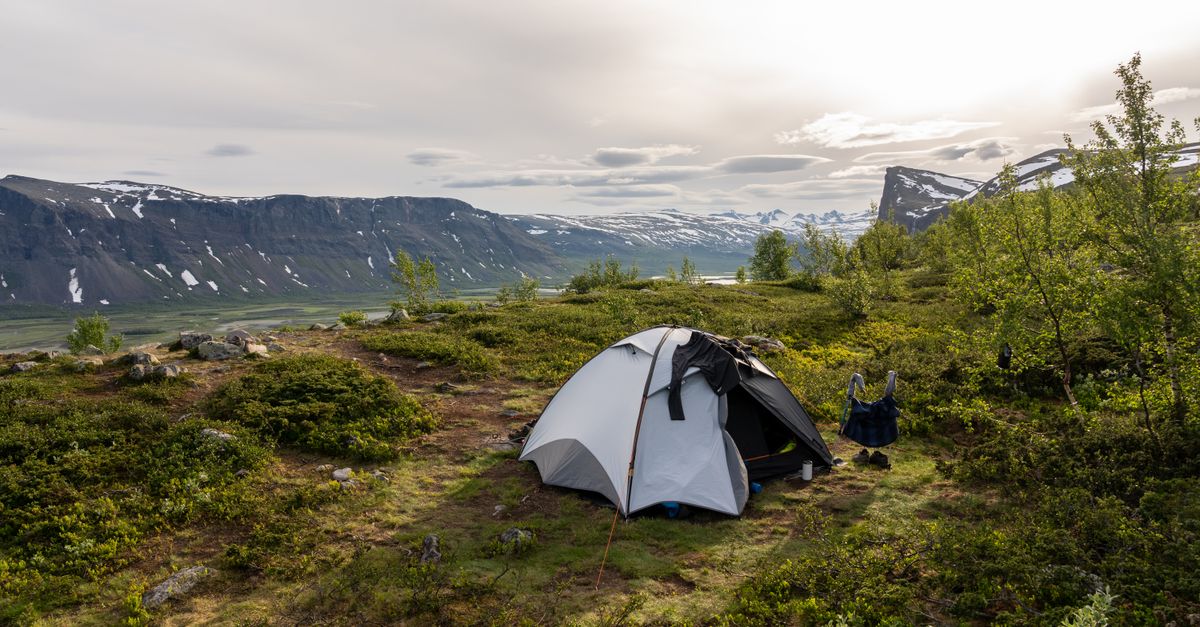
The Nordic right to roam is often marketed as permission to camp anywhere. Norway, Sweden and Finland each provide broad public access, but their legal structures and local restrictions differ. The shared ethical core is closer to “do not disturb, do not destroy” than “the land is free.”
Myth 1: access rights include motor vehicles
They generally concern people moving under their own power, not driving across land. Road traffic, off-road driving and parking have separate rules. Sleeping inside a vehicle does not transform an unlawful parking place into a lawful camp.
Use official road signs and municipal parking information. A van turnout may ban overnight occupancy even where a walker can lawfully camp farther away.
Myth 2: an empty field is wild land
Cultivated land, farmyards and the private zone around homes require distance and respect. The exact legal concepts differ, so use national guidance rather than guessing from appearance. A mown meadow may be working land; an unfenced shoreline may still sit inside a home's privacy zone.
Myth 3: one small fire is always acceptable
Fire seasons, drought restrictions, forest law, protected areas and local bans apply. Norway has a general seasonal restriction on open fire in or near forests and other uncultivated land, with limited safe-condition exceptions described by the authority; other countries use their own systems.
Treat “the ground looks wet” as an observation, not legal clearance. Use a stove only where allowed and carry a no-cook fallback. Never light fire on rock, which can crack and retain scars.
Myth 4: access for two means access for twenty
Group size changes noise, vegetation pressure, sanitation and the need for owner or manager coordination. Commercial and organised activities may have additional duties. A place that absorbs one tent can be damaged by a published group invitation.
Organised cleanups also need permission and disposal. Use an event listing only after the manager approves boundaries and collection, not as a way to legitimise occupation.
Myth 5: biodegradable waste can stay
Orange peel, toilet paper and food scraps alter a place and attract wildlife. Pack out food and packaging. Follow official human-waste instructions; in crowded, rocky, frozen or waterside locations, packing out may be the responsible or required option.
How to plan a defensible night
Read the national environment agency's current access guidance. Check the protected area and municipality. Confirm vehicle arrangements separately. Choose durable ground away from buildings, crops, livestock, water and sensitive habitat; remain briefly; keep quiet; leave no trace of the pitch.
On the community camping map, prefer established legitimate places and dated reports. Do not add a sensitive wild pitch whose publication could concentrate use.
If an established site is littered, remove a safe handful or record a larger cleanup need with manager contact and access. Do not use the litter as evidence that camping is permitted.
The right survives through reciprocity. Visitors gain extraordinary access; residents, wildlife and working land retain privacy and protection. Learning the duties is not a limitation on the experience—it is the mechanism that makes the experience possible.
Sources & further reading
- The Norwegian right to roam — Norwegian Environment Agency
- The right of public access — Swedish Environmental Protection Agency
- Everyman's rights — Metsähallitus, Parks & Wildlife Finland
Access, prices and opening times change. Verify locally before you travel.
Tags
- Nordic countries
- right to roam
- camping
- access
Background reading
Links to reference material and organisations we don't control.
- ReferenceWild campingWikipedia
- ReferenceLeave No TraceWikipedia
- OrganisationThe seven Leave No Trace principlesLeave No Trace
- VideoLeave No Trace, demonstratedYouTube