Dispersed camping after rain without new damage
Reconsider public-land camping after rain by reading closures, protecting soft soils, preventing ruts, managing runoff and leaving before impact grows.
Recently verified — 3 August 2026
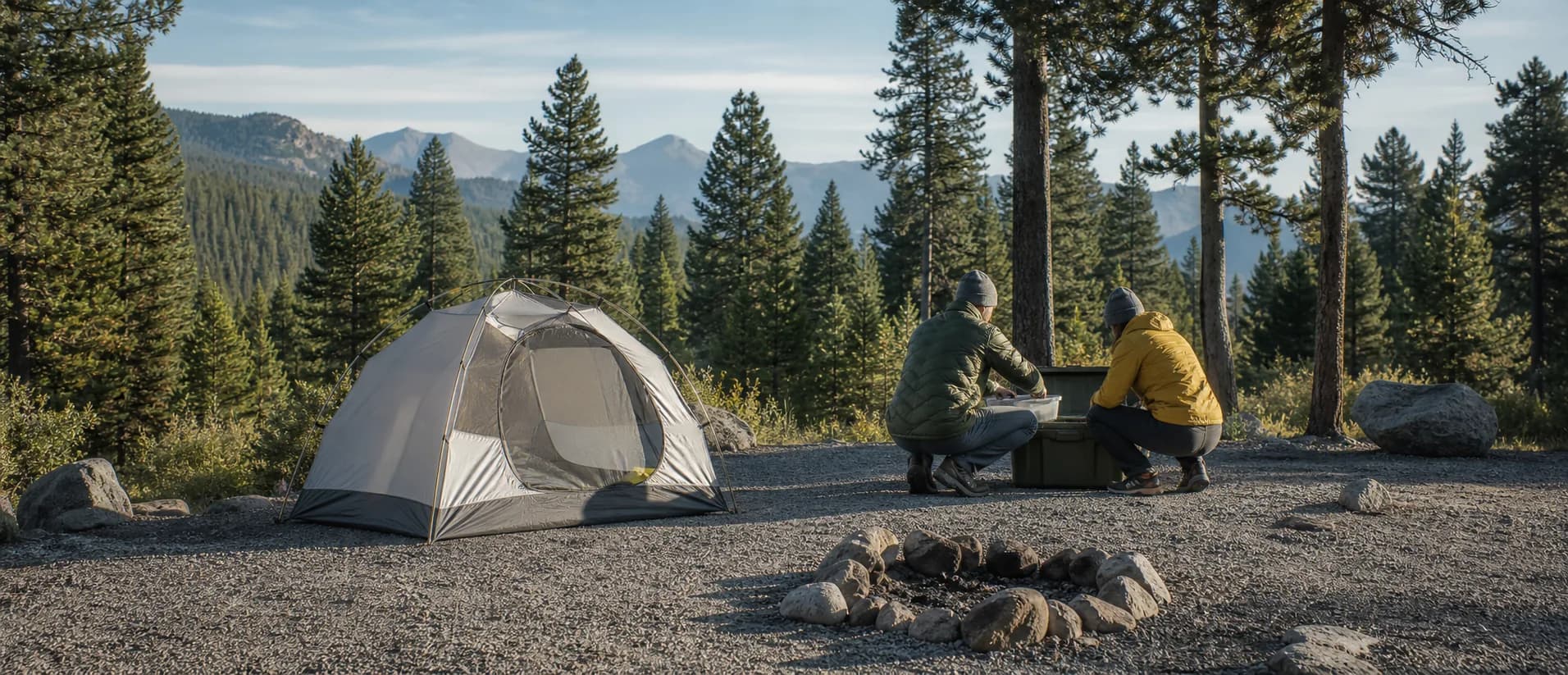
Rain changes the surface beneath a campsite. A track that looked firm can become a channel, a grassy meadow can compact under wheels and a short storm can make a creek crossing unsafe. Dispersed camping after rain requires a fresh decision about legality, access and impact instead of treating yesterday's site as today's guarantee.
Check closures and road conditions
Read the land manager's alerts, road-status page and local weather warning. Many public-land units close muddy roads or restrict vehicles to protect the roadbed. A four-wheel-drive vehicle may reach a site and still create damage that the next storm carries downhill. If the official notice says to wait, wait.
Confirm whether the site is inside a seasonal closure, restoration area or temporary wet-weather restriction. Contact the ranger district or field office when the online map and sign disagree. Do not drive around a gate, make a new bypass or camp in a turnout that is reserved for emergency access.
Choose the least vulnerable surface
If walking access is legal, use an existing compact site rather than spreading tents across wet vegetation. Avoid exposed roots, saturated soil, stream margins, cryptobiotic crust and drainage lines. A dry-looking patch can still be the place where water concentrates during the next storm. Keep the tent small and the kitchen compact so the group does not create a wider footpath.
Do not dig trenches around a tent, move rocks to build a dam or divert water from its natural course. Set gear where it will not block runoff. If water begins to flow through the site, move to a safer legal location rather than defending the pad with improvised engineering.
Manage vehicles and mud
Park once on the existing hardened surface. Repeated short drives to retrieve gear make ruts wider and deeper. Carry equipment from the vehicle when conditions allow and use traction aids only under the road manager's rules. Clean mud from tires at an approved facility, not beside a stream or trailhead.
Add an established camping place with weather-sensitive access notes and a dated observation. If rain reveals a recurring rut or illegal bypass, report the condition with the road segment, photos and safe approach; do not organize volunteers to reshape a road without authorization.
Before leaving, pick up every item, recover stakes and cord, scatter only what the manager allows, and avoid walking across soft ground for a final scenic photograph. The lowest-impact post-rain camp may be the one postponed until the surface can carry visitors without permanent marks.
Sources & further reading
- Dispersed camping — US Forest Service
- Recreation impacts and Leave No Trace — National Park Service
Access, prices and opening times change. Verify locally before you travel.
Tags
- dispersed camping
- rain
- erosion
- public lands
Elsewhere on the web
Links to reference material and organisations we don't control.
- ReferenceWild campingWikipedia
- ReferenceLeave No TraceWikipedia
- OrganisationThe seven Leave No Trace principlesLeave No Trace
- VideoLeave No Trace, demonstratedYouTube