Volunteering at the Green Balkans Wildlife Rescue Centre
How to help Bulgaria's wildlife rescue centre in Stara Zagora: volunteering on site, the bird-transport network, visiting, and making a useful first offer.
Sources checked - 8 October 2026
In this article
The Green Balkans Wildlife Rescue Centre in Stara Zagora is, with few exceptions, the only place in Bulgaria that takes in injured wild birds (FAQ). It admits on average more than 2,000 animals a year, of which over 40% go back to the wild (Ministry of Environment and Water). It is run by the non-governmental organisation Green Balkans, and it depends on volunteers, both at the centre and in a network of helpers who move birds across the country. If you want to help, the most useful thing is to understand which of those two roles fits your time and location.
What the centre does
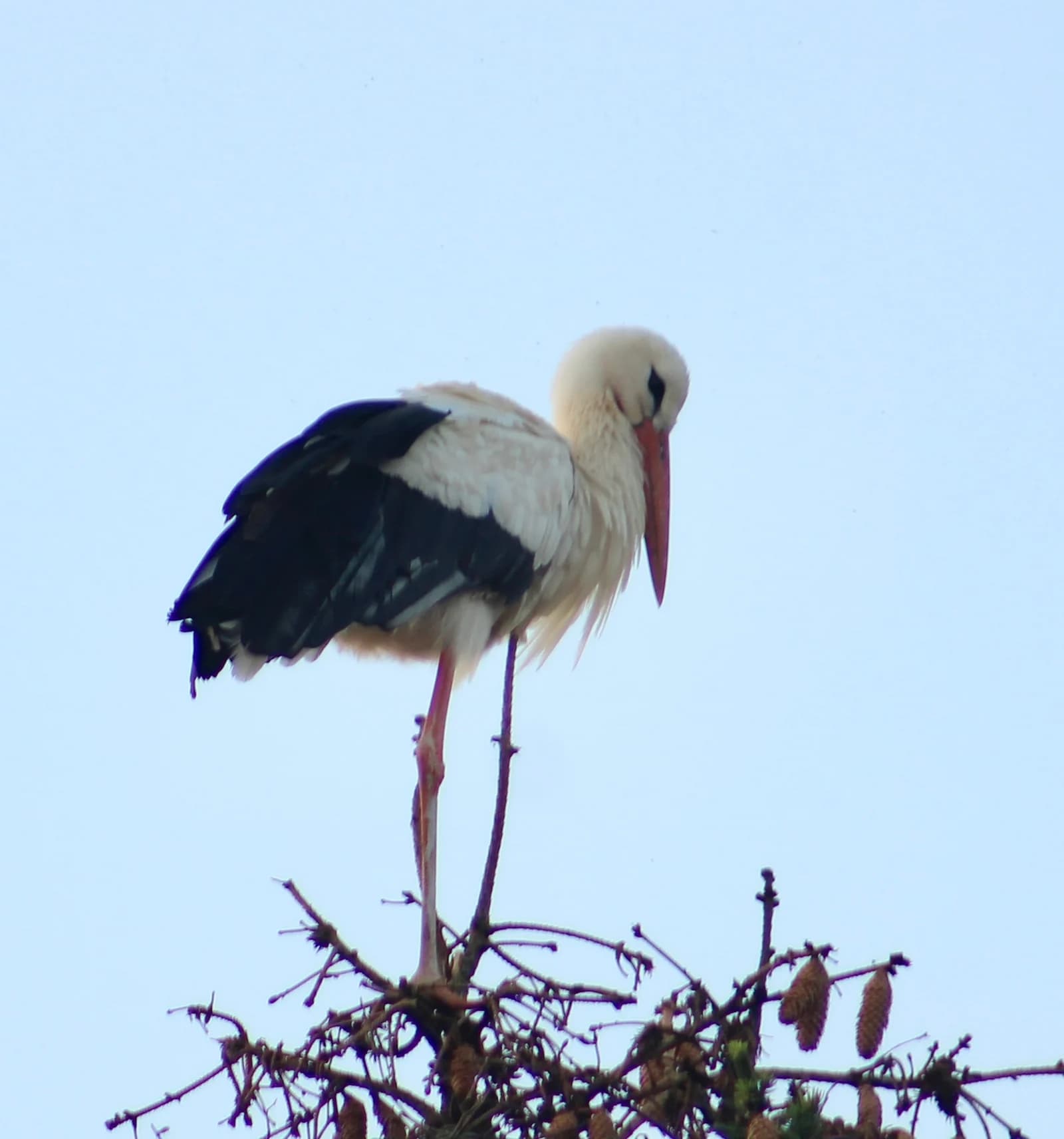
The centre was designated an official rescue centre by order of the Minister of Environment in 2012 and works under the Biodiversity Act, with a registered veterinary clinic on site (FAQ). Its patients range from storks and herons to vultures, eagles, falcons, pelicans and red-breasted geese (Ministry of Environment and Water). Storks are a large part of the summer workload: the centre releases between 180 and 200 a year, many of them raised from chicks, and in August 2025 it had around 500 animals in care (BTA).
The centre concentrates on birds and on protected species, which in Bulgaria covers almost all birds, including swallows and swifts. It does not take pigeons, gulls, crows, jackdaws or domestic animals. Large mammals and amphibians are generally referred to Sofia Zoo, and tortoises to the Gea Chelonia centre in Banya (FAQ).
Two ways to volunteer
| Role | What it involves | Who it suits |
|---|---|---|
| At the centre in Stara Zagora | Building and maintaining the facilities, caring for animals, receiving patients and giving first aid, alongside the daily cleaning, feeding and logistics | People who live nearby or can commit to regular days on site |
| Regional network | Helping to send or carry injured birds from your area to the centre, often handing a bird from one transport to another; once or repeatedly | People anywhere in Bulgaria with some flexibility and, ideally, a car |
Sources: volunteers, regional network, FAQ.
At the centre, the work is mostly unglamorous and that is what makes it valuable. The team and volunteers work more than ten hours almost every day, sometimes late into the night, with new patients arriving at times by the dozen, and much of the work is cleaning, feeding, operations, treatment, transport logistics and phone advice (FAQ). Reliable help with a fixed routine is worth more to them than an occasional visit.
In the network, the need is greatest around big cities. The centre notes that coordination is especially hard from Sofia, Plovdiv and Varna, where many birds are found but the distance to Stara Zagora is long, and that it usually asks the person who found a bird to help transport it, with network volunteers bridging the gaps (regional network). If you live in one of those cities and have a car, that is where network help counts most.
How to make a useful first offer
Write to [email protected] (contact) and give the team what they need to place you:
- where you live, and which role you are offering;
- the actual days or periods you are available, and for how long;
- whether you have a car and how far you could drive at short notice;
- relevant skills, honestly stated: animal care, veterinary or biology study, building and maintenance, admin;
- whether you need to communicate in English.
Ask in return what the role requires: minimum age, any induction, agreed hours, who coordinates a transport handoff, and whether there are costs or accommodation if you are coming from elsewhere. Agree the task before you travel or promise a pickup. Joining the network means cooperating with the centre's team; it does not mean catching or treating wild animals on your own initiative.
Visiting and other ways to help
The centre, on the grounds of the I. Pavlov veterinary high school in Stara Zagora, has a public visitor area with resident birds that cannot be released, and a breeding section for rare species that only staff enter, viewable by video. More than 3,000 people visit each year. Group visits must be booked by phone in advance (FAQ); visiting times have varied, so phone before you go. A visit is a good way to see the work before offering to join it, but it is not a volunteer placement.
Because the centre is funded project by project, donations of food, medicines, equipment and consumables matter as much as time (FAQ).
If you find an injured bird
Phone the centre rather than writing: the team checks email and social media daily, but with a serious injury every minute counts. Some birds are fine and can be released after advice by phone; others need to reach the centre quickly (FAQ). The centre's phone numbers for animals in distress are +359 88 426 4305 and +359 42 607 741 (contact). If you cannot get through, report it on 112 or to the regional environment inspectorate (RIOSV) for your area.
Details checked on 8 October 2026. For the rest of the region, see the Stara Zagora and Haskovo guide.
Sources & further reading
- Доброволци - Green Balkans Wildlife Rescue Centre
- Станете част от мрежата ни - Green Balkans Wildlife Rescue Centre
- Въпроси и отговори - Green Balkans Wildlife Rescue Centre
- Contact us - Green Balkans Wildlife Rescue Centre
- The 2023 annual budget for the Rescue Center for wild animals in Stara Zagora has been secured - Ministry of Environment and Water
- Green Balkans Wildlife Rescue Center Releases 24 Storks into the Wild - BTA
Tags
- Green Balkans
- volunteering
- wildlife rehabilitation
- Stara Zagora
- storks
- bird rescue