Beach cleanups and microplastics: what your data can show
Why a beach cleanup cannot measure microplastics, how a repeatable shoreline survey differs, and how to record cleanup results honestly and comparably.
Sources checked - 8 October 2026
In this article
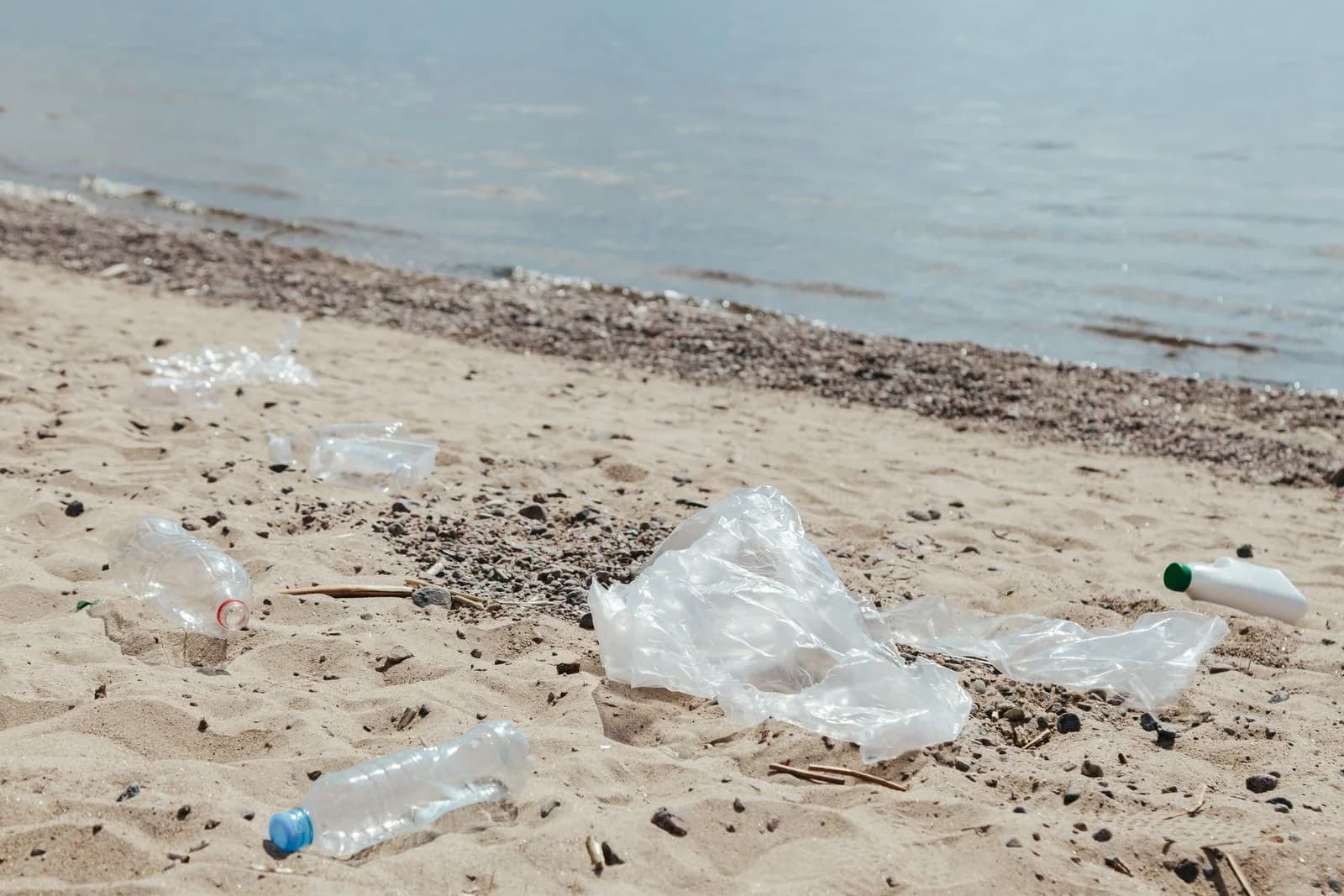
A beach cleanup removes the litter people can see and pick up. Microplastics are, by NOAA's definition, plastic pieces smaller than 5 mm (NOAA), many of them too small to spot or pick out of sand, seaweed and water by hand. So a cleanup, however big, says almost nothing about how much microplastic a beach holds. That is not a reason to skip the cleanup. It is a reason to describe the result for what it is, and, if you want data that means something over time, to run a proper survey alongside it.
Three different activities
| Activity | What it measures | What it cannot tell you |
|---|---|---|
| Cleanup | The items or weight removed from a stated stretch on a stated day | How much litter was missed, or whether the beach is getting cleaner |
| Shoreline survey | Counts of visible debris by category, using the same method each time | Microplastic levels, or anything outside the sampled area |
| Microplastic study | Particle counts from a defined sampling and laboratory method | Anything the study design was not built to support |
NOAA's own shoreline protocol makes the size gap concrete. Its Marine Debris Monitoring and Assessment Project (MDMAP) counts surface debris 2.5 cm and larger, five times bigger than the upper limit for a microplastic (MDMAP survey guide). Even the standard monitoring method is not designed to see microplastics.
What a repeatable survey looks like
A survey is about doing exactly the same thing every time, so that differences reflect the beach rather than the team. The 2021 MDMAP guide sets out how (MDMAP survey guide):
- A fixed 100 m site, marked by GPS at its four corners, divided into 20 transects of 5 m each running from the water's edge to the back of the beach.
- Four truly random transects per survey. People are bad at choosing randomly, so NOAA supplies random numbers on request or a spreadsheet formula.
- No more than two people per transect, scanning a 2.5 m strip each, so effort stays comparable.
- Surface only. No digging for buried debris.
- Arrive on a low or falling tide where tides apply, and record conditions on a coversheet.
- Survey first, clean later. All four transects are surveyed before any cleanup of the site, and removal is optional but must be recorded, because it changes what the next survey will find.
Submitted data is reviewed and marked "verified" before it is published. The current protocol documents and datasheets are on NOAA's MDMAP page. In Europe, beach litter monitoring under the Marine Strategy Framework Directive follows the Joint Research Centre's harmonised guidance on monitoring marine litter, which also covers microlitter. If you want your Black Sea or Mediterranean survey to feed into official data, start from that guidance and the national body that runs monitoring.
Borrowing one element of a protocol, such as the 2.5 cm threshold, does not make an event compatible with it.
Why microplastics need a research team
NOAA describes standardised field methods for sampling microplastics in sediment, sand and surface water as developed and still being tested (NOAA). Sampling means a defined volume or area, replicates, contamination control and laboratory identification. If you want to help, join a study run by a research group and follow its protocol, with the land manager's permission for any sampling.
Scooping a bucket of sand or sieving a dune to "get a number" produces a figure that cannot be interpreted. Advertising "microplastic samples collected" for an ordinary cleanup that picked up visible fragments is misleading.
Recording a cleanup honestly
A cleanup can still produce useful records if you note what defines it:
| Record | Why |
|---|---|
| Date, start and end time, and the exact stretch covered | Sets the boundary |
| Tide and weather | Explains how much beach was exposed and accessible |
| Number of people and active collecting time | Shows the effort, which differs between events |
| Categories and how you counted (whole items, fragments, bags) | Keeps counts comparable |
| Weighing method, if any | Separates measured weight from a guess |
| Areas or items skipped | Shows what you did not check |
| Where the waste went | Separates collection from disposal or recycling |
Two cleanups that each "filled 40 bags" are not a trend: bag size, fill, team size, tide and route all change. A sentence in the form "the team removed N items weighing X kg from the stretch between the pier and the river mouth in two hours on a falling tide; pieces under 2.5 cm were not counted" is more useful than "the beach is cleaner now", and it can be checked.
Sources checked on 8 October 2026.
Sources & further reading
- What are microplastics? - National Oceanic and Atmospheric Administration
- MDMAP Protocol Documents and Field Datasheets - National Oceanic and Atmospheric Administration
- MDMAP Shoreline Survey Guide (2021) - National Oceanic and Atmospheric Administration
- Guidance on the monitoring of marine litter in European seas - European Commission Joint Research Centre
Tags
- microplastics
- beach cleanup
- marine debris
- citizen science
- shoreline survey