Compostable packaging: where it actually goes after use
What biobased, biodegradable and compostable really mean, why compostable cups and bags rarely belong in recycling or a home heap, and how to sort them.
Sources checked - 8 October 2026
In this article
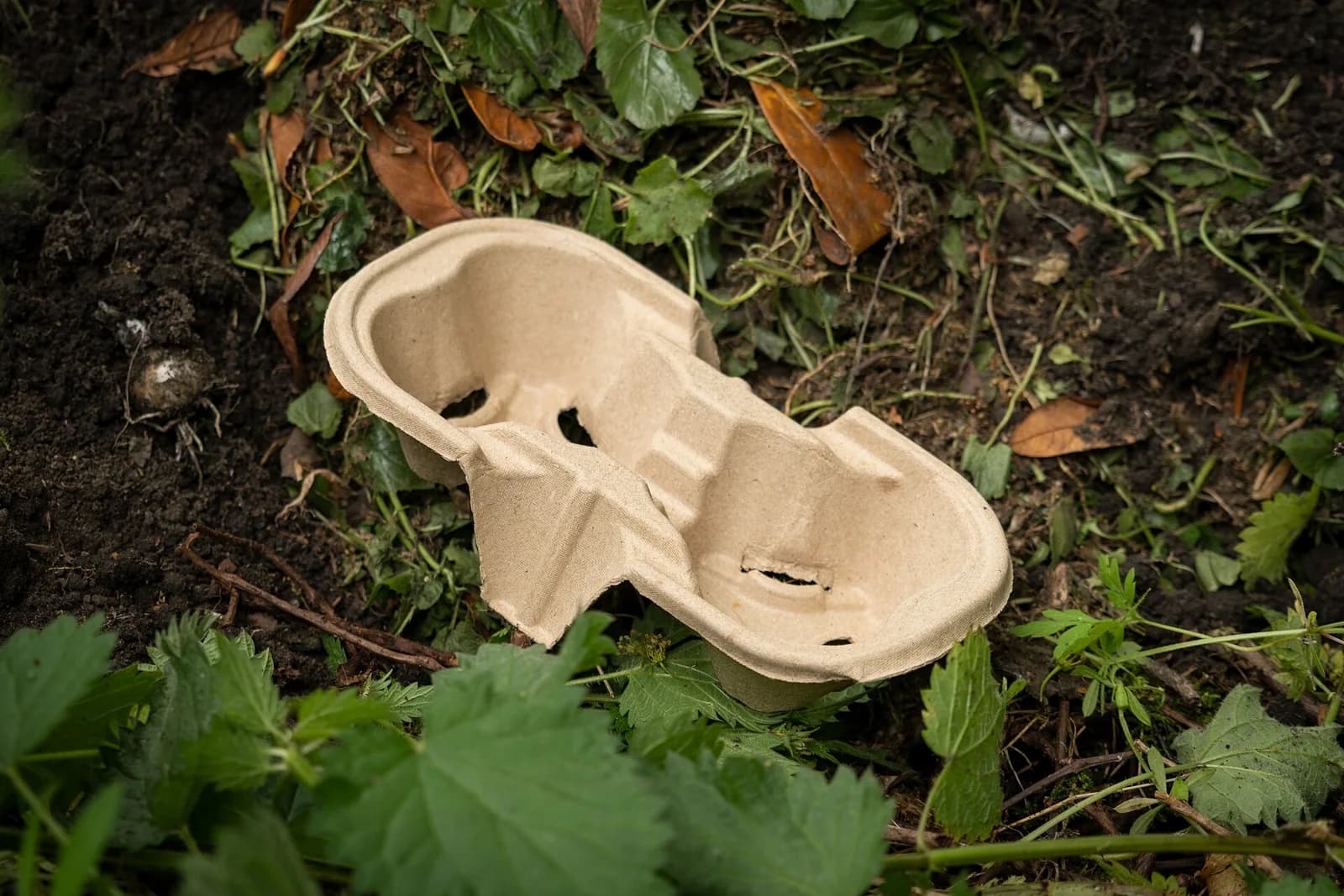
"Compostable" on a cup or a bag describes how the material behaves in a controlled composting process, usually an industrial one. It is not an instruction to put it in the yellow recycling bin, on a home compost heap or under a bush. Unless your local organics collection names the item as accepted, it belongs in mixed waste.
Three words that are not the same
The European Commission separates three labels that often appear side by side (European Commission):
| Label | What it means | What it does not mean |
|---|---|---|
| Biobased | Made wholly or partly from biological resources rather than fossil raw materials | That it biodegrades or composts |
| Biodegradable | Breaks down under certain conditions at the end of its life | That it breaks down quickly in nature, or which bin it belongs in |
| Compostable | A subset of biodegradable that typically breaks down in industrial composting facilities, after being collected | That a garden heap or the open ground will do the same job |
The Commission's concern is that a vague "biodegradable" claim encourages littering, because people assume the item will vanish anywhere. Its policy is that compostable plastics make sense mainly where reducing, reusing or recycling is not possible, and the EU packaging regulation names a short list of items, such as tea bags, coffee pods and sticky fruit labels, where industrial compostability is the intended route (European Commission).
Why not recycling, and why not the home heap
Not the yellow bin. Compostable plastics are not designed for recycling, and mixed in with conventional plastics they contaminate and disrupt the recycling stream (US EPA; European Commission). In Bulgaria's three-colour system, the yellow bin is for conventional plastic and metal packaging (ECOPACK), and a compostable cup that looks like plastic is a contaminant there.
Not the home heap, unless the label says "home compostable". Industrial composting reaches higher temperatures and different conditions than a garden bin. Unless the product is specifically marked as suitable for home composting, do not try it at home (US EPA).
Not always the organics bin either. Composting facilities decide their own accepted materials and want feedstock free of contaminants such as non-compostable packaging and produce stickers (US EPA, composting). A US EPA review of plastic contamination points out that compostable and conventional versions of the same product often look alike, which makes them hard for facilities to tell apart. Some facilities screen compostable items out before processing, and several large compost operators in Oregon have said they do not want compostable packaging or serviceware delivered at all (US EPA, plastic contamination). A certified compostable cup and an accepted cup are two different things.
What to do with it at home
If your municipality collects food or garden waste in brown bins, its own leaflet decides whether compostable bags or cups go in; ask the operator if it does not say. If there is no such collection, or the leaflet does not name the item, compostable packaging goes in mixed waste. That is not a failure: it keeps both the recycling and the compost clean.
Sorting at a cleanup or event
A cleanup turns up compostable cups, cutlery and bags alongside everything else, usually wet and dirty. Before the day, ask the receiving operator two questions: which exact items (cups, bags, plates, cutlery) it accepts, and in what condition. Write the answer on the sorting sign in plain words, such as "compostable cups only, emptied", rather than a broad "compostable".
| What the sorter can tell | Where it goes |
|---|---|
| On the receiver's accepted list and in the required condition | Labelled organics container |
| Marked compostable, but the receiver has not approved this item | Mixed waste |
| Conventional packaging that meets the recycling rules | The right colour bin |
| Unlabelled, unreadable or uncertain | An "unknown" box, checked before handover, then mixed waste if still unclear |
| Sharp, chemical or sanitary waste | Kept apart and handled as the land manager or waste operator instructs |
Do not bury rejected items, leave bags beside a bin or start a compost pile on site. When you write up the event, record what was collected and where it went; say "handed over for composting", not "composted", unless the processor confirms it. For a future event, the simplest fix is to choose reusable cups and plates and avoid the question altogether.
Sources checked on 8 October 2026.
Sources & further reading
- Biobased, biodegradable and compostable plastics - European Commission
- Frequently Asked Questions about Plastic Recycling and Composting - US Environmental Protection Agency
- Composting - US Environmental Protection Agency
- Emerging Issues in Food Waste Management - Plastic Contamination - US Environmental Protection Agency
- Useful rules for separate collection - ECOPACK Bulgaria
Tags
- compostable packaging
- bioplastics
- organic waste
- recycling contamination
- cleanup sorting