Bulgaria's recycling bins: what goes in yellow, blue and green
What belongs in Bulgaria's yellow, blue and green ECOPACK recycling bins, how to prepare packaging, common mistakes, and what to do with litter you pick up.
Sources checked - 8 October 2026
In this article
The coloured igloo bins on Bulgarian streets belong to a three-colour system for packaging waste: blue for paper and cardboard, yellow for plastic and metal, green for glass. ECOPACK Bulgaria runs them under contracts with municipalities and sends what you sort to its own sorting plants and on to recyclers (ECOPACK systems). The bins are for packaging, not for everything made of the same material, and the condition of what you put in matters as much as the colour.
What goes where
All lists follow ECOPACK's rules for separate collection.
Blue: paper and cardboard
Yes: juice and milk cartons once empty; cardboard boxes and other paper or cardboard packaging; boxes from biscuits, sweets, eggs and shoes; paper bags and sacks.
No: used tissues, sanitary products and cigarette butts; heavily soiled or greasy paper, such as a greasy pizza box; paper with metal or plastic foil coatings; anything that is not paper.
Flatten every box. Large corrugated boxes should not be stuffed into the bins at all: fold them as small as you can and hand them to the collection staff at a suitable place. Paper is accepted for recycling only when it is clean, and food, grease, rubble or muddy leaves mixed in can spoil the whole load.
Yellow: plastic and metal
Yes: bottles for water, soft drinks, cooking oil and beer; yoghurt pots and plastic milk bottles; cosmetic and cleaning product bottles; plastic cups and trays with the food scraped off; drinks cans and cleaned food tins; jar lids and bottle caps; plastic bags, stretch film and wrapping film.
No: medicine blister packs; containers of motor oil and other harmful substances; household appliances and car parts; anything that is not plastic.
Empty each item and clean it, by wiping out grease with a paper towel or rinsing. Then roll bottles to squeeze out the air and screw the cap back on, so more fits in the truck. Never drop in a cigarette end: burning plastic is very hard to put out and gives off toxic smoke.
Green: glass packaging
Yes: bottles of any type and colour; small jars and cosmetic bottles; food jars.
No: broken drinking glasses and plates; porcelain and ovenproof glass; light bulbs and fluorescent tubes; window panes and mirrors; car glass.
Remove caps and corks (metal lids go in yellow) and empty the contents. Rinsing helps keep dirt from sticking but is not compulsory. Bottle glass and window glass are processed differently, and stones and porcelain do not melt in the furnace, which is why they cause the most trouble.
Mistakes that matter most
- Sorting by material instead of by packaging. A broken plastic chair is plastic but not packaging; a window pane is glass but not packaging. ECOPACK's lists are of packaging items.
- Dirty packaging. A pot with yoghurt still in it or a greasy pizza box does not become recyclable because it is in the right colour bin.
- Mixing streams. Each bin takes only its own materials: no glass or paper in yellow, no plastic in blue.
- Large boxes left beside a full bin. If a bin is full, tell the collection staff instead of piling more around it (sorting rules). ECOPACK's free line is 0800 15253.
Not every area uses igloo bins
In low-rise neighbourhoods, ECOPACK also runs door-to-door collection: households get an individual yellow bin of 120 or 240 litres for paper, cardboard, metal and plastic packaging together, with green glass bins at selected addresses. Shops, petrol stations, hotels and restaurants have their own containers and collection schedules (ECOPACK systems). Where another operator runs the containers, its label is what counts, so read the sticker on the bin before you sort.
What happens after collection
Collection frequency is agreed with each municipality according to how much waste builds up, and each truck carries a sign showing which bin colour it is emptying that day. The bins go to ECOPACK's sorting lines, where the mix is separated by material and passed to recycling plants; one line handles glass only and produces cullet that is 99.7% pure (ECOPACK systems). Clean, correctly sorted packaging is what keeps those lines efficient.
Packaging picked up as litter
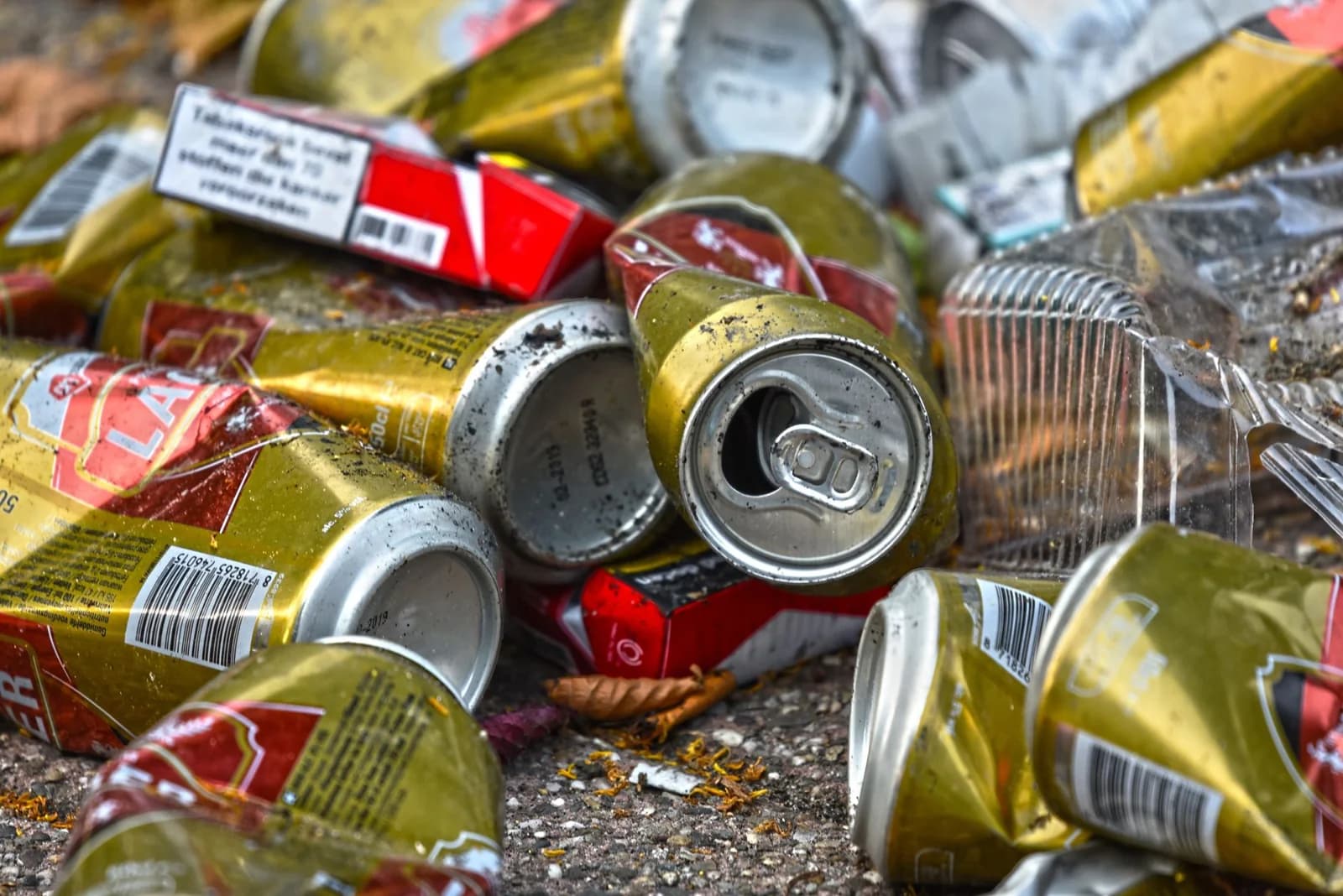
Litter collected on a walk or at a cleanup is usually wet, muddy or still has contents, so apply the same test you would at home. An empty bottle or can you can shake out and wipe goes in yellow; a clean glass bottle goes in green. Food-filled containers, soaked cardboard, cigarette butts, glass you cannot identify as bottle or jar glass, and anything else you are unsure of go with mixed waste. Keep the recyclable items in a separate bag from the start rather than trying to pick them out of a muddy sack later.
The street bins are sized for households: ECOPACK plans container volume per head of population (ECOPACK systems). A small amount of clean packaging from a walk is fine. For an organised cleanup with many bags, agree where the waste will go with the municipality or the collection operator before the day, rather than filling the nearest bins.
ECOPACK's rules were checked on 8 October 2026.
Sources & further reading
- Useful rules for separate collection - ECOPACK Bulgaria
- Separate collection systems for packaging waste - ECOPACK Bulgaria
Tags
- recycling
- ECOPACK
- separate collection
- packaging waste
- Bulgaria
- litter