Sliven, Kotel and Zheravna: Blue Stones and Revival towns
Walk the Blue Stones above Sliven, see Kotel's carpets and Rakovski's Pantheon, and explore Zheravna's timber houses, with plans and checked hours.
Sources checked - 8 October 2026
In this article
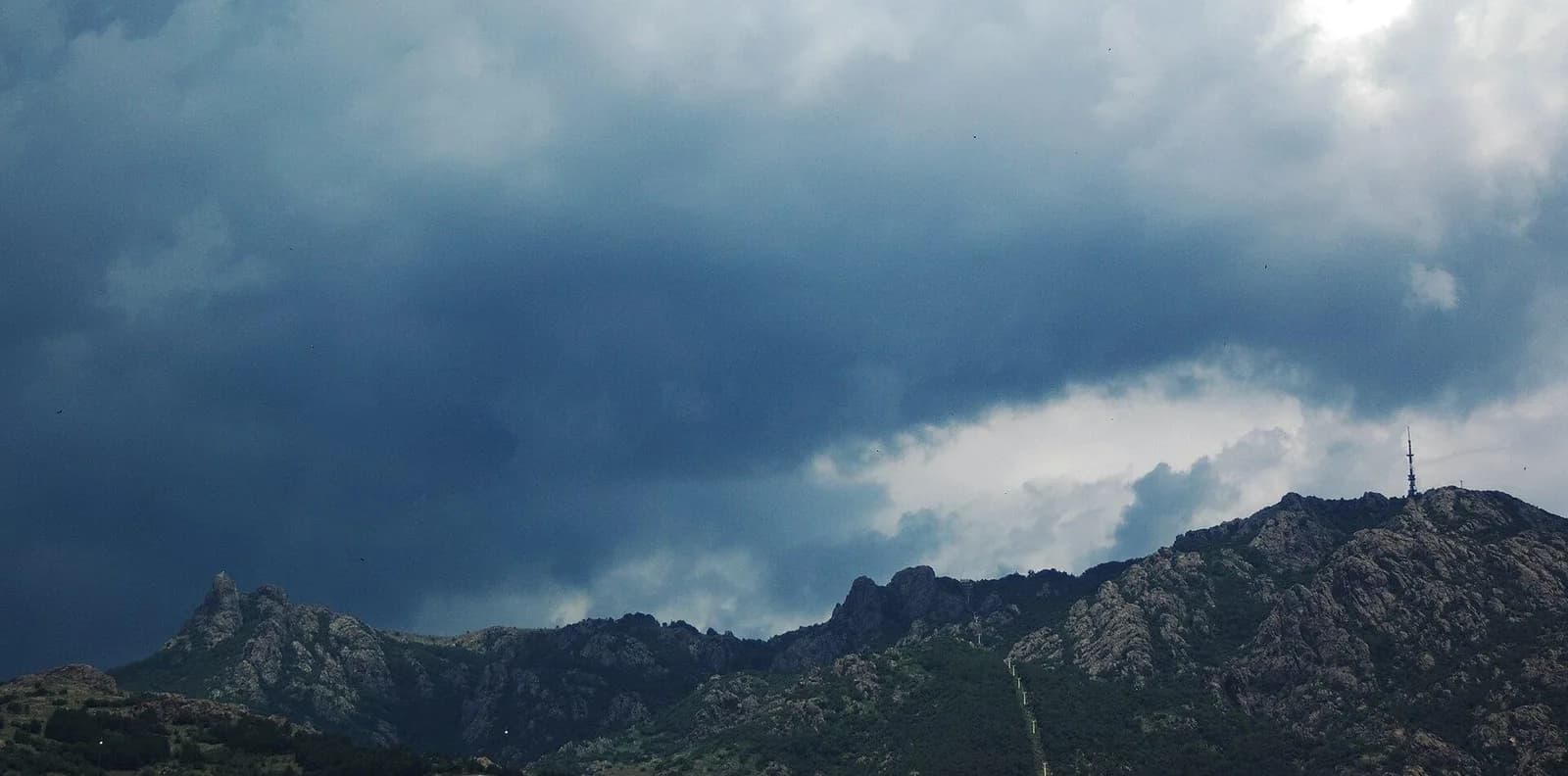
Sliven sits right under the Blue Stones, a jagged ridge you can walk onto straight from the city, and it was one of Bulgaria's first industrial towns. Across the mountains, Kotel and Zheravna are two of the best places to see the Bulgarian Revival up close: Kotel for its carpets and its famous sons, Zheravna for a whole village of timber houses. Together they make a rewarding two or three days in the eastern Balkan range, with a mix of hiking, archaeology and house museums.
Sliven
The Blue Stones
The Sinite Kamani Nature Park runs along the southern slopes of the eastern Stara Planina directly above Sliven, a strip about 21 km long and 7 km wide (nature park). Two park routes start in town, and they suit different walkers (park routes).
- Route 1, to Karandila and Kushbunar. From the park's information and visitor centre in Sliven, the marked Haidushka path climbs to the Karandila tourist complex in about two hours. A further 30 minutes north on an asphalt road brings you to Kushbunar, a spring in an old beech forest protected as a natural landmark. Choose this for a forest walk with a clear goal.
- Route 2, past Halkata. From the lower chairlift station, this route passes Halkata, the rock ring that is a short ten-minute detour from the path, then Tyutyunlyuka and the western foothills of Golyama Chatalka (1,055 m). The park gives about 2 hours 30 minutes for each route. Choose this one for rock formations and views over the valley.
A chairlift from the lower station rides up to Karandila in about 20 minutes. It was rebuilt with new motors, cables and chairs that can carry bikes, and reopened in February 2025 (BTA). It can turn a long walk into a one-way hike, but its timetable is not published online, so check that it is running before relying on it for the descent.
Tuida Fortress
On the Hisarlaka hill at the north-eastern edge of Sliven, near the Novo Selo quarter, Tuida overlooks the town on one side and the nature park on the other (Tuida). An inscription found during excavations that began in 1982 confirmed the ancient name. In the second and third centuries the site was a market and a sanctuary of Zeus, Apollo and Asclepius. A fortress with a large three-aisled basilica followed in the fourth century; the Huns wrecked it in the mid-fifth century, and Emperor Anastasius rebuilt it in the sixth. In that phase Tuida became a bishop's seat, with a separate baptistery laid with mosaic floors. Life went on after the Avar and Slav invasions, as a lead seal of Prince Boris-Michael from 870 shows, until the hill was abandoned in the 13th century (fortress history).
Walk the wall line, then look for the basilica and the baptistery. The 430-seat amphitheatre is a modern stage for events, not an ancient theatre (event spaces).
Museums in town
The Regional History Museum at 18 Tsar Osvoboditel Boulevard sets out its permanent exhibition, "Memory Through the Ages", over two floors, from the Neolithic of 7000-5000 BC to the end of the Second Bulgarian Empire. Look for the clay plaque the museum presents as an example of early proto-writing, Chalcolithic and Bronze Age pottery, bronze axes and a necklace of wild-boar tusks; the third floor hosts temporary shows (exhibitions).
Two house museums cover the Revival in very different keys. The Hadzhi Dimitar House in the Klutsohor quarter is the revolutionary's birthplace: a small single-storey house with a wooden veranda beside his father's inn and guest rooms. Upstairs, weapons, photographs and documents follow the 1868 campaign he led with Stefan Karadzha. The museum opened in 1935 and its display was renewed in April 2024 (Hadzhi Dimitar House). The Dobri Chintulov House, at 5 Vazrozhdenska Street (municipal listing), was built by Ivan and Dobri Chintulov in the mid-1850s, and the poet and teacher lived there until his death in 1886. Its exhibition, renewed in 2024, shows his handwritten textbooks, his nearly twenty poems and his role as a delegate to the 1871 Church National Assembly in Constantinople (Chintulov House). Pick Hadzhi Dimitar for the armed struggle, Chintulov for education and verse.
The Museum of the Textile Industry is the one place in Sliven that comes alive with noise. It opened in 1986 in a building made for Bulgaria's first vocational textile school, in the former yard of Dobri Zhelyazkov's broadcloth factory, and many of its machines still run (history; building). The rooms move from hand spinning and early looms through crafts such as silk, plant dyeing and the Kotel carpet technique to factory machines dated 1893 to 1969 and knitting machines (crafts; machine production). Book a demonstration if you want to see the looms working; one-hour and three-hour workshops for up to 12 people need registration in advance (workshops).
Kotel
Kotel lies at 643 metres in the eastern Balkan range and produced a remarkable share of the Revival's leaders, among them Georgi Rakovski, Sofroniy Vrachanski, Petar Beron, Stefan Bogoridi and Alexander Bogoridi (Kotel). A fire in 1894 destroyed most of the old town, which is why its surviving buildings are so prized.
The Pantheon of Georgi Rakovski, opened on 10 October 1981, is both his tomb and a museum. A broad staircase leads to the marble sarcophagus, then four halls follow the Revival through its "Awakeners", "Educators", "Rebels" and "Revolutionaries". Among the exhibits are a copy of Sofroniy's 1765 manuscript of Paisiy's history, a Kiriakodromion of 1806, editions of Beron's Fish Primer, Beron's embalmed heart in a reliquary, haiduk weapons and Rakovski's own belongings and newspapers (Pantheon).
The Galatan School of 1869 is the last Revival school building in Kotel and the only public building to survive the 1894 fire. Its ground floor shows classic Kotel carpets, some 150 to 200 years old, in patterns with names like "Watermelon Rinds", "Necklaces", "Fuchila" and "Curly Stars", along with the primitive vertical loom on which they were woven. Upstairs are woven icons and pictures by Stoyanka Mileva and Petranka Chehlarova (Galatan School).
Kyorpeeva House shows how a prosperous family lived. Tryavna builders put up the main house in 1872 next to a summer kitchen of 1868, where a hearth, two bread ovens, a kneading room and a bath served daily life. In the main house, compare the formal guest room, with its "Curly Stars" rug and a Jerusalem picture of biblical scenes, with the bedroom and its cradle hung from the ceiling, the loom and wool tools of the textile room, and the cellar with a hand mill for bulgur, a well and copper vessels (Kyorpeeva House).
At the Natural History Museum in Izvorite park, a 1981 building of 1,000 square metres displays some 30,000 items from the eastern Balkan, a collection begun by the local teacher Vasil Georgiev. Rooms run from more than 100 types of fossil and nearly 200 plant species to 218 insect species and habitat scenes with storks, pelicans, eagles, brown bear, wolf and wild boar (Natural History Museum). It is the best stop in Kotel with children or in bad weather.
Zheravna
Zheravna, 12 km from Kotel, is an architectural reserve of national importance with more than 200 timber houses from the 18th and 19th centuries. It is the birthplace of the writer Yordan Yovkov, born in 1880, and hosts a festival of national costume every summer (Zheravna). The village is the attraction in itself: cobbled lanes, stone walls and broad eaves. Four museum houses belong to the Kotel museum (Kotel Municipality).
- Yordan Yovkov House, a low single-storey oak house in the Golyamo Bardo neighbourhood, holds his family belongings, photographs, manuscripts and first editions (Yovkov House). The renewed display links places in the village with his "Staroplaninski Legends", recreates the first meeting of his characters Rada and Shibil, and shows the pen he wrote them with.
- Sava Filaretov House, birthplace of the 19th-century educator, tells the history of Zheravna and has columns and ceilings carved with gilded motifs.
- Rusi Chorbadzhi House, from the 18th century, is a fine example of a wealthy Zheravna home, with carved woodwork, 19th-century photographs and objects, and woven rugs in the old shop downstairs.
- The art gallery in the 1867 school holds about 400 works by Bulgarian and foreign artists.
Suggested plans
Half a day in Sliven. Morning at the Regional History Museum and Hadzhi Dimitar's house, then Tuida in the afternoon for the view. On a weekday, swap one of them for the Textile Museum and ask for a demonstration.
A full day in Sliven. Walk Route 1 to Karandila and Kushbunar in the morning, take the chairlift down if it is running, and spend the afternoon in town.
A day for Kotel and Zheravna. Kotel's Pantheon and Galatan School in the morning, Kyorpeeva House or the Natural History Museum after lunch, then Zheravna, arriving by mid-afternoon so the museum houses are still open.
Two or three days. Sliven on day one, Kotel and Zheravna on day two, and if you have a third day, the Blue Stones walk. Save the ridge for a dry day; summer brings the Zheravna costume festival.
Practical details
Getting there. Sliven is about 300 km east of Sofia, mostly on the Trakia motorway, and has rail and coach links with Sofia and Burgas. Kotel lies across the mountains north-east of Sliven, and Zheravna is 12 km from Kotel; a car makes the Kotel and Zheravna day far easier. For trips without a car, see our public transport guide.
Hours and adult prices were checked on 8 October 2026. The Sliven museum sites sell a family ticket and package prices for two to five sites, and individual visitors get in free on the last Thursday of each month (Sliven tariff).
| Site | Opening hours | Adult ticket |
|---|---|---|
| Regional History Museum, Sliven | Tue-Sat 09:00-12:00 and 13:00-18:00 to 31 Oct; afternoons 13:00-17:00 from 1 Nov (hours) | €5 |
| Hadzhi Dimitar House | Same hours; Tue-Sun in Apr-Oct, Tue-Sat in Nov-Mar | €5 |
| Dobri Chintulov House | Same hours, Tue-Sat | €5 |
| Museum of the Textile Industry | Mon-Fri 08:30-17:00; weekends and holidays on request (visitor information) | €4; guided tour or demonstration €6; workshops €5-7 |
| Tuida Fortress | Tue-Sun 09:00-12:00 and 13:00-18:00 (contacts) | On site |
| Rakovski Pantheon, Kotel | Daily 08:30-12:00 and 13:00-17:30 (Kotel museum) | €5 |
| Galatan School, Kyorpeeva House and the Zheravna museum houses | Daily 08:30-12:00 and 13:00-17:30 | €3 each |
| Natural History Museum, Kotel | Daily 09:00-16:30 | On site |
Check the chairlift and any holiday closures before you travel; otherwise these sites keep steady year-round hours, with a lunch break at most of them.
Sources & further reading
- Sinite Kamani Nature Park - Sinite Kamani Nature Park / Executive Forest Agency
- Sinite Kamani Nature Park - tourist routes - Sinite Kamani Nature Park / Executive Forest Agency
- Renovated cable car opened in Sliven - Bulgarian News Agency
- Tuida Fortress - Tuida Fortress - Sliven
- History of the fortress - Tuida Fortress - Sliven
- Entertainment and event spaces - Tuida Fortress - Sliven
- Contacts and working hours - Tuida Fortress - Sliven
- Regional History Museum Sliven - exhibitions - Regional History Museum Sliven
- Regional History Museum Sliven - ticket prices - Regional History Museum Sliven
- Regional History Museum Sliven - opening hours of all sites - Regional History Museum Sliven
- Hadzhi Dimitar House Museum - Regional History Museum Sliven
- Dobri Chintulov House Museum - Regional History Museum Sliven
- Sliven Municipality - cultural institutes - Sliven Municipality
- Museum of the Textile Industry - history - Museum of the Textile Industry - Sliven
- Museum of the Textile Industry - building - Museum of the Textile Industry - Sliven
- Textile crafts - Museum of the Textile Industry - Sliven
- Machine textile production - Museum of the Textile Industry - Sliven
- Workshops - Museum of the Textile Industry - Sliven
- Visitor information - Museum of the Textile Industry - Sliven
- Pantheon of Georgi Stoykov Rakovski - Historical Museum Kotel
- Galatan School - carpet exhibition - Historical Museum Kotel
- Kyorpeeva House - Historical Museum Kotel
- Natural History Museum - Historical Museum Kotel
- Contacts, opening hours and prices - Historical Museum Kotel
- Yordan Yovkov House Museum, Zheravna - Historical Museum Kotel
- Historical Museum - Zheravna exhibitions - Kotel Municipality
- Kotel, Bulgaria - Wikipedia
- Zheravna - Wikipedia
Tags
- Sliven
- Blue Stones
- Kotel
- Zheravna
- Tuida Fortress
- Bulgarian Revival
- Kotel carpets
- Eastern Balkan