Wild beaches of the Bulgarian Black Sea coast and their rules
Undeveloped beaches from Durankulak to Silistar: their protection, their 2026 official status, the extra rules at each and the coast-wide dune, tent and vehicle bans.
Sources checked - 27 October 2026
In this article
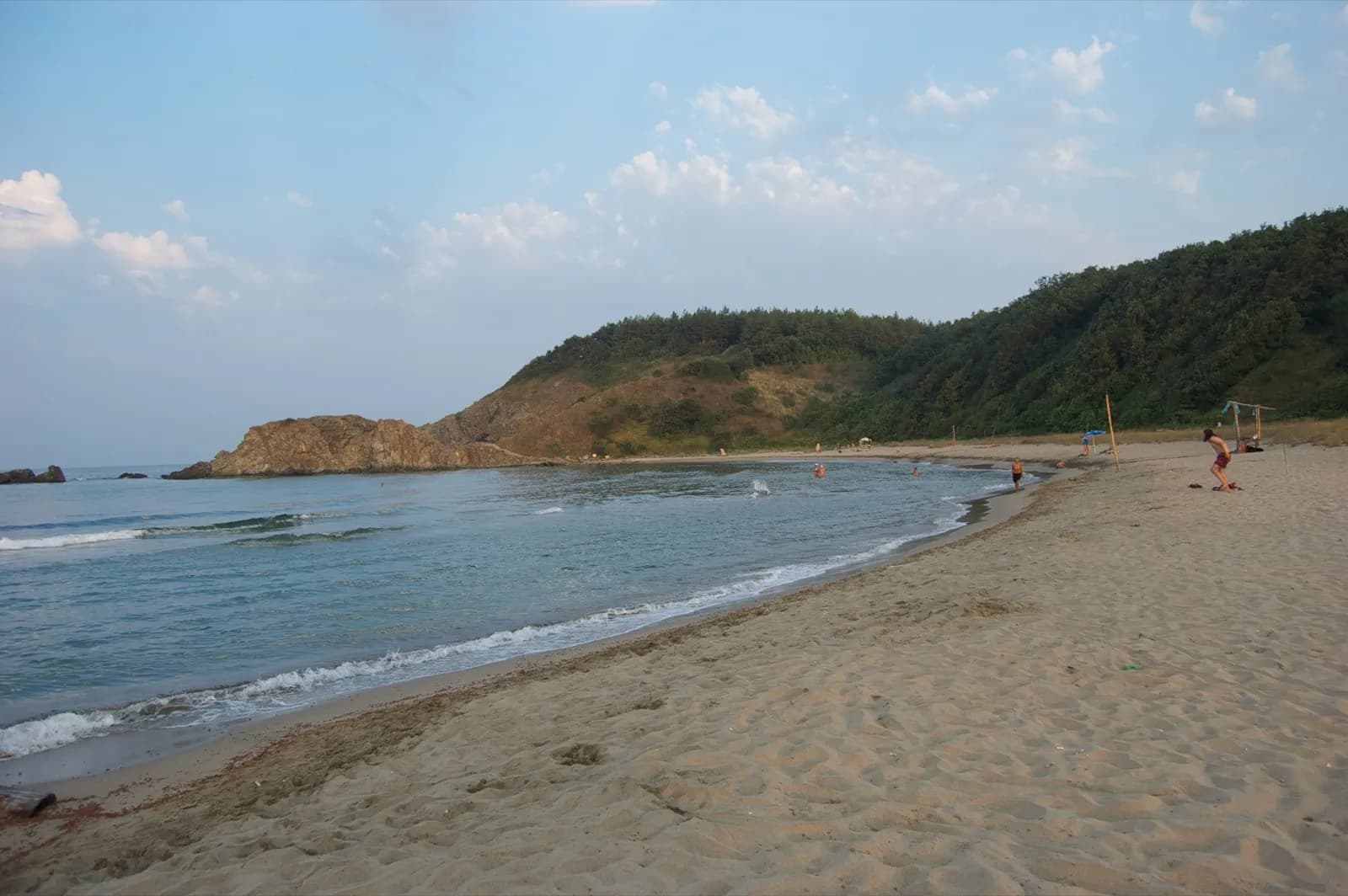
Much of the Bulgarian Black Sea coast is built up, but some long stretches of sand still have no hotels behind them. From north to south they are Durankulak and Krapets in the far north, the dune beaches of Shkorpilovtsi and Karadere south of Varna, Irakli below Cape Emine, the river-mouth and lagoon beaches around Ropotamo, Koral in Tsarevo municipality, and the Strandzha coves of Lipite and Silistar near the Turkish border. Almost all are either declared unguarded, which means no operator rents out umbrellas and sunbeds, or are one of the three beaches where the law bans business altogether. Nearly all lie in protected areas or Natura 2000 sites. The core rules are the same on every one: no tents and no vehicles on the dunes, no vehicles on the beach, and no camping place can be designated on a beach or a dune. Reserves, protected sites and Strandzha Nature Park add their own limits on where you may walk, camp and light a fire.
What "wild" means on this coast
Bulgarian law does not use the word "wild", but three official labels tell you what you will find.
Unguarded beach. Every beach not under a concession or lease is declared "unguarded" each year by order of the Minister of Tourism (Black Sea Coast Act, Art. 7(7)). In practice there is no operator renting umbrellas or running kiosks, and anyone who places a movable structure on an unguarded beach without the right to do so faces a fine of 10,000 to 30,000 leva (Art. 26). Lifeguards are not guaranteed: the regional governor may propose a lifeguard scheme for these beaches for the minister's approval, paid for from beach rental income (Arts. 7(8) and 22a(4)). The 2026 list was changed nine times between 29 January and 20 August (Ministry of Tourism). The latest order, of 20 August 2026, has 94 numbered entries across the Dobrich, Varna and Burgas provinces, some of which group several beach sections (order T-RD-16-249).
Beach for nature-friendly tourism. Only three beaches have this status in law: Byala-Karadere, Irakli and Koral. No economic activity takes place on them, they cannot be leased or put under a concession, and fast-food and sports outlets are banned. Since February 2024 the 500 m strip behind each one has been closed to new buildings, to fences on dunes and to advertising, and machinery may go onto the beach only in a disaster or a threat to human health (Black Sea Coast Act, Arts. 7(9), 10(2a), 10(11) and 17b(2)).
Protected area. Several of these beaches lie in a reserve, a protected site or Strandzha Nature Park, each with its own rules under the Protected Areas Act (see the rules section). Almost all also fall inside Natura 2000 sites, which protect dune habitats but do not on their own set visitor rules.
The beaches, north to south
Durankulak and Krapets (Shabla municipality)
At the northern end of the coast, a sand beach separates Lake Durankulak from the sea and runs south to the Krapets campsite. Dunes take up the centre of the strip, and a line of trees separates the beach from the farmland behind. The lake has been on the list of wetlands of international importance since 1984, and the Natura 2000 data form notes shorebirds staging on the beach (SDF BG0000154). The 2026 list includes Durankulak-North 1 and 2, Durankulak-Lake and part of Krapets-North as unguarded beaches.
Camping on these dunes has already drawn official inspections. In July 2024 the Ministry of Environment led a joint inspection of camping and car parking on the dunes at Krapets-North. Officials issued administrative offence certificates, and police gave caravan owners 24 hours to remove their vehicles (MOEW, 11 July 2024).
Shkorpilovtsi and the Kamchia mouth (Dolni Chiflik and Byala)
South of Varna, the Natura 2000 site Plazh Shkorpilovtsi covers what its data form calls "two of the longest beaches on the Black sea coast with well-preserved dunes", backed by a large dune complex and oak forest on the hills (SDF BG0000100). The whole beach is 11.96 km long, and the site takes in land around Byala, Goritsa, Samotino, Rudnik, Staro Oryahovo and Shkorpilovtsi (Bulgarian Wikipedia). The same form names chaotic resort building as the main pressure and calls for regular removal of household rubbish from the beach and dunes. Shkorpilovtsi-North and Kamchia-South are on the 2026 unguarded list.
At the north end, the Kamchia, the largest Bulgarian river flowing straight into the Black Sea, reaches the sea through swamp forest, marshes and coastal dunes. The data form lists the Kamchiya reserve and the Kamchiyski Pyasatsi (Kamchia Sands) protected site within the Natura area (SDF BG0000116). The reserve includes a sand-dune beach. The bridge that once took visitors into it has been destroyed, but people still wade across the river mouth to the reserve's beach (Wikipedia). That is not a marked path: inside a reserve the law allows visitors only to pass along marked paths, so the reserve's shore is off limits for a beach day.
Karadere (Byala municipality)
Karadere lies between the town of Byala and the village of Goritsa, the southernmost stretch of the Varna coast. The beach is clean and stone-free, bordered by forest in places and scrub elsewhere, and is reached by car, bicycle or on foot from Byala or Goritsa (Bulgarian Wikipedia).
It has survived two big resort plans. In 2007 a Norman Foster design for five villa settlements with up to 15,400 beds was announced (Bulgarian Wikipedia). In March 2014 the environment minister said a later Karadere resort would not go ahead because it affected two Natura 2000 sites, and that without an environmental impact assessment the project did not exist for her ministry (The Sofia Globe). In 2021 conservation groups, among them the citizen group for saving Karadere, proposed enlarging the Shkorpilovtsi Natura site with habitats there (SDF BG0000100). Today Byala-Karadere is one of the three beaches for nature-friendly tourism, with the 500 m no-build strip behind it.
The pressure now comes from campers. In April 2026 the mayor of Byala banned tents, awnings, campers and caravans on the beach. On 28 July a joint team led by the Varna regional administration still counted close to 1,000 caravans, campers and tents and dozens of cars along the 4 km strip, covering more than half the beach. Owners were given until 7 August to move at least 500 m from the beach, the edge of zone A there, or the municipality would remove their things at their expense. Officials cited fines of 500 to 3,000 leva in zone A (BTA).
Irakli and Cape Emine (Nesebar municipality)
Irakli is a beach of more than 2.6 km next to the village of Emona, 3 km from Banya and 12 km from Obzor. It has no infrastructure apart from bungalows at one end, and it was declared a protected site by an order of 6 May 1994 (Bulgarian Wikipedia). The small Vaya river forms an estuary on the beach, with longoz forest along its banks, and white and embryonic dunes run in a narrow strip along the sand. In its 2018 update, the Natura 2000 form calls Irakli and Cape Emine "one of the last extensive sandy beaches and rocky shorelines in Bulgaria" with no hotels or holiday complexes directly behind them (SDF BG0001004).
At Cape Emine itself the shore turns steep and rocky, a narrow gravel strip under the cliff. The cape is a natural monument, and the surrounding Emine bird area is one of the few places in Bulgaria where the Yelkouan shearwater regularly occurs and the osprey breeds (SDF BG0002043). Irakli is a beach for nature-friendly tourism, so the no-business and no-build rules above apply.
Ropotamo, Arkutino and Alepu (Sozopol and Primorsko)
Between Sozopol and Primorsko the Ropotamo river forms a preserved estuary. The Natura 2000 site there has large areas of dunes with patches of forested dune, and its sandy beaches are of two kinds: the river-mouth beach at Ropotamo and the lagoon beaches of Dyuni and Arkutino. The Ropotamo Ramsar complex takes in the estuary, the Velyov Vir water-lily reserve and three coastal lagoons, Arkutino, Alepu and Stamopolu. Alepu marsh and the Alepu sand dunes are both natural monuments (SDF BG0001001). The same form lists new construction, tourist disturbance and the existing road, which cuts through key transition habitats, as the main pressures.
Alepu, Arkutino Lilii and Ropotamo are on the 2026 unguarded list. The Ropotamo reserve lies within the site, and there you may only pass along marked paths.
Koral (Tsarevo municipality)
Koral is the third beach for nature-friendly tourism. It lies on the mostly cliffed stretch between Cape Maslen Nos and Cape Tsarevo, where the Ropotamo data form counts it among a handful of bay beaches with Primorsko, Kiten and Atliman. The form singles Koral out for a unique subtype of white dune grading into grey dune (SDF BG0001001). As at Karadere, a citizen group campaigning for the beach joined the 2021 proposal to enlarge the Natura site.
Lipite (Sinemorets, Tsarevo municipality)
South of Sinemorets, Butamyata is not wild: it is a concession beach with lifeguard posts, umbrellas and sunbeds, and it held a Blue Flag in 2025 (BTA). Lipite, the next bay south, is a different place. It is a small, little-visited bay of fine sand between the trees and the sea, reached by a walking route from the southern end of Butamyata. There is a rough dirt track, but the bay lies in Strandzha Nature Park and vehicles are banned. It has no lifeguard and no restaurant, and its southern end is shallow (welcome.bg). Lipite is on the 2026 unguarded list.
Silistar (Tsarevo municipality)
Silistar is a bay at the mouth of the river of the same name, about 5 km from both Sinemorets and Rezovo near the Turkish border. It was declared a protected site in 1992 and lies inside Strandzha Nature Park (Wikipedia, SDF BG0001007). Along this coast coarse sand dominates, and dunes form only in narrow strips near the river mouths (SDF BG0001007).
Unlike the other beaches in this guide, the main beach is under a concession: in May 2025 BNT described it as developed by the concessionaire as an eco-beach. The road to it crosses private land, and in May 2025 the mayor of Tsarevo said the owner had agreed to keep that road open with no barriers or entry fees (BNT). Only Silistar-North is on the 2026 unguarded list.
On foot, Tsarevo Municipality lists 7.2 km and about 2 hours 50 minutes from Sinemorets, or 6.4 km and about 2 hours 30 minutes from Rezovo, neither suitable for mountain bikes. The full Rezovo-Silistar-Sinemorets walk is 13.6 km and about 5 hours 20 minutes (Tsarevo Municipality).
Some pages, including the English Wikipedia article, still say camping is allowed at Silistar. It is not: tents are banned on the dunes and are not among the uses allowed on a beach, no camping place can be designated inside a protected site, and the nature park bans bivouacking outside designated places (see below).
The Veleka mouth at Sinemorets is a protected site for its coastal landscape, rock formations and fjords (SDF BG0001007). Tsarevo's walking routes to it from Ahtopol and Sinemorets are in our Burgas, Sozopol and Nessebar guide.
Comparison
| Beach | What is there | Protection | Official status, 2026 | Rules on top of the coast-wide bans |
|---|---|---|---|---|
| Durankulak and Krapets | Sand beach between the lake and the sea, dunes in the centre | Natura 2000; lake on the Ramsar list | Unguarded (several sections) | Coast-wide rules only |
| Shkorpilovtsi | 11.96 km beach with a large dune complex | Natura 2000 | Unguarded (Shkorpilovtsi-North) | Coast-wide rules only |
| Kamchia mouth | River mouth, swamp forest, dune beach | Reserve; protected site; Natura 2000 | Kamchia-South unguarded | Reserve: marked paths only; the old bridge is gone |
| Karadere | Clean, stone-free beach edged by forest and scrub | Nature-friendly tourism beach | No concession or lease by law | No business; 500 m no-build strip; mayor's 2026 ban on tents, campers and caravans |
| Irakli | 2.6 to 2.7 km of sand, small river estuary, white dunes | Protected site; nature-friendly tourism beach; Natura 2000 | No concession or lease by law | No business; 500 m no-build strip; protected-site regime |
| Ropotamo, Arkutino, Alepu | Estuary and lagoon beaches, extensive dunes | Reserve; natural monuments; Ramsar; Natura 2000 | Unguarded (Alepu, Arkutino Lilii, Ropotamo) | Reserve: marked paths only |
| Koral | Rare white-to-grey dune type | Nature-friendly tourism beach; Natura 2000 | No concession or lease by law | No business; 500 m no-build strip |
| Lipite | Small bay of fine sand, shallow at the south end | Strandzha Nature Park | Unguarded | On foot only; no bivouac or fire outside designated places |
| Silistar | River-mouth bay, coarse sand | Protected site; Strandzha Nature Park | Main beach under concession; Silistar-North unguarded | No camping; no bivouac or fire outside designated places |
Rules a beach visitor needs
These are the rules that apply on the sand. The wider camping regime, including fines on other land and the mayor's-order places for tents and campers, is in our guide to free and wild camping rules in Bulgaria.
- Dunes. Tents and marquees are banned on white, grey and wooded dunes in the coastal zones, and so is driving, parking or stopping any vehicle, trailer or caravan there (Black Sea Coast Act, Art. 17a(2)). A tent on a dune is fined 500 to 1,000 leva (Art. 30(2)). Since 2024 it is also an offence to damage or level a dune (Art. 17c). The law counts dunes directly behind or on a beach as part of the beach (Art. 6(2), Black Sea Coast Act).
- Vehicles on the beach. Driving, parking and stopping vehicles on any sea beach is banned (Art. 17b(1)), except for authorised beach maintenance and services and for rescue work (Art. 17b(3)). Driving or parking on a beach or a dune is fined 1,000 to 3,000 leva (Art. 30(3)).
- Tents, campers and caravans. The Act allows designated places for temporary tents, campers and caravans only outside beaches, dunes and campsites (Art. 10a(1)), and never inside a reserve, managed reserve, natural monument or protected site (Art. 10a(4)). The dune ban survived a challenge in the Constitutional Court, which rejected it in June 2020 (The Sofia Globe).
- Reserves. In the Kamchia and Ropotamo reserves every activity is banned except a short list that includes guarding, scientific visits and people passing along marked paths. Managed reserves have the same rule (Protected Areas Act, Arts. 17 and 27).
- Strandzha Nature Park. Bivouacking and lighting fires outside designated places are banned, as is dumping rubbish (Protected Areas Act, Art. 31). This covers Lipite, Silistar and the Veleka mouth.
- Protected sites. At Irakli, Kamchia Sands, Silistar and the Veleka mouth, activities that conflict with the purpose of protection are banned (Protected Areas Act, Art. 34); each site's declaration order lists the specific bans.
The Black Sea Coast Act still states its fines in leva. Bulgaria adopted the euro on 1 January 2026 at 1.95583 leva to the euro (ECB), so 500 to 1,000 leva is €255.65 to €511.29 and 1,000 to 3,000 leva is €511.29 to €1,533.88.
Before you go
- Check the current list. A beach can move on or off the unguarded list during the season as concessions and leases change. The Ministry of Tourism publishes each order.
- Plan for no services. On unguarded and nature-friendly tourism beaches, assume no lifeguard, shade, drinking water, toilets or bins. Swim within your ability, reach the sand on existing paths rather than across the dunes, and carry everything out with you.
For town bases, museums and transport on each stretch of coast, see the Varna guide, the Balchik, Kaliakra and Dobrich guide and the Burgas, Sozopol and Nessebar guide. If you pick up litter on the sand, our note on what beach cleanups can and cannot do about microplastics is a useful companion.
Laws, protected-area data forms, the 2026 beach list and the news reports cited were checked on 27 October 2026. Nettei has not visited these beaches for this guide.
Sources & further reading
- Black Sea Coast Spatial Development Act (consolidated text) - Lex.bg
- Protected Areas Act (consolidated text) - Lex.bg
- Order T-RD-16-249 of 20 August 2026 updating the list of unguarded sea beaches - Ministry of Tourism
- Concessions and lease of beaches (orders on unguarded beaches) - Ministry of Tourism
- Natura 2000 Standard Data Form BG0000154 Ezero Durankulak - Ministry of Environment and Water
- Natura 2000 Standard Data Form BG0000100 Plazh Shkorpilovtsi - Ministry of Environment and Water
- Natura 2000 Standard Data Form BG0000116 Kamchia - Ministry of Environment and Water
- Natura 2000 Standard Data Form BG0001004 Emine - Irakli - Ministry of Environment and Water
- Natura 2000 Standard Data Form BG0002043 Emine - Ministry of Environment and Water
- Natura 2000 Standard Data Form BG0001001 Ropotamo - Ministry of Environment and Water
- Natura 2000 Standard Data Form BG0001007 Strandzha - Ministry of Environment and Water
- Joint inspection for unauthorized camping on the dunes at Krapets-North beach - Ministry of Environment and Water
- Varna Regional Administration: the first of a series of checks for illegal tents, campers and caravans began on Byala-Karadere beach (28 July 2026) - BTA
- Karadere construction will not go ahead - Bulgarian environment minister - The Sofia Globe
- Bulgaria Constitutional Court rejects challenge to camping ban - The Sofia Globe
- Карадере - Wikipedia (Bulgarian)
- Шкорпиловци (плаж) - Wikipedia (Bulgarian)
- Иракли - Wikipedia (Bulgarian)
- Kamchia (biosphere reserve) - Wikipedia
- Silistar - Wikipedia
- One of Bulgaria's most picturesque beaches - Silistar - remains freely accessible (28 May 2025) - BNT
- Lipite beach - welcome.bg
- Sinemorets - Butamyata beach - Blue Flag (photo gallery, 30 May 2025) - BTA
- Tourist routes - Tsarevo Municipality
- ECB welcomes Bulgaria joining the euro area - European Central Bank
Tags
- Bulgarian Black Sea coast
- wild beaches
- Karadere
- Irakli
- Silistar
- Lipite
- Strandzha
- sand dunes