Cross Appalachian streams without damaging banks
Choose official crossings, read rain and water conditions, protect streambanks and report damaged trail infrastructure.
Recently verified — 3 August 2026
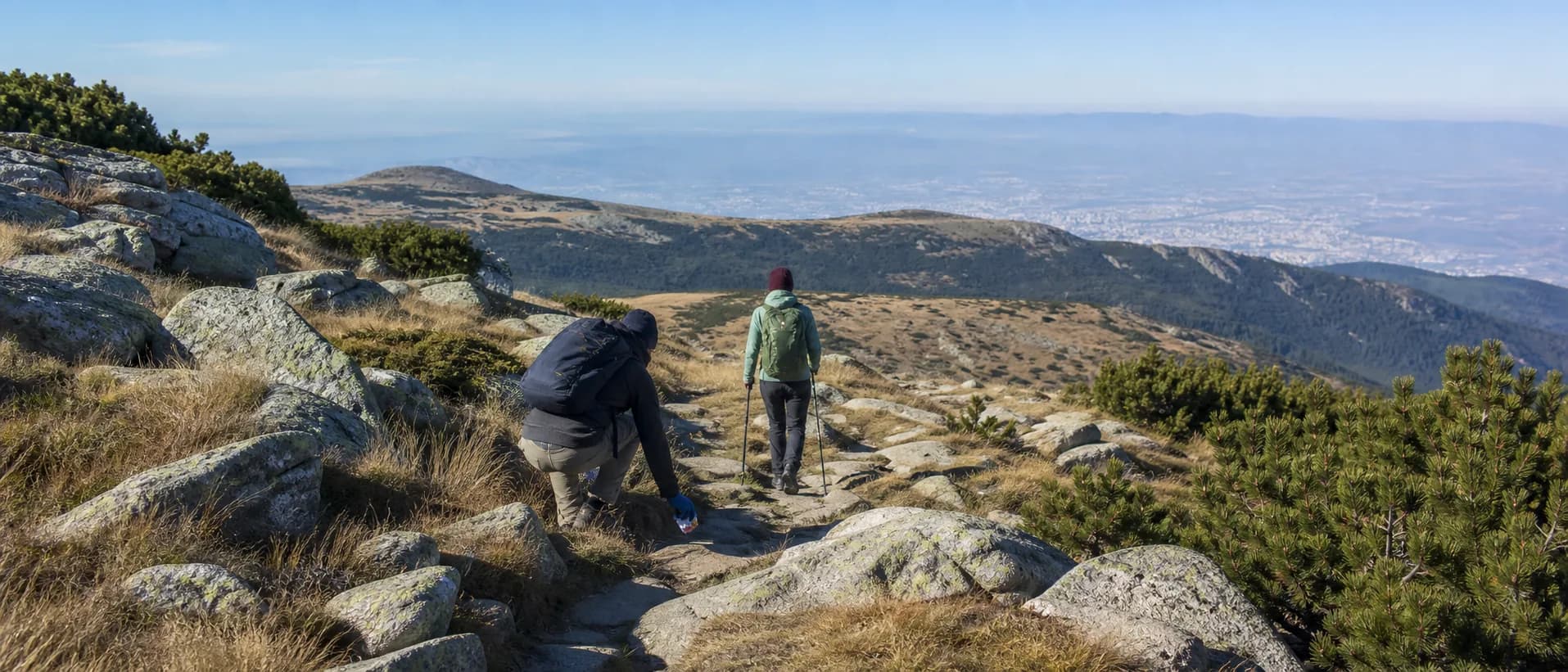
Appalachian streams can rise quickly after rain, and a crossing that looks shallow may have a slippery bed, undercut bank or stronger current than expected. Protecting the stream begins with choosing the official crossing and turning back when the manager or weather service says conditions are unsafe.
Check upstream weather
Rain at the trailhead is not the whole story. Look at the forecast and radar for the watershed, especially before entering a gorge or committing to a loop. A permit, shuttle or summit goal is not a reason to cross moving water. Tell someone the turnaround plan and carry navigation independent of cell service.
Never cross above a waterfall, near a bridge with damage or through water that reaches a dangerous depth or speed. Follow the local ranger guidance; do not assume a technique from another river applies here.
Use the durable route
Stay on rocks, bridges, stepping stones or the trail surface designated by the manager. Do not create a braided bank path while waiting for a lower level. Keep pets and groups controlled so they do not trample wet vegetation or dislodge stones into the channel.
Do not wash dishes, soap, shoes or litter in the stream. Collect drinking water only at the approved access point and treat it according to current guidance. Pack out toilet material and food scraps rather than placing them near the water.
Report damaged crossings
Photograph a missing bridge, exposed anchor, eroded approach or debris jam from stable ground. Record the date, rain, water level and whether the trail can be safely turned around. Do not move a log, build a ford or install a rope. The manager must assess the crossing and any downstream risk.
Add a dated trail and crossing condition report. Map streambank litter only from legal access and without entering the channel. If a trained project is approved, publish the cleanup with a weather cutoff.
The considerate hiker treats a stream as a living system and a safety boundary. Turn around early, protect the bank and let the responsible agency decide when a crossing is ready again.
Sources & further reading
- Hiking safety — National Park Service
- Flood safety — National Weather Service
Access, prices and opening times change. Verify locally before you travel.
Tags
- Appalachians
- stream crossings
- hiking safety
- water
Further reading
Links to reference material and organisations we don't control.
- ReferenceHikingWikipedia
- ReferenceTrailWikipedia
- OrganisationThe seven Leave No Trace principlesLeave No Trace
- VideoREI — skills and gear explainersYouTube