Bulgaria's 2026 fire season: safer camp cooking
How to cook at a Bulgarian campsite during the 2026 fire-dangerous season: use a cold-meal backup, verify the exact regime and leave no embers or food waste.
Recently verified — 12 August 2026
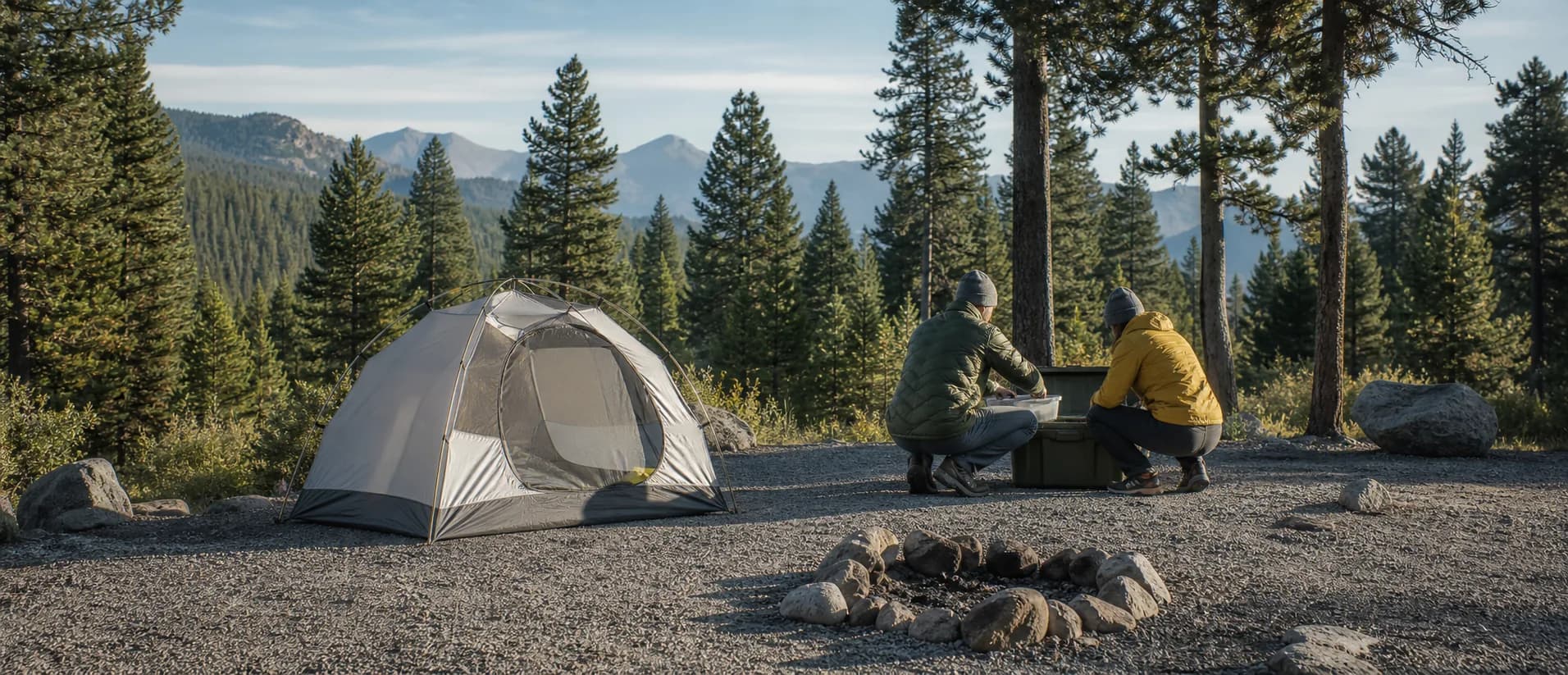
For camping in Bulgaria in mid-August 2026, plan to cook without flame and treat any stove or fire as something that requires explicit, current permission at the exact site. The Ministry of Environment and Water has designated 1 April–31 October 2026 as a fire-dangerous season in protected areas and certain state-owned forest territories, including national parks, reserves and maintained reserves. In Bulgaria's national parks, the visitor guidance says open fires are strictly prohibited. A stone fire ring or an old photograph is not permission.
Start with the land designation
“Camping in Bulgaria” is not one single rule. A formal campsite, a private pitch, a forest edge, a protected area and a national park can have different authorities and restrictions. Before you travel, identify the exact property or operator, not only the nearest town. Check the current notice and ask who is responsible for fire instructions on your dates.
The 2026 announcement covers a defined fire-dangerous period, but it should not be read as a complete permission list for every stove or campsite. Local instructions can prohibit flame entirely, add a temporary restriction or specify where an appliance may be used. The stricter instruction wins. Do not move a stove to a beach, forest clearing or roadside because the pitch is inconvenient.
In a national park, start from the assumption that an open fire is not allowed. Follow the marked access, keep the cooking area tidy and do not create a new fire place. If the operator says a particular appliance is allowed at an organised pitch, ask what “allowed” means: the fuel type, wind limit, surface, hours and what to do if the fire-danger level changes.
Build a meal that does not need a flame
A cold-cook plan is not a punishment; it is your safety margin when conditions are dry or the rule is unclear. Pack food that is safe for the expected temperature and storage time: bread, hard cheese or other suitable sealed foods, whole fruit, nuts, shelf-stable spreads, ready-to-eat pulses and vegetables that travel well. Use an insulated bag and ice packs for foods that require refrigeration, and follow the food label rather than guessing from smell.
For a warm drink or meal, a thermos prepared where heating is legal can remove the need to light anything at the pitch. A cold-soak option can work for some foods, but test it at home and pack it in a leakproof container. Bring enough for a late return; do not depend on collecting firewood or buying supplies at a site with uncertain opening arrangements.
Keep raw and ready-to-eat food separate. Wash hands with a small amount of water and pack the wash water or dispose of it exactly as the site directs. Do not pour oily or salty leftovers into soil, a stream or a fire ring. Food residue attracts animals and becomes a hygiene problem after the group leaves.
If a permitted stove is confirmed
This section is conditional: it applies only if the current manager or operator explicitly allows your stove at that site. Use it on a stable, non-flammable surface with clear space around it, away from dry grass, pine needles, tents, vehicles and overhanging branches. Keep the fuel and hot cookware controlled, never leave a flame unattended and stop immediately when wind gusts or the surface becomes unsafe.
Never cook inside a tent, vehicle or enclosed shelter. A stove can cause fire and carbon-monoxide poisoning even when there is no visible smoke. Keep children and dogs outside the cooking zone, and let cookware cool before packing. Do not carry a lit stove or hot ash along a trail.
When finished, follow the operator's extinguishing and disposal instruction. Do not assume that pouring water onto a metal stove or a fire ring solves the problem; hot surfaces can remain dangerous and a wet patch may hide embers. If the site does allow a designated fire, use only the approved place, use no collected wood unless the manager says it is permitted and inspect the area before leaving. Never leave glowing coals for the next group.
Waste is part of fire prevention
Pack food in reusable containers where possible and carry an extra bag for greasy wrappers and wet waste. Do not burn packaging “to reduce rubbish”: plastics, foils, coatings and treated materials can release harmful smoke, leave persistent residue and spread sparks. Cans, glass and batteries do not belong in a fire either.
At the end of the meal, check under the table, around the tent, beside the cooking area and along the approach for crumbs, twist ties and small plastic pieces. Use the campsite's waste points only as instructed; if they are full, seal the waste and ask the operator where it should go. A public bin beside a road is not automatically an approved disposal point for a campsite's collected bags.
Respond to smoke without becoming another casualty
If you smell smoke, see a small flame or receive a warning, stop cooking, take people and pets away from the fire's direction and keep access roads clear. Do not drive toward smoke, enter a burned area or approach a fire to take photographs. Call 112 with the nearest landmark, road or trail, what is burning if you can observe it safely and whether anyone is at risk. Follow instructions from firefighters, park staff and local authorities.
After the trip, record the date, campsite or route, exact instruction you were given and any hazard you observed. In Garbamons' camping map, share a dated note about facilities and fire guidance without turning it into a guarantee for future visitors. Open Bulgarian campsites and outdoor places on the map
The responsible camp kitchen is the one that still works when the wind rises, the fire rating changes or the “usual” fire ring is off-limits. Pack that option first.
Sources & further reading
- Enhanced prevention measures during the 2026 fire-dangerous season — Ministry of Environment and Water
- What you need to know when visiting Bulgaria's national parks — Ministry of Environment and Water
- National weather forecasts, fire-danger readiness and dangerous phenomena — National Institute of Meteorology and Hydrology
Access, prices and opening times change. Verify locally before you travel.
Tags
- fire season
- camp cooking
- camping safety
- Bulgaria
Background reading
Links to reference material and organisations we don't control.
- ReferenceCampsiteWikipedia
- ReferenceEcotourismWikipedia
- VideoREI — skills and gear explainersYouTube