Grey-water disposal at US campgrounds
Keep dishwater, shower water and food residue out of streams by following campground grey-water stations, local rules and clean-camp practice.
Recently verified — 3 August 2026
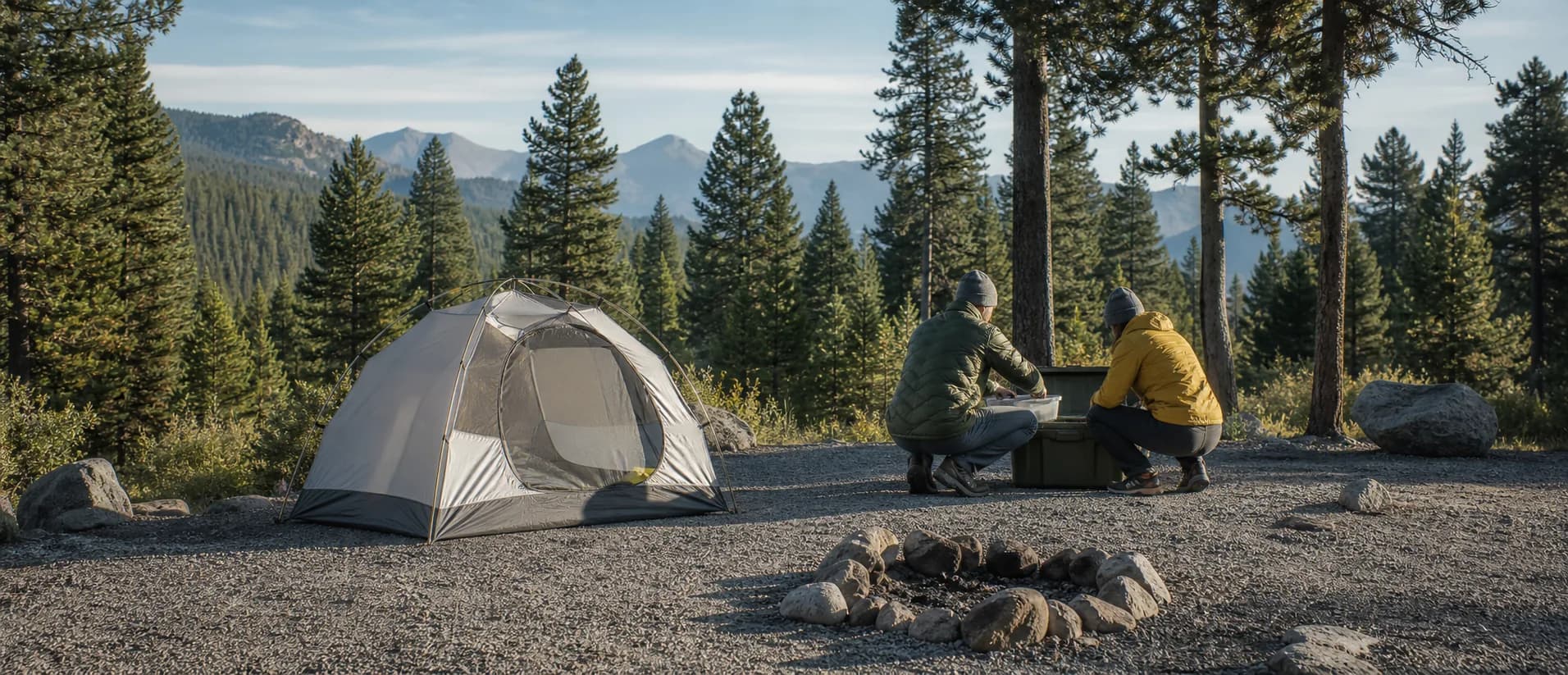
Grey water looks harmless because it is mostly clear, but dishwater, shower water and food residue can carry grease, soap, nutrients and pathogens into soil or streams. At a US campground, the correct disposal method belongs to the operator or land manager. Ask where the station is and what it accepts before you wash a pan.
Separate the kinds of wastewater
Dishwater is different from a drinking-water spill. Cooking oil, sauces and food particles attract wildlife and can clog a disposal system. Shower water may contain soap and sunscreen. Chemical toilet liquids belong in a designated dump station, never in a sink, fire ring or natural drainage. Keep these streams separate until you know the approved destination.
Use a basin rather than washing directly at a faucet or stream. Scrape plates into a pack-out container first. A small mesh strainer can capture solids, but the solids still need to leave with the trash unless the campground provides a collection system. Do not bury food scraps.
Read the campground signage
Look for a grey-water drain, dishwashing sink, RV dump station or a rule that requires visitors to pack out liquid. Do not assume a drain leads to treatment; some systems are only for specific equipment. Ask staff when a sign is missing or a facility is full. Keep chemical products out of ordinary drains unless the operator explicitly accepts them.
If the manager permits scattering, follow the stated distance from tents, trails, water and food-storage areas. Scatter broadly, never pour a concentrated stream into one spot, and avoid areas where animals travel. In arid landscapes, wastewater may stay attractive for a long time and a different method may be required.
Make cleanup easy
Carry a dedicated basin, strainer, unscented soap if allowed, and a sealable waste pouch. Wipe cookware before washing. Drain the basin through the strainer, bag the solids and wash the equipment away from sleeping gear. Do not use a campground fire ring to evaporate or burn wastewater.
Add a campground with verified sanitation facilities and say exactly what was observed and when. Do not label a site “grey-water friendly” from a single assumption. For a spill or illegal discharge, notify the operator; map a cleanup need only when the material is safe and the manager agrees on access and disposal.
A good grey-water plan leaves no smell, slick, food trail or improvised drain behind. It also makes the next camper's water source and campsite easier to protect.
Sources & further reading
- Leave No Trace Seven Principles — National Park Service
- Wastewater and sanitation — US Environmental Protection Agency
Access, prices and opening times change. Verify locally before you travel.
Tags
- grey water
- campgrounds
- sanitation
- water protection
Elsewhere on the web
Links to reference material and organisations we don't control.
- ReferenceCampsiteWikipedia
- ReferenceEcotourismWikipedia
- VideoREI — skills and gear explainersYouTube