A waste plan for national park campgrounds
Reduce campground trash by planning food packaging, toilet use, recycling limits, food storage, grey water and a clean departure from national parks.
Recently verified — 3 August 2026
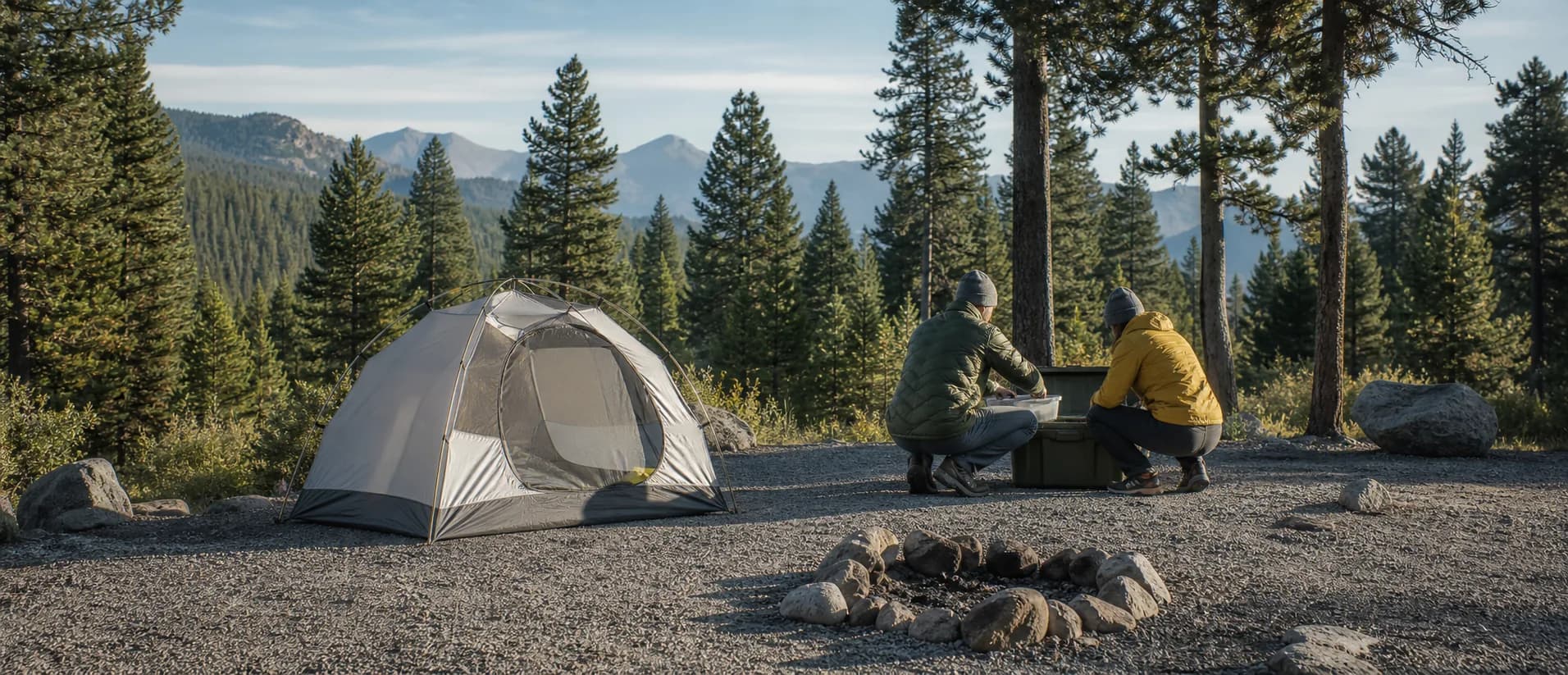
National park campgrounds make outdoor travel easier, but easy access can concentrate food scraps, packaging and overflowing bins. A reliable waste plan starts before the drive and ends with a deliberate inspection of the site. Read the specific park page because bins, recycling, food storage, toilets, water systems and checkout practices differ from one campground to another.
Design the trip around what you can carry out
Choose durable, reusable containers for meals and remove unnecessary wrappers at home. Repackage food only when the destination's food-storage rule allows it; in bear country, every scented item still needs the approved locker or canister. Keep a clean bag for unused food, a separate bag for ordinary trash and a sealed pouch for wet or odorous waste.
Estimate waste volume for the whole stay, including pet waste, hygiene products, fuel packaging and damaged gear. A small daypack can become unpleasant when a family leaves with more than it brought. Carry spare bags, but never use a thin shopping bag as a substitute for a wildlife-resistant storage system.
Read the campground's disposal system
Find out whether the campground offers trash, recycling, food-scrap collection, wastewater disposal or only a limited number of containers. A recycling bin does not mean every plastic, glass or metal item is accepted. Follow the park's posted list and keep questionable items out of a recycling stream. If the park asks visitors to pack out material, plan the return route and vehicle storage in advance.
Use toilets as directed and never place wipes, diapers, food or packaging in a vault toilet. For a backcountry segment attached to a campground stay, learn the park's human-waste system before leaving the developed area. Grey water also needs the local method; scattering greasy dishwater near a tent can attract animals and pollute a drainage.
Prevent food and wildlife conflicts
Food storage is a waste issue as well as a wildlife issue. Keep cooking equipment, toiletries, pet food and garbage in the required locker, canister or vehicle system. Clean tables and grates after eating. Do not burn leftovers or packaging. Burning can leave food odors, foil fragments and incompletely burned waste that creates a hazard for wildlife and the next visitor.
Add the campground with current facilities and waste notes only after checking the manager's page and observation date. A dated report can say “recycling container present on 3 August” without promising that service is permanent. If a recurring accumulation needs organized help, publish a cleanup event with permission and a confirmed disposal route.
The best campground waste plan is quiet and ordinary: less packaging enters the site, food stays secured, bins are used exactly as labeled, and the site is checked from ground level before the vehicle leaves.
Sources & further reading
- Leave No Trace Seven Principles — National Park Service
- Camping safely — National Park Service
Access, prices and opening times change. Verify locally before you travel.
Tags
- national parks
- campsites
- waste prevention
- packing
Elsewhere on the web
Links to reference material and organisations we don't control.
- ReferenceCampsiteWikipedia
- ReferenceEcotourismWikipedia
- VideoREI — skills and gear explainersYouTube