Desert hiking without crushing living soil
Recognize cryptobiotic soil, follow durable routes, manage heat and water, and keep cleanup or photography from widening desert trails.
Recently verified — 3 August 2026
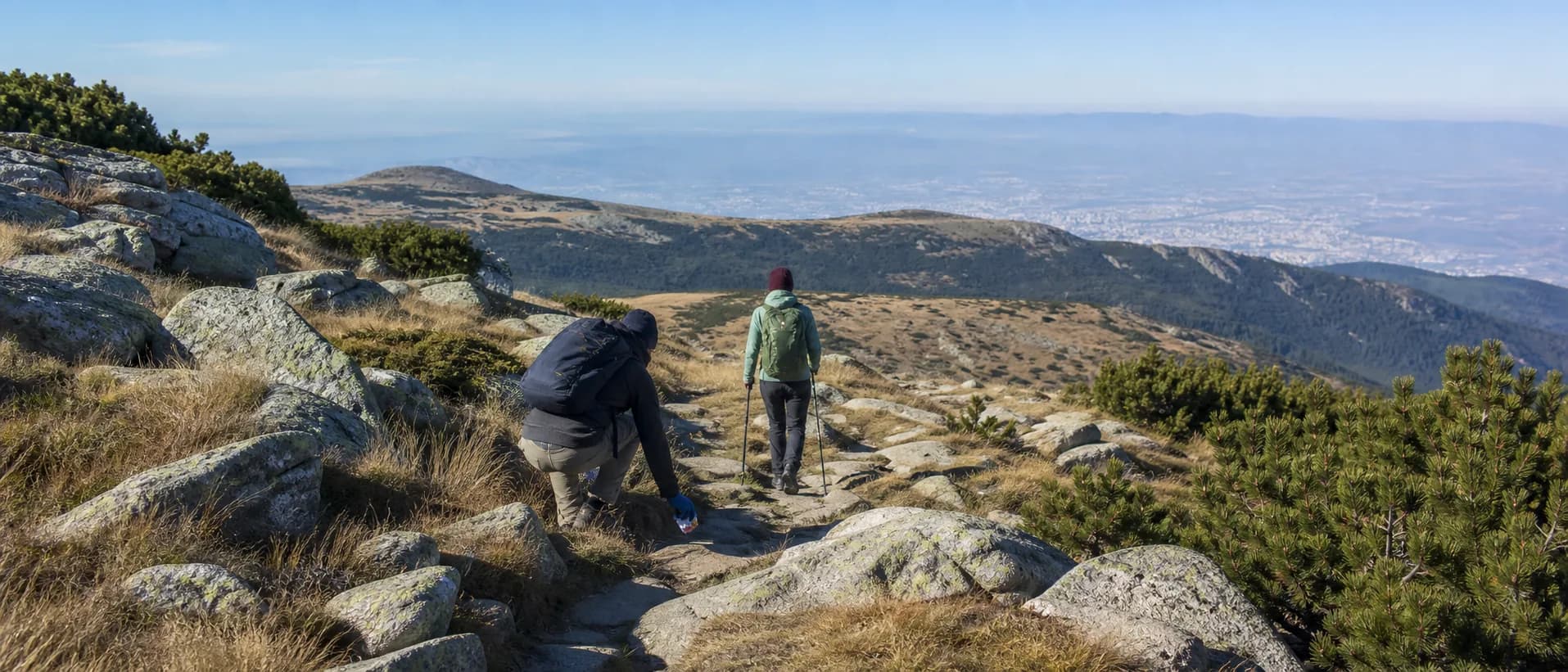
Desert ground can look empty while carrying a living surface of soil organisms, lichens and fragile plants. A footprint or tire track may remain visible for years. Responsible hiking in the US Southwest means staying on the designated route, planning water and heat, and resisting the urge to step off for a photograph or a shortcut.
Learn the route's limits
Read the park, monument, forest or BLM page for trail designation, closed areas, permits and vehicle rules. A route marked on a phone may be an unofficial social path. Follow signs, cairns placed by the manager and established tread; do not add your own rock piles or cut across switchbacks.
Look for cryptobiotic soil, biological crust, cryptogamic soil or similar language in the official guidance. Treat dark, bumpy or delicate ground as protected even if you cannot identify it. Walk single file on durable rock or sand where the route permits, and keep groups compact.
Manage heat and water
Start early, carry more water than a screenshot suggests and tell someone the plan. Heat, wind and dry air can turn a short route into an emergency. Use shade and rest points without widening the tread. Do not rely on an unverified spring or water cache, and do not empty grey water near a campsite or natural source.
If a storm threatens, avoid washes and flash-flood channels. Follow the manager's closure and weather advice instead of trying to outrun a storm through a narrow canyon.
Handle litter without new damage
Carry a small bag for safe reachable litter, but do not cross crust, climb unstable rock or enter a wash to retrieve it. Stop at sharps, chemical containers, human waste and unknown objects. Record a recurring accumulation from the legal trail and give the agency the exact location privately when public mapping could draw more traffic.
Add a dated desert trail condition report with surface and access notes. Map a cleanup need without publishing a fragile shortcut, and use a fixed-view gallery that shows the route without geotagging sensitive sites.
Leave the desert with the same tread width, no new footprints and every safe piece of trash in your pack. The best desert photograph shows restraint as clearly as scenery.
Sources & further reading
- Leave No Trace in the desert — National Park Service
- Hiking safety — National Park Service
Access, prices and opening times change. Verify locally before you travel.
Tags
- Southwest
- desert hiking
- cryptobiotic soil
- Leave No Trace
Further reading
Links to reference material and organisations we don't control.
- ReferenceHikingWikipedia
- ReferenceTrailWikipedia
- OrganisationThe seven Leave No Trace principlesLeave No Trace
- VideoREI — skills and gear explainersYouTube