In this article
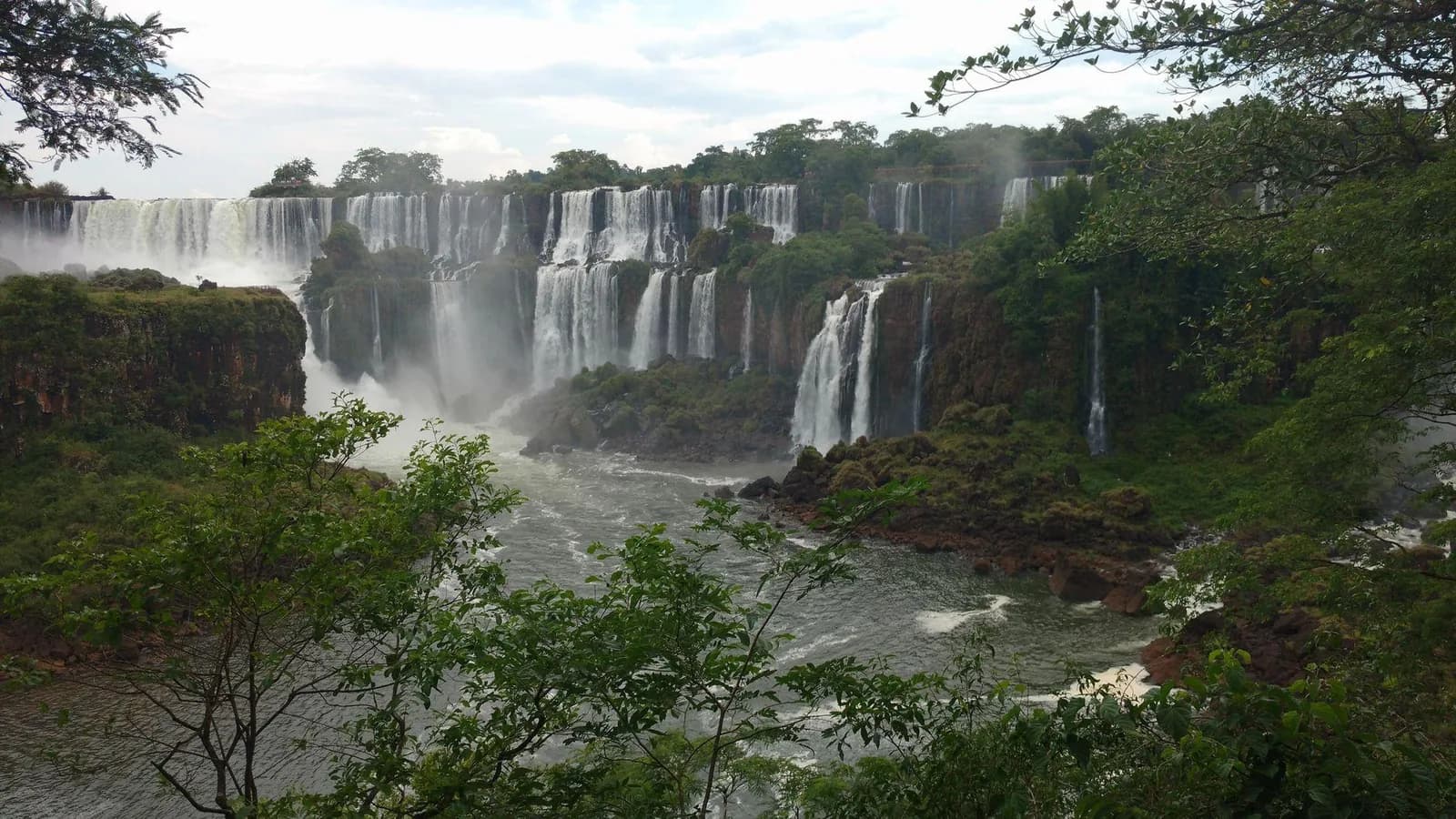
Iguazú is the largest waterfall system in the world: about 275 separate falls spread over 2.7 km of the Iguazú River on the border between Argentina and Brazil, dropping 60 to 82 m into a forested gorge. Roughly 80 percent of the falls are on the Argentine side, and its national park, a UNESCO World Heritage Site since 1984, lets you walk on catwalks above, beside and below them. The name comes from the Guaraní for "big water" (Wikipedia).
Plan a full day on the Argentine side. Two circuits, the Upper and the Lower, show the falls from very different angles, and a third, to the Devil's Throat, is closed at the moment.
Devil's Throat closure
The Devil's Throat (Garganta del Diablo) is a U-shaped chasm 80 to 90 m wide and 70 to 80 m deep that takes about half the river's flow (Wikipedia). Normally a 2.2 km round-trip catwalk across the upper river leads to its edge from the train station of the same name.
On 3 August 2026 the park operator began removing the floors and railings of that catwalk, a 40-day job intended to protect the structure from floods forecast for September and October with the El Niño pattern. No reopening date has been set (operator notice). As of 8 October 2026 the circuit remained closed as a precaution because of high river flow, with all other circuits operating normally (circuit status; operator news).
Upper Circuit
The Upper Circuit runs along the top of a line of falls, so you look down as the river pours over the edge in front of you and out across the gorge. It is 3.7 km round trip, about 90 minutes, easy, and fully wheelchair accessible.
Along the way you pass the twin falls of Dos Hermanas, Ramírez, Bossetti with its frequent rainbows in the spray, Eva and Adán, Guardaparque Bernabé Méndez and Mbiguá, which looks across to San Martín Island. The circuit ends on the San Martín balcony above Salto San Martín, the second-largest fall in the park.
Lower Circuit
The Lower Circuit drops below the rim into the forest and approaches the falls from below. It is 2.9 km round trip, about 90 minutes, of medium difficulty, with steep stairs in places; around 70 percent is wheelchair accessible thanks to an adapted alternative path.
Here you get close to the long cascade of Salto Lanusse, see Álvar Núñez from both below and above, find the small Salto Chico tucked into the vegetation and look back up at San Martín and the Upper Circuit. Expect spray close to the falls. Despite its shorter length, it is the more demanding of the two.
Which first? Walk the Upper Circuit first for the overview, then the Lower for close-ups, or the other way round to tackle the stairs while you are fresh. Both start near the Cataratas train station and close at 16:45, so a morning arrival lets you do both without rushing.
Trails into the forest
The Sendero Verde is a 650 m, 15-minute path, fully wheelchair accessible, linking the entrance area with Cataratas station as an alternative to the train. It is a good place to see wildlife: jays, toucans, monkeys, coatis and even caimans sunning themselves.
The Sendero Macuco is a different kind of outing: a 7.6 km round trip of about three hours through the Misiones rainforest on a rough path with no services, ending at Salto Arrechea, a 23 m waterfall dropping into a clear natural pool. It starts beside the Central station, is open from 08:00 to 15:00 when rangers judge conditions safe, and is not wheelchair accessible. It needs most of a morning, so choose it in place of one of the circuits rather than as an add-on.
Getting there and tickets
The park is 18 km from Puerto Iguazú, reached by national routes 12 and 101; taxis, shuttles and tours run from the town and the airport, and there is paid parking at the entrance (park access). The Rainforest Ecological Train, included in the ticket, links Central, Cataratas and Garganta stations.
| Item | Detail |
|---|---|
| Park hours | Daily 08:00 to 18:00; last entry 16:00 |
| Upper and Lower circuits | Open 08:00 (07:00 on extended-hours days), close 16:45 |
| Ticket, international visitors | ARS 60,000, including the train |
| Ticket, Argentine residents | ARS 25,000 (Misiones residents ARS 8,000; Argentine students ARS 15,000) |
| Free entry | Children under 6, Argentine retirees and pensioners, people with disabilities, with documents |
| Second day | 50 percent off within 72 hours of first entry |
| Car parking | ARS 12,500 per day |
| Devil's Throat | Closed; no reopening date announced |
Prices are from the operator's tariff page and the national parks' access fees, which apply from 1 June 2026. Hours, prices and circuit status were checked on 8 October 2026; check the Devil's Throat status on the morning of your visit.
Across the river, Brazil's Iguaçu National Park, listed by UNESCO in 1986, has a walkway along the canyon towards the base of the Devil's Throat, which makes a good second day if your border paperwork allows (Wikipedia).
Sources & further reading
- Iguazu Falls - Wikipedia
- Iguazú National Park hours and access - Argentina National Parks Administration
- National park access fees - Argentina National Parks Administration
- Tarifas - Iguazú Argentina
- Circuito Garganta del Diablo - Iguazú Argentina
- Prensa y Novedades - Iguazú Argentina
- Parque Nacional Iguazú: conocé los circuitos disponibles mientras Garganta del Diablo permanece cerrado - Iguazú Argentina
- Circuito Superior - Iguazú Argentina
- Circuito Inferior - Iguazú Argentina
- Sendero Verde - Iguazú Argentina
- Sendero Macuco - Iguazú Argentina
Tags
- Iguazú Falls
- Argentina
- Devil's Throat
- Puerto Iguazú
- waterfalls