A late-August Black Sea visit with less waste and less guesswork
Plan a Bulgarian Black Sea day at the end of August with separate checks for bathing water and litter, lawful access, shade, reusable food and a realistic waste plan.
Recently verified — 18 August 2026
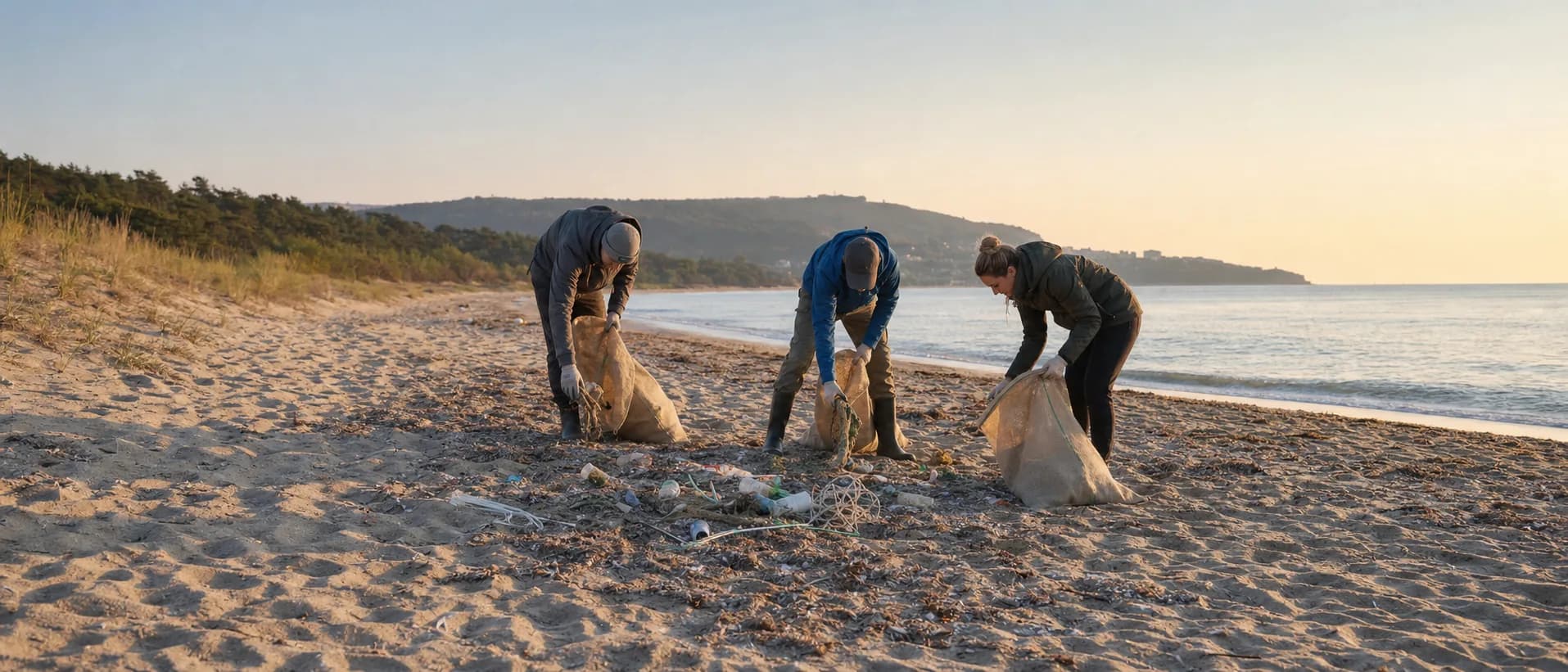
The end of August can make a Bulgarian Black Sea day feel simple: swim, eat, walk and go home. The practical version has a few more checks. Bathing-water quality, marine litter, access to dunes, shade, traffic and waste collection are different questions, and a good answer to one does not settle the others.
Choose a beach you can reach and leave without crossing a protected dune, blocking a local road or relying on an unconfirmed service. Check the current notices for the exact place, especially if your plan includes camping, a fire, a vehicle or a protected area.
Separate the water check from the litter check
Bathing-water monitoring answers a public-health question about defined parameters. It does not certify that the sand is free of glass, hooks, cigarette ends or plastic, and it does not make every nearby access point safe. Check the official information and the local manager's notices separately from the condition of the beach itself.
Do the same with photographs. A clear sea in a social post may be from a different date, and a full bin in one image may have been emptied an hour later. Record the observation date if you share a condition report.
Keep dunes and informal paths out of the itinerary
Dunes are not spare sand for a shortcut, picnic platform or vehicle turn. Use the marked access, boardwalk or route that the beach manager permits. Keep chairs, towels, dogs and games out of fenced or signed restoration areas, and do not dig, rake or move vegetation for a better view.
If a route ends at a locked gate, a damaged boardwalk or a closed habitat, turn around. Do not create a parallel path around it. A public pin can help people understand an access problem only when it describes the barrier and does not advertise an unauthorised alternative.
Camping, overnight parking and fires need their own current check. The fact that other people are doing something, or that an old review says it was tolerated, is not permission for this visit. Confirm the current rule with the responsible authority, landowner or licensed campsite.
Pack for a full day, not a perfect service
Carry a reusable bottle, a small reserve, food in sealed containers and a washable cloth. Pack a separate, leakproof bag for packaging, tissues, cans and cigarette ends. Put drinks in a separate cooler pocket so the food is not opened every time someone wants water.
Avoid food that creates a large amount of liquid or packaging when a hot car, a long walk and a full beach are already part of the plan. Take leftovers with you. Organic scraps are still introduced food, and feeding gulls or other wildlife changes the place even when the item looks harmless.
Do not plan to leave your bag beside a full public bin. Carry it to the confirmed collection point or take it home. If the waste belongs to a coordinated cleanup, agree on the pickup before bags arrive and keep them above the wave reach and away from public paths until they are collected.
Know what not to pick up
Small, loose and recognisable litter can be collected with appropriate gloves or a grabber when the site manager allows it. Stop at syringes, chemical containers, gas cylinders, unknown liquids, fishing gear under tension, large buried objects, dead wildlife and anything attached to an animal or habitat. Photograph it from a safe distance and report it to the responsible authority or manager.
Never enter the water, climb a breakwater or dig in a dune to retrieve one item. A cleanup is not permission to work outside the agreed boundary, and a volunteer group should have a named organiser and a confirmed disposal route.
Share observations that help the next visitor
After the visit, note the date, access, water information you checked, crowding, shade, full bins, barriers and any safety problem. Avoid absolute language unless you have evidence: “glass fragments observed on the upper beach at 08:30” is stronger than “the whole beach is dangerous.” Do not publish sensitive wildlife locations or an unofficial shortcut.
For a useful local update, share the dated place information in Garbamons. If there is a safe, agreed cleanup need, report the location with its limits so the next person knows what the task is—and what it is not.
A good late-August beach day is not measured by how much you managed to squeeze into it. It is a day with current checks, a realistic exit, no new pressure on dunes or wildlife and every piece of your own waste leaving with you.
Sources & further reading
- Bathing water quality in Bulgaria — Ministry of Environment and Water
- Bulgaria bathing water country factsheet 2025 — European Environment Agency
- Tents and camping on the beach — Ministry of Tourism
- General information about protected areas — Ministry of Environment and Water
Access, prices and opening times change. Verify locally before you travel.
Tags
- Black Sea coast
- end of August
- beach etiquette
- low-waste day trips
- dunes
Further reading
Links to reference material and organisations we don't control.
- ReferenceBeachWikipedia
- ReferenceMarine debrisWikipedia
- VideoBBC Earth on YouTubeYouTube
- OrganisationSurfrider Foundation — coastal protectionSurfrider Foundation